
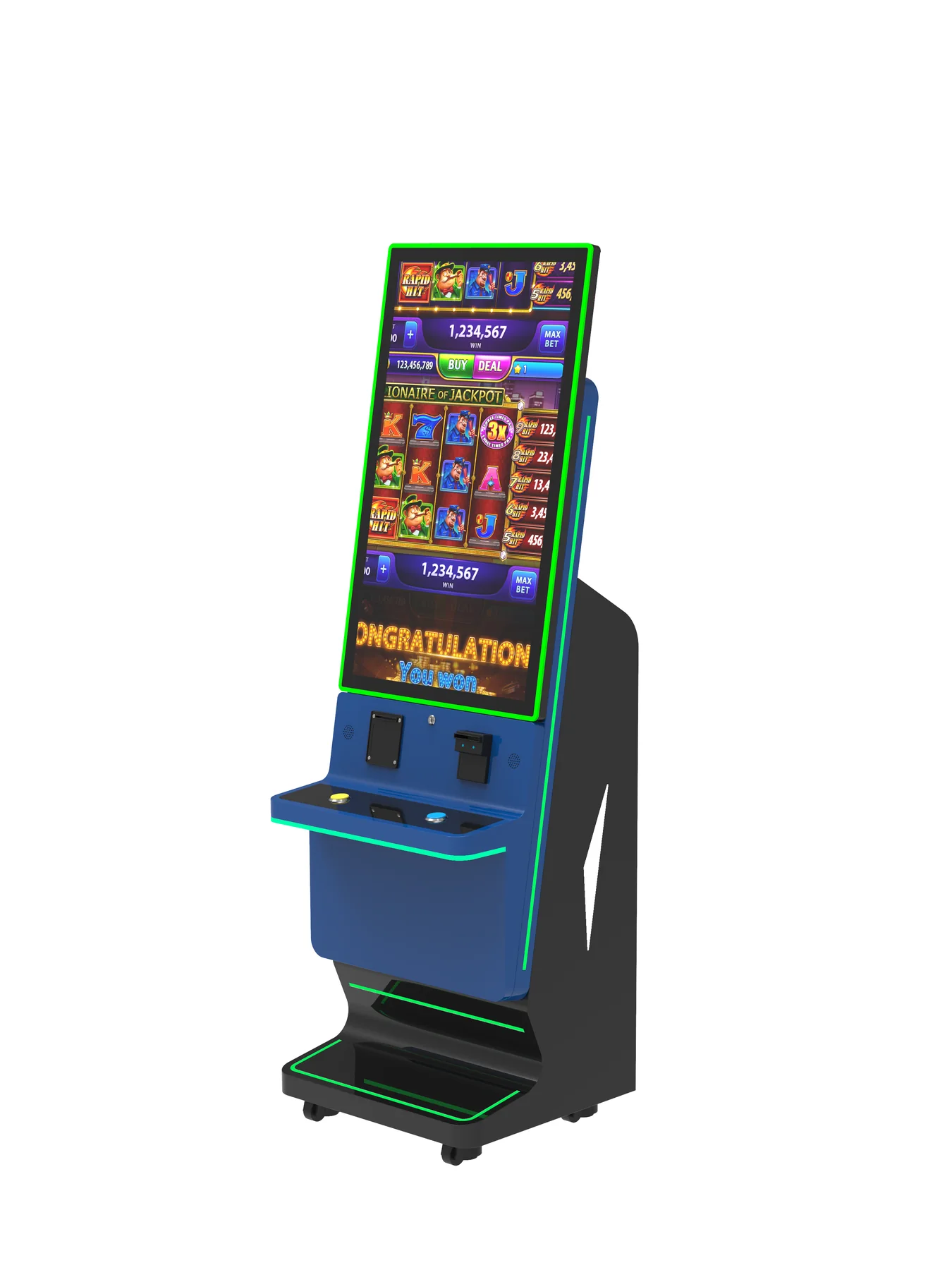
Quick answer: Casino self-service kiosks were among the first and largest self-service deployments anywhere — but most of the installed base is aging into a replacement window, and hardware still absorbs roughly 57% of a kiosk project’s cost (a 57.02% hardware share of the self-service kiosk market in 2025, per Mordor Intelligence ). That split means the buying decision is dominated by one question most casino procurement teams answer badly: are you buying a machine, or are you buying a five-year cost and risk profile?
Overview
Casino self-service kiosks were among the first and largest self-service deployments anywhere — but most of the installed base is aging into a replacement window, and hardware still absorbs roughly 57% of a kiosk project’s cost (a 57.02% hardware share of the self-service kiosk market in 2025, per Mordor Intelligence ). That split means the buying decision is dominated by one question most casino procurement teams answer badly: are you buying a machine, or are you buying a five-year cost and risk profile? The short answer: if you source directly from an OEM and model total cost of ownership (TCO) rather than sticker price, you typically pay less upfront, get the cash module configured to your exact validator and currency needs, and remove the brand integrator’s markup — provided you are willing to own integration and compliance verification yourself.
Why the Casino Installed Base Is Entering a Replacement Window
Gaming and entertainment venues scaled kiosks for ticketing, redemption and cash long before retail and hospitality — which is exactly why the fleet is now old. Ticket-in/ticket-out (TITO) has become the dominant way players move value on a floor ( TITO modules held a 73.80% share of the slot machine market in 2025, per Mordor Intelligence ), and the machines that first supported it are now several years past their reliable service life. Bill validators, ticket printers and touch panels wear out fastest; on a 24/7 floor they fail not with a warning but at the moment a player is mid-transaction.
Three drivers converge on the same conclusion: the next 12–24 months are the cheapest window to replace.
- Aging hardware raises opex silently. An old validator accepts fewer note conditions, jams more often, and its service contract gets more expensive every renewal year. Each dark unit on a busy floor is lost throughput and player friction.
- TITO is now the floor standard, so the marginal cost of new ticketing-capable hardware is falling while the cost of maintaining pre-TITO or semi-integrated legacy units rises.
- Compliance expectations tightened. Regulators treat TITO redemption and cash handling as AML-sensitive; older equipment without audit-ready logging forces manual export and manual risk.
For a deeper look at the specific verification checks that apply to a cash-and-ticketing machine on a regulated floor, our existing cash handling kiosk vendor questions guide walks through compliance, TITO integration and lifecycle checks in detail.
Hardware Is ~57% of the Cost — Here Is Where the Money Actually Goes
When a self-service kiosk project is budgeted, roughly 57% of spend lands on hardware and the balance on software, integration, deployment and services. Most casino buyers accept this split without questioning whether they are overpaying for the hardware layer. The realistic cost drivers, in order:
- The cash/ticketing module cluster — bill validator, coin and ticket handling, plus the secure cassettes. This is the most expensive subsystem and the one that determines acceptance rate, reliability and compliance.
- The enclosure and touch display — form factor, ingress protection, and the screen’s brightness/antiglare spec for high-ceiling floor lighting.
- The compute and software shell — the PC, OS and the kiosk application. Smaller on hardware value but where hidden middleware fees hide.
- Integration, compliance and deployment labor — frequently the line item where brand-integrator quotes inflate the total. Because it sits outside the hardware quote, buyers rarely benchmark it; ask for it itemized separately so you can see what a turnkey integrator charges versus what it costs to own yourself.
The strategic consequence: a 5–10% saving on the hardware layer is worth more than a 20% discount on software, because hardware is the larger denominator. That is the argument for pressuring the equipment cost specifically.
OEM-Direct vs. Buying Through a Brand Integrator
Most casino floors buy kiosks through a brand integrator that wraps hardware in its own software and services. That model has real value when you want a turnkey, single-vendor product — but it also stacks margin at every layer. Sourcing directly from an OEM/ODM manufacturer changes the economics and shifts work back to you. Which model fits depends on your in-house engineering and compliance capacity.
| Decision factor | OEM / ODM direct | Brand integrator |
|---|---|---|
| Unit hardware cost | Lower — no integrator markup on the machine | Higher — bundles margin across hardware + software |
| Cash module configurability | Choose validator, firmware and currency types for your floor | Limited to the integrator’s stocked configuration |
| Integration work | You own TITO/slot-accounting integration or contract it | Included in the turnkey scope |
| Compliance verification | You request certificates and references directly | Provided (verify it, don’t assume it) |
| Branding / enclosure customization | Full OEM/ODM branding and form-factor control | Limited to the integrator’s design |
| Spares and service ownership | You manage spares and the SLA with the OEM | Single vendor handles it |
| Best when… | You have an integration/compliance team and buy at volume | You need a managed, single-contract rollout |
If you need floor-specific modifications rather than an off-the-shelf unit, our custom kiosk OEM/ODM process explains how a procurement brief moves from specification to production.
How to Run the 5-Year TCO Model
The cheapest quote is rarely the cheapest machine. Model five years, not the invoice, and force every vendor (OEM-direct or integrator) to price the same set of line items so comparisons are apples-to-apples:
- Upfront hardware — the machine, the cash module, and the initial spares bundle. Price it with the exact validator model, currency set and spare-part list you need, because this specification — not the bare enclosure — drives acceptance rate and uptime over the asset’s life.
- Integration and middleware — native TITO/slot-accounting support vs. required custom API work (a recurring source of budget overruns).
- Deployment — freight, installation, floor wiring, signage, and commissioning. On a 24/7 gaming floor this is not a cost to hand-wave: schedule it in a low-traffic window, and build in a clear go-live and rollback plan so commissioning downtime does not land on a weekend of player-facing traffic.
- Power and cooling over 5 years — a 24/7 unit’s electricity and HVAC load is real operating cost.
- Service and spares — response-time SLA, regional parts stock, mean-time-between-failure of the validator.
- Replacement and end-of-life — panel and validator replacement cost, and whether the chassis can host new applications later.
A reliable rule of thumb for cash-handling terminals in high-traffic, round-the-clock venues is a 5–7 year planned life; after that the validator reliability and service cost curve makes continued operation more expensive than replacement. Model your floor’s actual throughput against that curve rather than a generic number.
Reliability SLA: The Line Item That Separates Honest Quotes
On a busy casino floor, a dark kiosk is lost revenue and player friction. Every vendor should put four numbers in writing before you compare quotes:
- Guaranteed response time — the contractual window within which a failure is addressed, and whether that clock runs 24/7 or business hours only. On a gaming floor, a next-business-day response can mean a whole weekend of a unit sitting dark.
- Regional spare-parts stock — not vague “parts available,” but the named warehouse where the validator, ticket printer and touch panel are stocked and the realistic lead time to your floor.
- Documented validator service life and MTBF — from the validator manufacturer’s own documentation (JCM and MEI are common industry references), not a reseller’s marketing figure, so you can model when reliability starts to fall off.
- Panel/validator replacement price and warranty scope — the actual cost to swap a worn validator or cracked touch panel, and whether accidental damage in high-traffic zones is covered or carved out of the warranty.
If a vendor won’t put these four numbers in writing, treat that as a disqualifying signal regardless of how competitive the sticker price looks — an unquantified response time or an unnamed parts location is exactly where a low quote turns into expensive downtime after installation, and a vendor that cannot document the validator’s service life is either unsure of the module it sells or is passing that risk to you.
Frequently Asked Questions from Casino Procurement Teams
Is OEM-direct cheaper than buying through a casino kiosk integrator?
Usually, on unit hardware cost, because you remove the integrator’s markup on the machine itself. The trade-off is that you take on integration and compliance verification work that a turnkey integrator bundles. If you have an engineering or compliance team and buy at volume, OEM-direct typically wins on TCO; if you need a fully managed single-contract rollout, the integrator model may justify its premium.
What is a realistic lifespan for a casino cash kiosk before replacement?
For cash-handling terminals in 24/7, high-traffic venues, a 5–7 year planned life is a common planning assumption. Beyond that, validator reliability and rising service costs usually make replacement more economical than continued operation. Model your actual throughput rather than relying on a single number.
Should I standardize on one kiosk model across my whole floor?
Standardizing on a hardware family simplifies spares, training and service — but the cash module should still be configured per deployment for your exact currency types and note conditions. Ask for a family that shares the validator and chassis design so one spares strategy covers different form factors.
Do I need to re-verify compliance when replacing older kiosks?
Yes. Newer deployments should request current third-party certification and reference installations in your jurisdiction, and confirm the machine logs every transaction with timestamps and operator IDs in an audit-ready format. Do not assume a new purchase inherits the compliance standing of the equipment it replaces.
Next Step: Pressure-Test a Quote Against a Real Datasheet
The fastest way to see whether your current quotes carry hidden integrator margin is to put them next to an OEM datasheet and look at the gaps — especially the cash module’s validator model, the enclosure’s ingress rating, and the documented service life. For gaming and entertainment deployments, our cash-handling kiosks are built for that comparison and carry full configuration-based OEM/ODM support.
Request a quote or datasheet for a 23.6-inch flat-screen cash handling kiosk or the freestanding cash-handling kiosk to model your 5-year TCO against real figures. For larger or mixed-floor programs, our payment kiosk hardware and cash integration guide and the currency exchange kiosk cover the adjacent cash and ticketing scenarios worth scoping in the same tender.

