Quick answer: Size recycle cassettes by dividing the notes you take in between two services by each cassette's usable capacity, then add a jam buffer and split by denomination share. Bulk-load and drop cassettes are sized separately, from your replenishment cadence. Three numbers drive the whole calculation: notes per day by denomination, the cash-in-transit or staff-replenishment interval in days, and peak-hour transaction rate.
Answer first: cassette count should fall out of note mix, not cabinet space
Size recycle cassettes by dividing the notes you take in between two services by each cassette's usable capacity, then add a jam buffer and split by denomination share. Bulk-load and drop cassettes are sized separately, from your replenishment cadence. Three numbers drive the whole calculation: notes per day by denomination, the cash-in-transit or staff-replenishment interval in days, and peak-hour transaction rate.
Most RFP drafts break at the same point — they buy spare cassette bays "just in case." Extra bays raise cabinet cost, enclosure volume and idle float, yet they do not reduce service trips if the interval is your real constraint. In most retail and venue deployments the interval is the constraint. That is why the checklist below starts with inputs, not with a product SKU.
Why this decision freezes your operating cost for years
The cassette architecture is one of the few choices in a cash kiosk that cannot be retrofitted cheaply. Cabinet envelope, note transport path, lock hardware, audit logging and the software's denomination map are all built around it. Change the denomination split after tooling, and you are re-qualifying a module, not adjusting a setting. Ranking pages on "cash recycler capacity" tend to restate datasheet numbers; this one gives you the arithmetic, the inputs, and the questions that make two quotes comparable.
Step 1 — Pull the six inputs your RFP cannot start without
- Daily note count per denomination — counts, not currency value. Ask for a typical week and a peak week separately; a single averaged figure hides the peak that actually causes overflow.
- Cash-in versus cash-out ratio — if the unit rarely pays cash out, recycling adds cost without removing a trip. This ratio decides whether you need a recycler at all.
- Peak-hour transaction count and notes per transaction — this is where feed rate converts into queue time.
- Servicing model and realistic interval — CIT vendor, staff pickup, or self-service safe drop, expressed in days you can actually staff, not days you would like.
- Physical envelope — footprint, counter height, reach range, indoor or semi-exposed vestibule. Accessibility reach requirements can eliminate cassette stacks that look fine on paper.
- Reconciliation and audit requirement — who must count, when, and what the note path must log per cassette and per denomination.
Two of these six break first-draft sizing more often than the rest: peak-hour note count and the real CIT interval. Operators habitually supply an average day and an aspirational service interval. Both flatter the design.
Step 2 — Map note mix to cassette architecture (four cassettes do four different jobs)
"Cassette capacity" is not one number. A quote that says "supports up to X notes" without naming which cassette role it refers to cannot be compared with another bidder's. Use this table to force the distinction in writing.
| Cassette role | What it holds | Sizing driver | Symptom if undersized |
|---|---|---|---|
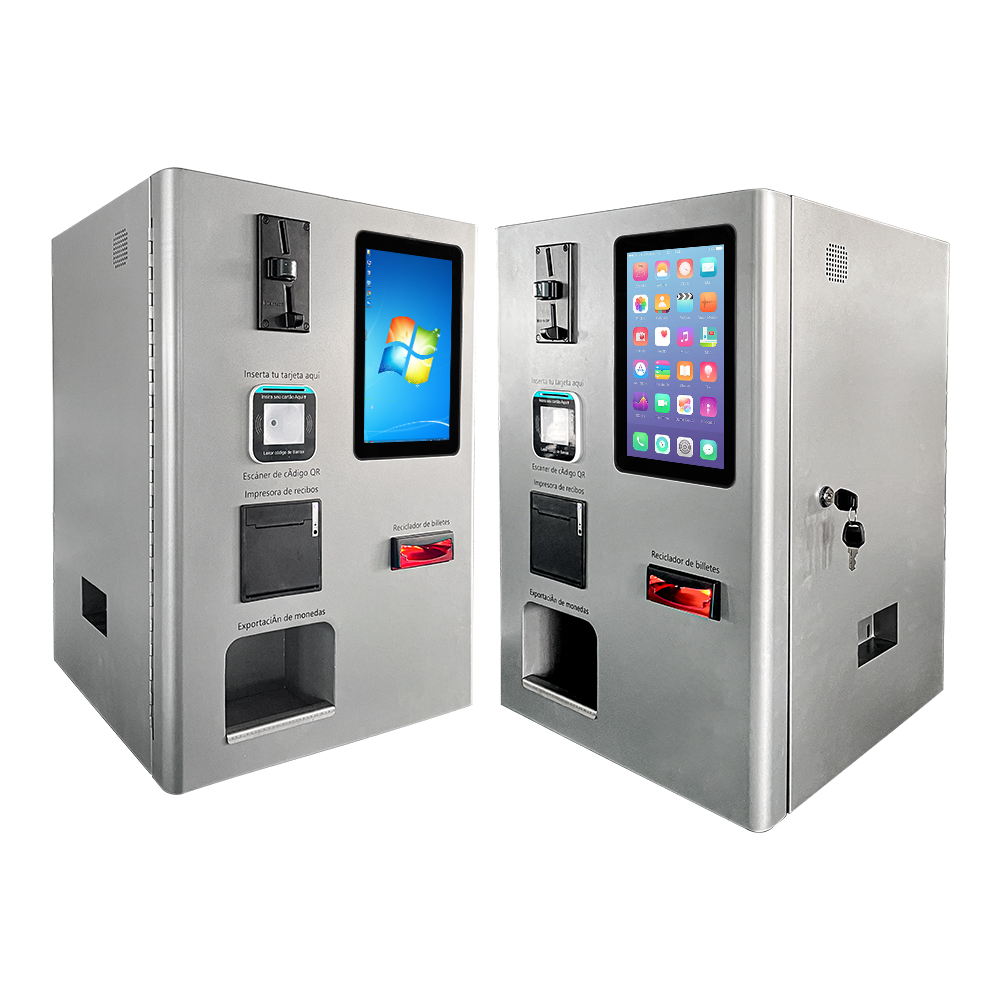
| Recycle cassette | Notes accepted and re-dispensed; normally denomination-assigned | Notes deposited per denomination between services, plus jam buffer | Early full-stop, forced pickup, or a denomination that stops accepting |
| Bulk loading cassette | Fresh notes used to replenish a high-volume denomination | Replenishment volume per service visit | Staff top up mid-cycle; extra handling and shrinkage risk |
| Drop / safe box | Notes removed from circulation, not re-dispensed | CIT interval and cash-in volume | Deposit-only mode shuts down before the next service |
| Reject / escrow path | Notes failing validation, plus in-flight transaction notes | Note condition in your venue; retry logic | Repeated rejects stall the queue and inflate service calls |
One published example of this architecture, labelled clearly as a single vendor's specification and not a benchmark: the Source Technologies 9-Series financial datasheet lists approximately 120 notes per recycle cassette across three cassettes supporting up to six denominations, one loading cassette of approximately 500 notes, and a cash box of approximately 1,500 notes, with deposit bulk handling of 50 notes and dispense of 20 notes at 3 notes per second ( datasheet PDF ). Note the words "approx." and the fact that these are that vendor's figures for that model — they tell you what shape a specification takes, not what your cabinet should hold. Your own sizing sheet, filled with your note histogram, is the only number that applies to you.
Step 3 — Size against the replenishment interval you can actually service
The working formula is short enough to put in the RFP:
Required usable capacity (per denomination) = notes per day × interval in days × safety factor
The safety factor is a chosen assumption, not a measured result. Pick it deliberately, write it down, and state what it covers — weekend peaks, a missed service, a note-quality spike. A figure between 1.2 and 1.5 is a common planning choice; treat it as a policy decision your operations lead signs off, not a fact.
Worked illustration, entirely hypothetical: a venue deposits 1,200 notes on its busiest day, services every four days, and applies a 1.25 safety factor. 1,200 × 4 × 1.25 = 6,000 notes of usable capacity required across the deposit path. Compare that figure against the sum of your proposed recycle cassettes plus drop box, then against the alternative of shortening the interval to three days (1,200 × 3 × 1.25 = 4,500). The second option may cost one extra service visit per cycle and save a cassette bay, or the reverse — but you can only make that trade once both numbers exist on the same page. No number in this paragraph is a measurement of any product.
On service contracts, one secondary market report states that kiosks under proactive service contracts experienced 40% less downtime than in-house-managed units, attributing this to a 2024 reliability audit by Deutsche Bahn ( Market Data Forecast ). Treat it as a third-party claim about maintenance models generally, with unpublished method and scope — it says nothing about cassette sizing, and we do not present it as evidence for a cassette decision.
Step 4 — Decide the denomination split per cassette
Start from three rules, then verify each against the module vendor's real limits rather than against a marketing phrase.
- Give the highest-turnover denomination its own cassette. Shared cassettes turn every high-volume note into a capacity risk for its neighbour.
- Pair only low-turnover denominations. Two low-volume denominations in one cassette generally costs less in fit rate than pairing a high-volume note with anything.
- Never let your top denomination share a cassette with a high-volume one. The pairing halves effective headroom on the note you cannot afford to reject.
US and EU note mixes behave differently: a $20/$50/$100 turnover pattern in US retail does not map onto €50/€20/€10 habits in EU markets, and venue type shifts it again. Ask each operator for their own note histogram and refuse to import a template across regions.
The hidden constraint is the roller arrangement. A cassette described as supporting multiple denominations with two rollers does not deliver the same effective capacity or fit rate per denomination as single-denomination cassettes. Confirm the split with the module supplier in writing before the RFP promises it.
Step 5 — Stress-test against peak day, jam recovery and fit rate
Design reviews that pass on average data fail on the worst day. Run four tests:
- Peak event: a promotion, a weekend rush or a cash-heavy event. Does capacity hold without a mid-cycle pickup?
- Missed service: one CIT no-show. How many hours until the unit stops accepting, and does it degrade gracefully to card-only or stop entirely?
- Jam recovery: how many minutes, whose key, and what the on-screen queue does during the clear. A note path that requires a supervisor key at 2am is a different design from one cleared by floor staff.
- Fit rate and note condition: worn, folded or foreign notes are normal in high-traffic venues. Ask what the reject path does, where rejected notes land, and whether a rejected note is returned to the customer or held.
The only credible proof that a denomination split works in your note mix is a reference deployment in a comparable environment, or a pilot. Ask for the reference before finalising, and ask what note mix that reference actually runs.
Step 6 — Do not let published kiosk forecasts size your cassettes
Headline market forecasts are not a sizing input, and industry press has said so publicly: commentary published by the kiosk industry association questions figures such as a US$43.6 billion self-service kiosk market by 2030, describing such estimates as often lacking direct interviews, field audits or validation with actual large deployers and manufacturers ( kioskindustry.org ). The same page carries a more conservative industry-participant estimate for the core interactive and self-service kiosk sector.
Market framing exists for a different job. Mordor Intelligence, for instance, estimates hardware accounted for 50.76% of bank kiosk market value in 2025 ( Mordor Intelligence ) — useful context for budgeting a category, irrelevant to how many €20 notes your lobby takes on a Saturday.
Use instead: your own transaction log by denomination, your CIT contract terms, and one verified reference installation. Triangulate those three; do not extrapolate from a total-addressable-market number, however often it is repeated.
Step 7 — Put the sizing into the RFP so proposals are comparable
Require every bidder to return these items against your sheet, not around it:
- Cassette count by role — recycle, loading, drop, reject — stated separately.
- Usable capacity definition per role, including whether the figure is gross or usable after the transport path reserves notes.
- Denomination assignment per cassette, with the roller and fit-rate implication stated.
- Feed rate in notes per second, for deposit and dispense separately, plus bulk limits per transaction.
- Reject handling: where rejected notes go, retry policy, and what the customer sees.
- Lock, key hierarchy and audit logging of the note path by cassette and denomination.
- Replenishment and cassette-swap procedure, including whether a swap requires the unit to go offline.
Reject "supports up to X notes" without a role attached. Then ask each supplier to flag where their module cannot meet your sheet. That gap list — not the headline capacity — is the document you actually decide on.
Where the sizing sheet still cannot help you
Cash recycling economics depend on the in/out ratio. In strongly cash-out-heavy environments, or cash-in-heavy environments with no dispense requirement, recycling may not pay back at all, and a drop box plus a shorter interval is the cheaper architecture. Say so before the cabinet is frozen, not after.
One week of transaction data understates seasonality. Before freezing cassette count, define an observation window that covers at least one full demand cycle for your venue type — and record the window in the sizing sheet so the assumption is auditable later.
Finally, we do not publish measured uptime, savings or fit-rate results for a generic configuration, because those depend on your note mix, module choice and service model. Claims of that kind should come from a pilot on your own site or from a named reference you have spoken to — not from a supplier's brochure, including ours.
Frequently asked questions
How many cash cassettes does a self-service kiosk need?
There is no fixed number. Count recycle cassettes from notes deposited per denomination between services divided by usable per-cassette capacity, add a jam buffer, then size a loading cassette and a drop box separately from your replenishment volumes. A low-volume indoor unit may need two or three; a high-traffic venue may need more recycle cassettes plus a larger box. The arithmetic, not the cabinet, decides.
What is the difference between a recycle cassette, a loading cassette and a cash box?
A recycle cassette both accepts and re-dispenses notes and is normally assigned to specific denominations. A loading cassette holds fresh notes used to top up a high-volume denomination during a service visit. A cash box (drop box) holds notes taken out of circulation until collection. Each is sized from a different input, and a single "capacity" figure that does not name the role is not comparable across suppliers.
How do I calculate the cash replenishment interval for a kiosk?
Work backwards: usable capacity ÷ (notes per day × safety factor) gives the maximum interval in days for that cassette. Then compare it with the interval your CIT contract or staff rota can actually deliver. If the serviceable interval is shorter, you may not need extra cassettes at all — and if it is longer, extra cassette bays may be cheaper than extra trips. Both sides of that trade belong in the same calculation.
Should a kiosk have cash recycling or just cash acceptance?
Recycling pays back when the same unit takes cash in and pays cash out at meaningful volume, because reusing deposited notes reduces both float and collection frequency. If the site is overwhelmingly deposit-only, or the in/out ratio is heavily skewed, a recycler adds mechanism, cost and maintenance surface without removing a trip. Decide from your own in/out ratio, not from a category trend.
Next step
Share your daily note mix and request a cassette sizing sheet plus quote. Send us one typical week and one peak week of note counts by denomination, your serviceable CIT interval, and your cabinet envelope; we will return the sizing sheet with each assumption exposed, a proposed cassette architecture by role, and the points where your inputs would change the recommendation. If the numbers point away from recycling for your site, we will say so.