Quick answer: Before you approve a kiosk for mass production, the factory should provide a verifiable document package covering engineering drawings, bill of materials, market-valid compliance certificates, test results, QC plans, and configuration control.
Overview
Before you approve a kiosk for mass production, the factory should provide a verifiable document package covering engineering drawings, bill of materials, market-valid compliance certificates, test results, QC plans, and configuration control. At minimum this means mechanical drawings (DXF plus editable source), a complete BOM with part numbers and suppliers, compliance certificates that are valid for your target market with checkable certificate numbers, an IP-rated environment test report, a mass-production test and QC plan, a frozen configuration sheet, first-article inspection (FAI) reports, a firmware/software version list, and a warranty and spare-parts continuity statement. Treat a factory that resists this package as a red flag — the documents are what let you approve the run with your eyes open instead of on trust.
Why a prototype approval is not a production approval
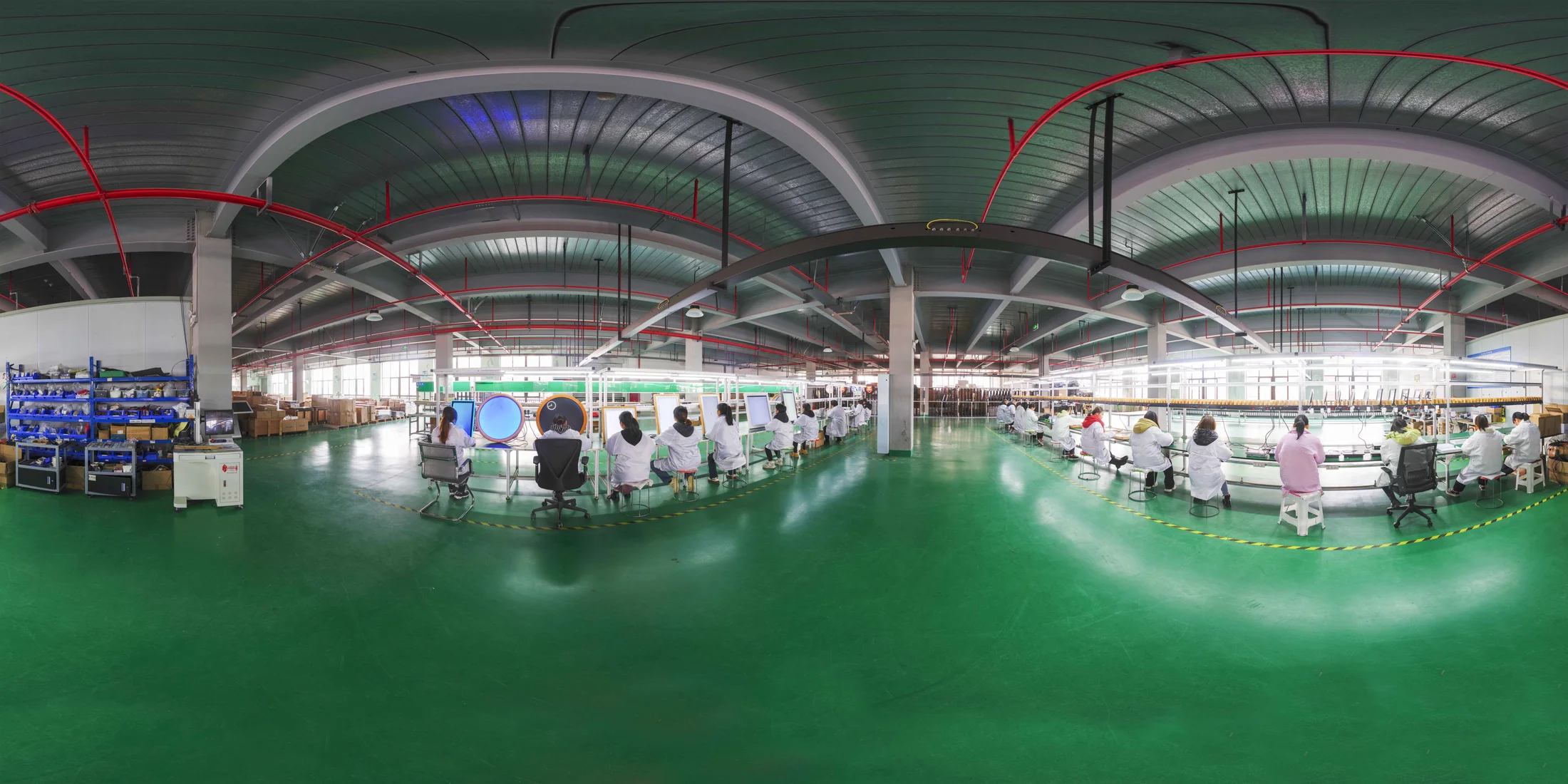
Most kiosk buyers approve one golden sample and assume the run will match it. It will not. A prototype is hand-built by your factory’s most careful technician; a production run is assembled from bulk batches, different operators, and components bought to price. The gap between the two is exactly where defects, spec drift, and compliance surprises live.
The document package below exists to close that gap. It is essentially the kiosk-industry equivalent of a PPAP (Production Part Approval Process) file. Automotive and medical buyers have demanded it for decades; kiosk buyers in the US, EU, and Middle East are increasingly being burned for not demanding it too — typically on compliance (a certificate that does not actually cover the region they sell into) or on component substitution (a cheaper screen or power supply swapped in after approval). For a full view of how these approvals fit into the wider custom kiosk OEM/ODM process , review the requirements-to-handoff sequence before you negotiate.
What documents should a kiosk factory provide before production approval?
Ask for the nine items below in writing before you sign the production approval. We list what to demand, what to check inside each document, and the red flag that means it is not good enough.
| Document | What to verify inside it | Red flag if missing / weak |
|---|---|---|
| 1. Mechanical drawings | DXF for the fabricator plus editable CAD source (not a locked PDF), material callouts, tolerances | Only a PDF or a single render; no editable source means every change costs a re-draw |
| 2. Complete BOM | Part numbers, manufacturers, and suppliers for every component — screen, power supply, board, cash-acceptor, enclosure | OEM board listed as “generic” or supplier hidden — this is where silent substitution hides |
| 3. Compliance certificates valid for YOUR market | CE (EU), UL/cUL (US), FCC (US), RoHS, and certificate numbers you can verify against the issuing body | A “CE” sticker with no verifiable number, or a cert issued for a market you do not sell into |
| 4. IP-rated environment test report | Actual test results for your enclosure’s IP54/IP65 claim, not just the rating printed on the datasheet | IP rating asserted with no test report behind it |
| 5. Mass-production test & QC plan | What is tested on every unit (power-on, touch, connectivity, cash handling), sampling rate, defect threshold | “We do QC” with no defined test list or pass/fail criteria |
| 6. Configuration freeze sheet | The exact frozen spec the line is building to, matching your approved sample | No frozen config means the line can drift unit to unit |
| 7. First-article inspection (FAI) reports | Measurements and checks on the first production units against the drawing and BOM | No FAI before the line ramps = defects discovered across the whole batch |
| 8. Firmware / software version list | Exact firmware and OS versions loaded, plus how updates are locked to prevent drift | Versions not pinned means you cannot reproduce or support what shipped |
| 9. Warranty & spare-parts continuity statement | Warranty terms plus a commitment on spare availability and component end-of-life handling | No statement means your field maintenance has no plan after year one |
Which documents should NOT be treated as production approval
Three things factories often offer as “documentation” are not what you need for approval. A marketing datasheet describes the intended product, not what the line is actually building, so it cannot prove a repeatable process. A single golden-sample photo proves one unit existed, but not that the production line can reproduce it at volume. And a compliance certificate for the wrong market — a cert covering only the factory’s home region — gives you zero protection when a customs authority or retailer in your target market asks for proof, because it was never assessed against the rules of the market you actually sell into.
How to use documents to de-risk, in order
Collecting paperwork is not a box-ticking exercise; the order you verify it matters for catching problems early. Freeze the configuration first, because with no frozen spec every later document is compared against a moving target. Then verify the BOM against that frozen config, confirming the listed parts are the parts your approved sample actually used. Next, check the compliance certificates against your target market and verify the numbers with the issuing body — this is the step where US/EU buyers most often get burned, so treat it as non-negotiable. Confirm the QC plan actually tests the failure modes that matter for your deployment, such as outdoor rain and heat for an IP claim or cash handling for a payment kiosk. Finally, review the FAI before the line scales past the first production batch.
Five signals that production should not be approved
You can stop a run before it ramps if any of these five gaps appear. If the factory cannot name the supplier of a critical component, substitution risk is unmanaged. If a compliance certificate has no verifiable certificate number, treat the document as decorative. If the QC plan has no defined test list or pass/fail criteria, defects will be found in the field, not on the line. If there is no first-article inspection before the line ramps, a process error repeats across the whole batch. And if the firmware version shipped is not pinned and documented, you cannot reproduce or support what actually left the factory.
Why compliance documents must be checked against your market
The single most expensive mistake is accepting a certificate that was never assessed for the region you sell into. For the EU and EEA, the legal basis is the harmonised CE marking regime: the European Commission’s CE marking guidance sets out the conformity-assessment obligations and what the Declaration of Conformity must contain. When the factory hands you a CE or other certificate number, verify it independently — the Commission’s NANDO database lets you confirm a notified body and its scope rather than trusting a sticker. A certificate you cannot validate is, for procurement purposes, no certificate at all.
Frequently asked questions
What is the difference between a PPAP and a kiosk production-approval package?
PPAP (Production Part Approval Process) is the automotive-standard evidence file that proves a supplier’s process can repeatedly make a part to spec. A kiosk production-approval package is the same idea applied to an assembled terminal: engineering drawings, a BOM, market-valid compliance certificates, test and QC plans, a configuration freeze, FAI reports, and a firmware version list. The point of both is identical — replacing trust in one golden sample with documented evidence that a repeatable process exists.
What should I check inside a compliance certificate before approving production?
Verify three things. First, confirm the certificate is valid for the market you actually sell into (CE for EU/EEA, UL/cUL for US, FCC for US radio, RoHS for substance limits) and not just the factory’s home region. Second, confirm there is a certificate number you can independently check against the issuing body or a database such as the EU’s NANDO register. Third, confirm the scope of the certificate covers the configured product — the screen, power supply, cash acceptor, and enclosure you approved — because a change of component can invalidate an existing certificate.
Why does the order of document verification matter?
Because the later documents are only meaningful against a stable reference. If you freeze the configuration first, the BOM, compliance certificates, QC plan, and FAI all describe the same product. If you verify compliance before freezing the config, or review the FAI before confirming the QC plan tests the right failure modes, you can approve a run whose documents describe different versions of the machine — which is exactly the drift a good approval package exists to prevent.
Get a factory that documents the run as rigorously as it builds it
Every item above is standard practice for a contract manufacturer that has shipped kiosks to demanding buyers before. If a factory cannot hand over this package, the safest move is to treat the quote as incomplete rather than the risk as acceptable — and to review the factory’s own certificate library and quality documentation before you commit.
If you are evaluating a kiosk manufacturer and want a full production-approval document package (drawings, BOM, compliance certs valid for your region, test and QC plans, FAI) before you commit, review our OEM/ODM capabilities and request a quote or sample with our engineering team — we will send the spec sheet and the document checklist our own runs ship with.