Quick answer: A hardware-selection guide for casino operators replacing coin and cash-out kiosks with TITO redemption: how ticket-in/ticket-out reshapes validator, ticket printer and cash dispenser choice, what the audit trail must capture, and how to keep a busy floor running.
Overview
Direct answer: A TITO redemption kiosk pays winnings as a barcoded ticket instead of coins. Ticket-in/ticket-out means the kiosk accepts tickets and cash on the way in and prints a validated ticket on the way out, so the hardware is specified around ticket throughput and audit logging — a bill validator, a thermal ticket printer, and, where cash payout is required, a cash dispenser. Choosing those three modules well is what decides uptime, cage workload and compliance traceability.
This guide is written for the people who run and maintain the gaming floor — cage, floor operations and venue engineering — not for the buyers comparing purchase orders. For the procurement and five-year cost angle, see our casino kiosk procurement and TCO playbook ; here we stay on the operational side.
Why TITO became the floor default — and what it changes for hardware
Ticket-in/ticket-out replaced coin hoppers across North American casinos because it removes the two most expensive things on a gaming floor: coin logistics and coin-induced downtime. A player cashes out to a printed ticket, and that ticket is read back into a machine or redeemed at a kiosk or cage. The coin hopper, the coin vault, the coin-counting room and the coin cart all shrink or disappear.
For the kiosk itself, the shift is not cosmetic. When coins leave the machine, the design centre moves to three engineering questions:
- Print speed and ticket integrity — a redemption kiosk lives or dies on how fast and how reliably it can print a valid, scannable ticket.
- Module communication — ticketing and cash modules must hand off to the slot accounting system cleanly; the SAS protocol is the long-standing backbone for casino floor communication.
- Auditability — every ticket, payout and exception has to be reconstructable after the fact.
Everything else in the section below flows from those three.
Three cash-out models, compared honestly
Most operators are choosing between three payout philosophies. The table below compares them on the dimensions that actually drive floor operations. Nothing here is a benchmark figure — treat the ratings as directional and confirm specifics with the module supplier for your jurisdiction.
| Dimension | TITO ticket-out | Coin hopper payout | Cash-to-card / digital |
|---|---|---|---|
| Typical payout speed | High — a print cycle, no coin count | Low — coin count scales with amount | High, but depends on card/network |
| Change / small-denomination handling | Not required | Core strength | Not required |
| Main mechanical failure points | Printer, ticket path, validator | Hopper, coin path, jam-clearing | Card reader, network, host link |
| Audit trail quality | Strong — every ticket is a serialised, logged event | Weaker — coin volume is harder to serialise | Strong where the host is integrated |
| Kiosk modules required | Validator + thermal ticket printer (+ dispenser if cash-out) | Validator + hopper(s) + coin vault | Validator + card reader + host integration |
| Best fit | Slot floors, high-traffic venues | Low-denomination / arcade-style play | Cashless or hybrid floors |
| Main operational cost driver | Ticket stock + printer maintenance | Coin logistics + cash-room labour | Host integration + network reliability |
The practical takeaway: TITO is not “better hardware” in the abstract — it moves your failure modes from the coin path to the print path, and it moves your compliance burden from physical count rooms to log integrity. Plan maintenance around that, not around the old coin model.
Choosing the payout and ticketing modules
A redemption kiosk is a chassis around a small set of peripheral modules. In practice these come from a handful of established suppliers, and the naming you will hear on the floor is typically JCM , MEI / CPI , NRI and CashCode for validators and dispensing subsystems. Treat any supplier-specific claim as something to confirm against the module datasheet and your jurisdiction’s approval list — module firmware revisions can require fresh test-lab approval, and that is a scheduling risk, not a technicality.
Module brand matters less than three selection questions, each of which maps to a failure mode you will actually meet on the floor:
- Validator: Does it accept the note mix your players actually insert, and does it expose a clean audit event stream? A validator that silently rejects a valid note is a floor complaint generator.
- Ticket printer: Thermal print head life, ticket stock specification and paper-path access for clearing jams. If a floor attendant cannot clear a jam without a technician, your uptime cost just went up.
- Cash dispenser (if the kiosk also pays cash): Cassette configuration, note denomination flexibility and whether a partial-payout / retract state is logged correctly on an aborted transaction.
Where the Usingwin gaming chassis fit
Our gaming and redemption line is built as a chassis that accepts the module set above, so the same enclosure serves redemption, ticketing and dispensing configurations. Selected models, all available with configuration-based OEM/ODM support:
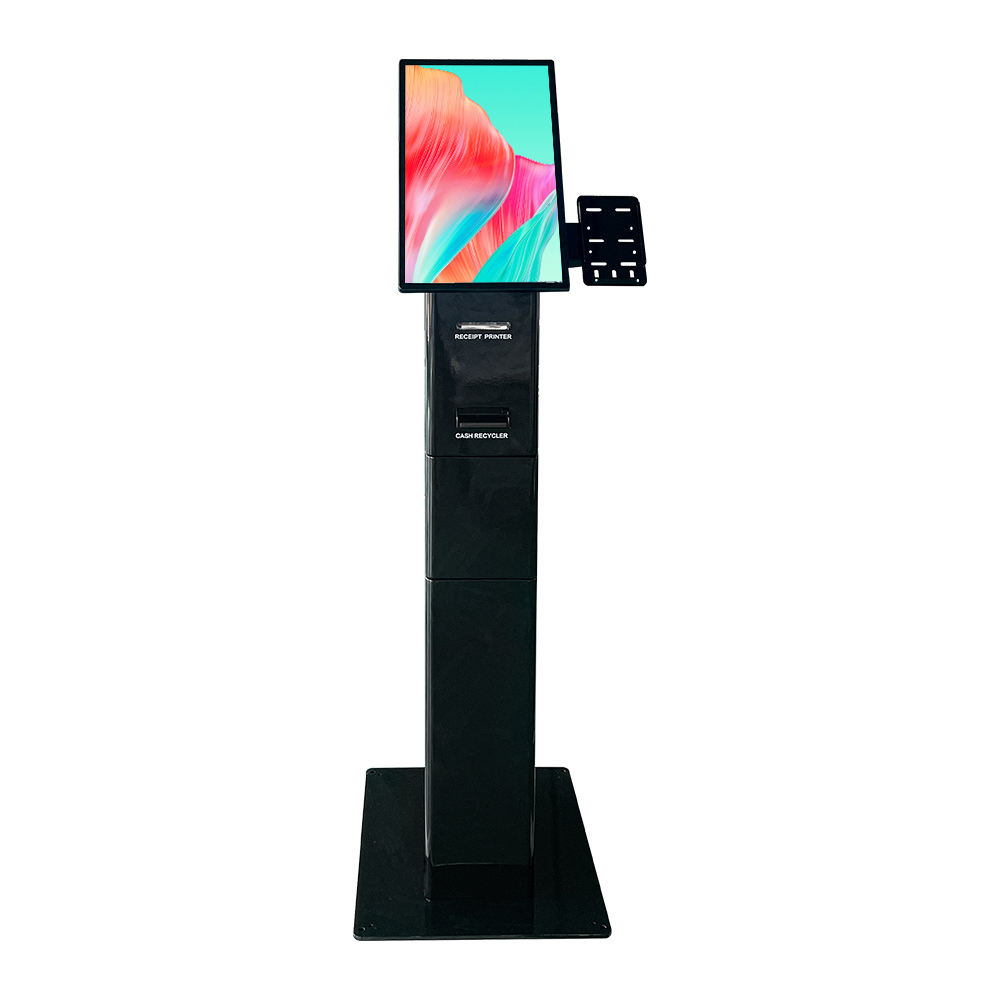
- US-K320FS-3 — 32″ curved floor-standing game redemption kiosk (Gaming & Entertainment / Banking & Finance).
- US-K236CB — 23.6″ floor-stand cash dispensing self-service kiosk.
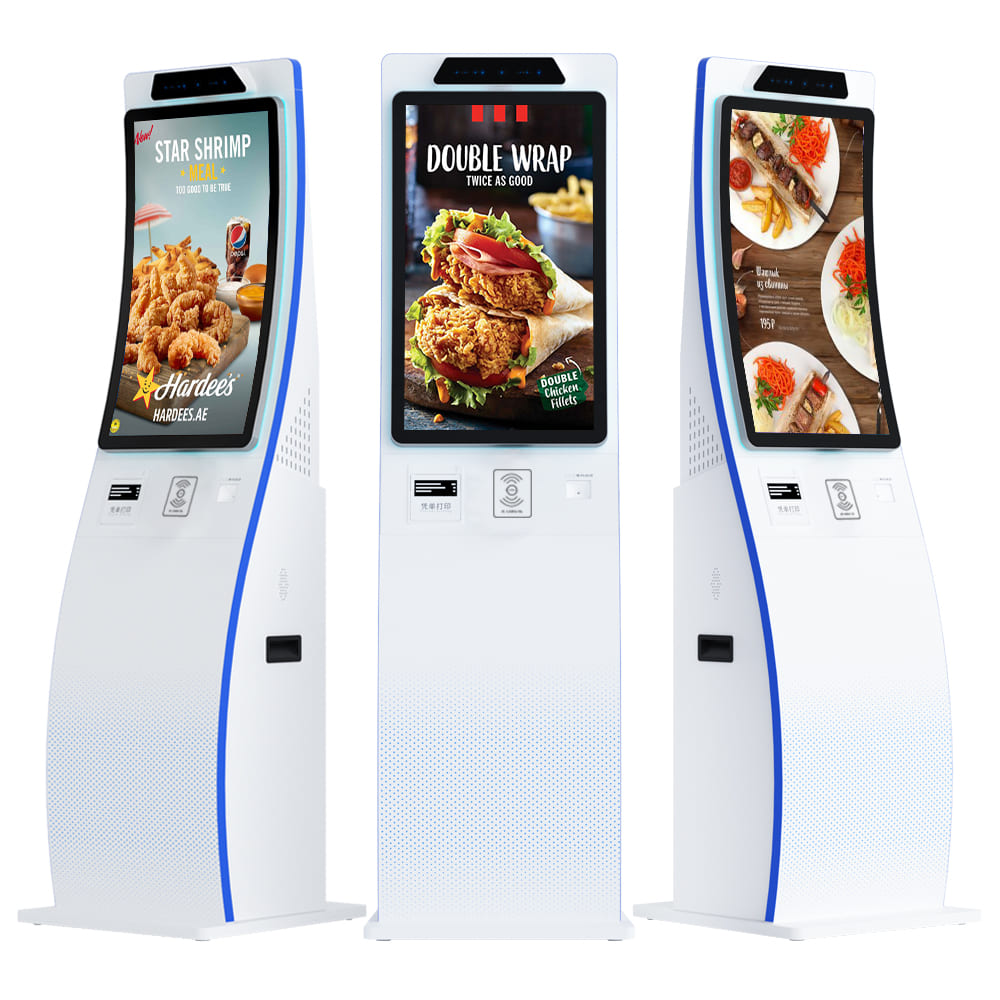
- US-K236CB-1 — curved-cabinet self-service machine.
- US-K430CB-1 — 43″ skill-game cabinet.
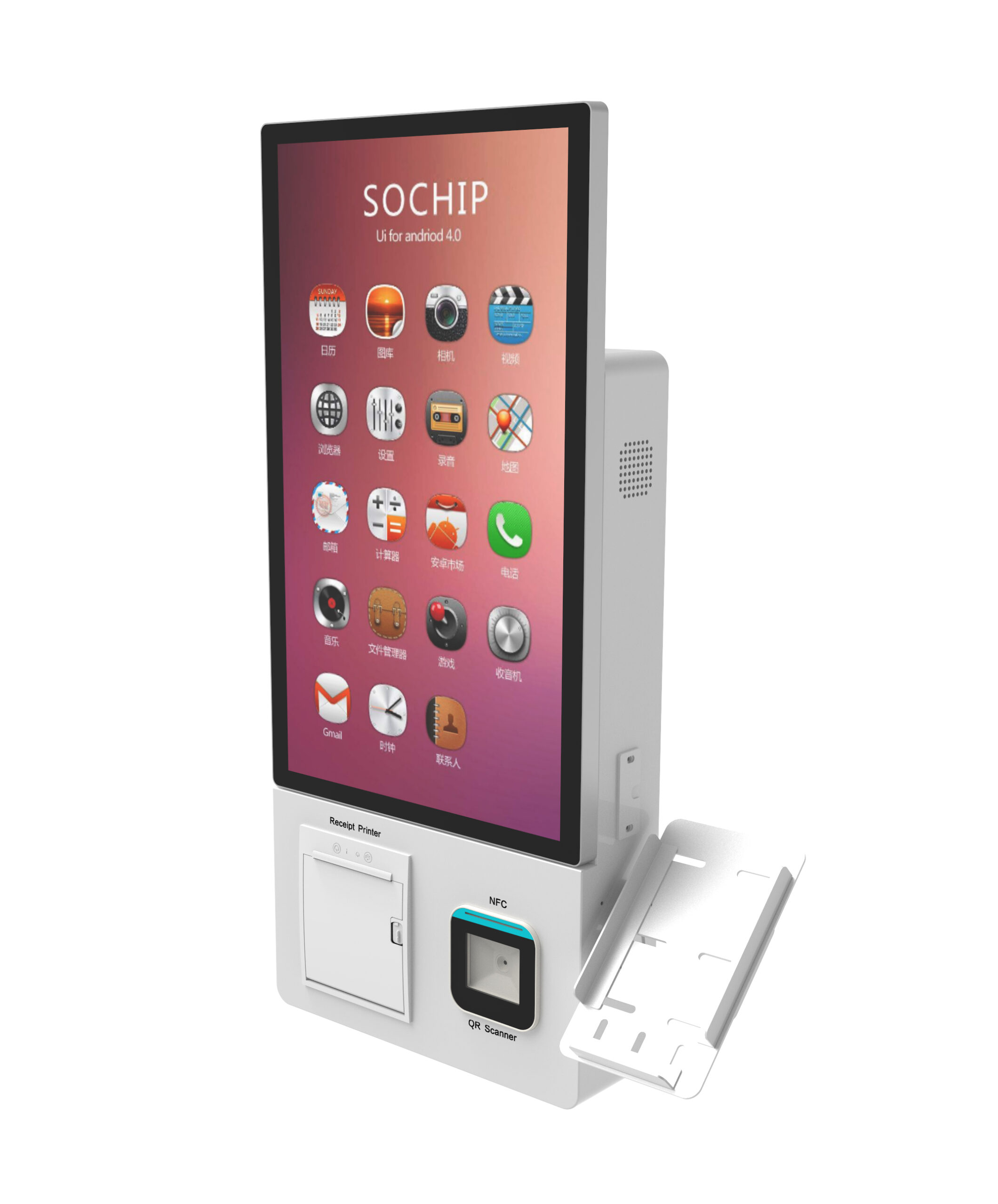
- US-K320WM — 32″ wall-mount cash redemption kiosk, where floor space is the constraint.
Minimum order quantity on these units is 1, with lead times typically in the 20–25 business-day range depending on configuration — useful when you are phasing a floor rollout rather than replacing everything at once.
Compliance and audit trail for AML-sensitive redemption
Redemption is the point on the floor where money moves fastest, which is exactly why it is the point regulators look at hardest. US casino operators run anti-money-laundering programmes under the Bank Secrecy Act and FinCEN rules; currency transaction reporting has long applied at the $10,000 threshold, and suspicious-activity reporting obligations run alongside it. A kiosk does not replace that programme — it either strengthens or weakens it depending on what it logs.
Regulators do not ask for a kiosk; they ask for records. At minimum, a redemption kiosk should hand compliance three audit artefacts:
- A serialised record of every ticket issued and redeemed, reconciled against the host.
- Transaction-level timestamps and amounts, retained to your jurisdiction’s retention period.
- A clean exception log — aborted conversions, partial payouts, retracted notes — separated from normal transactions so anomalies surface rather than hide in the totals.
Two honest caveats: this article is not legal advice, and the specific reporting forms, thresholds and retention periods vary by jurisdiction and by whether you operate slots, table games or sportsbook. Confirm your obligations with counsel and your gaming control board before specifying logging requirements.
Uptime and field operations on a busy floor
A redemption kiosk is only as good as its worst hour. High-traffic venues should plan around three operational realities:
- Consumables and jam access: ticket stock and paper-path access should be serviceable by floor staff, not only by a technician call-out.
- Spares strategy: printers and validators are the wear items. Holding a spare of each at the property turns a multi-hour outage into a swap.
- Response commitments: when you specify the kiosk, settle the spares and response terms at the same time — not as an afterthought once the machines are on the floor.
Our companion guide covers how those response and TCO terms are structured in procurement; the point here is that the operating plan and the hardware spec should be written together.
Is TITO better than coin for redemption?
For slots and high-traffic floors, almost always yes — TITO removes coin logistics and coin-induced downtime, and it produces a stronger audit trail. Coin still makes sense where small-denomination play is the point of the floor.
What modules does a TITO redemption kiosk actually need?
A bill validator, a thermal ticket printer, and — if the machine also pays cash — a cash dispenser. Each must integrate cleanly with your slot accounting system and expose usable audit events.
Can one kiosk handle both tickets and cash?
Yes. A chassis can be configured to accept tickets and notes on the way in and to pay out by ticket, by cash, or both, depending on the module set you specify.
Do redemption kiosks need gaming approval?
Requirements vary widely by jurisdiction, and firmware or module changes can trigger re-approval. Treat test-lab approval as part of the project schedule, not a formality, and confirm the list with your gaming control board.
What are the order terms?
On the gaming cash-handling models above, MOQ is 1 unit with lead times typically around 20–25 business days, configuration-dependent.
Next step
If you are replacing coin or aging cash-out kiosks on a gaming floor, the fastest way to a usable answer is a configured specification: tell us your payout model (ticket / cash / both), your note and ticket mix, and your jurisdiction, and we will map it to the right chassis and module set and return a quote and datasheet.
Request a quote, a datasheet or a sample configuration → contact our gaming and redemption team, or start from the US-K320FS-3 game redemption kiosk and we will adapt the enclosure to your floor.