Quick answer: Two quotes for the same 20-branch rollout can land three times apart, and the gap is almost never the vendor’s margin. It is scope. One quote prices a deposit-only cash module; the other assumes note recycling with extra cassettes and higher servicing complexity. One includes installation, duty and first-line support; the other stops at the factory gate. Until both quotes are decomposed into the same named buckets, headline price tells you nothing about which bid is actually cheaper to own.
Overview
Two quotes for the same 20-branch rollout can land three times apart, and the gap is almost never the vendor’s margin. It is scope. One quote prices a deposit-only cash module; the other assumes note recycling with extra cassettes and higher servicing complexity. One includes installation, duty and first-line support; the other stops at the factory gate. Until both quotes are decomposed into the same named buckets, headline price tells you nothing about which bid is actually cheaper to own.
This page does one thing: it turns a kiosk unit price into the seven buckets that move it, and gives you the exact spec line to request for each — so a shortlist decision can be made line by line instead of on the bottom number. For the full lifecycle model (integration, service, end-of-life), the companion piece is the bank self-service kiosk procurement TCO comparison .
Why your two bank branch kiosk quotes are 3x apart
A bank branch self-service kiosk cost is a sum of independently-scoped line items, not a commodity price. Three mechanisms create the spread:
- Scope mismatch inside a single word. “Cash recycling” in one quote can mean two cassettes and deposit-only in the other. “Certified” can mean the factory holds an EMC test report, or that the specific model has been certified for the destination country — different cost, different risk.
- The exclusions are invisible. Freight, import duty, in-branch installation, middleware licence, remote-management subscription, spare-parts kit and first-line field service are routinely left off one quote and bundled into the other. Bundled looks expensive; unbundled looks cheap until the purchase order grows.
- Deployment context changes the hardware. A cash-accepting kiosk in a high-footfall urban lobby needs a different cash module duty cycle, a brighter panel for glazed frontage and a faster service response than a low-traffic rural branch unit. If the vendor does not know your branch profile, it prices to a generic average — in either direction.
For scale context, Market Research Future’s bank kiosk market research notes that a fully functional multi-function kiosk with cash recycling capabilities falls in a USD 35,000 to USD 65,000 range. That is a market-level estimate for a category, published at marketresearchfuture.com — it is not a quotable price for your configuration and should never be used as the basis of a bid comparison. Separately, CDLATM’s published market commentary contrasts a global ATM market growing at roughly 3.6% CAGR with a self-service kiosk market growing at roughly 10.9% CAGR, which is useful for justifying the branch-transformation budget line, not for costing a unit.
The seven cost buckets inside a bank branch kiosk BOM
Every credible quote can be split into these buckets. Ask each vendor to do it in this order, against these columns.
| Bucket | What sits inside it | Spec line to request per bucket |
|---|---|---|
| 1. Chassis and metalwork | Sheet-metal gauge, weld and finish, anti-vandal and pry resistance, lobby pedestal vs wall-mount vs vestibule housing, cable management, ventilation | Material and gauge, finish spec, IP rating claimed, mounting type, footprint, weight, and whether the design is standard or tooled for this project |
| 2. Cash module | Deposit-only vs recycling, cassette count and capacity, note validation and fitness sorting, jam and reject handling, shutter and safe interface | Make and model number, deposit or recycling, cassette count, accepted note denominations and currencies, stated duty cycle, service interval |
| 3. Display and input | Panel size, luminance, touch technology, privacy filter, physical accessibility (reach range, keypad height), audio guidance | Diagonal size and brightness in nits, touch type, contrast, anti-glare or privacy treatment, and the accessibility standard the layout is designed against |
| 4. Compute and connectivity | Processor and memory grade, storage, thermal design, network failover, remote management agent, OS and imaging | CPU/memory/storage grade, OS and image, dual-network or failover capability, remote management agent and its licence ownership |
| 5. Payment and identity | Card reader, PIN pad, contactless, biometric capture, camera, receipt and passbook printing | Each interface standard supported, the certification each payment component carries, and which party owns the PCI DSS compliance scope |
| 6. Certification and compliance | EMC, electrical safety, payment scheme approval, accessibility, radio approvals for wireless modules — per destination country | A list of certifications held today , the exact certificate reference, the countries covered, and which are planned rather than held |
| 7. Integration, freight and support | Middleware or host connector, shipping, duty, on-site installation and commissioning, warranty term, spares kit, MTTR commitment | IncOTerm, whether duty is included, who installs, warranty duration and coverage, spares held locally, agreed MTTR and escalation path |
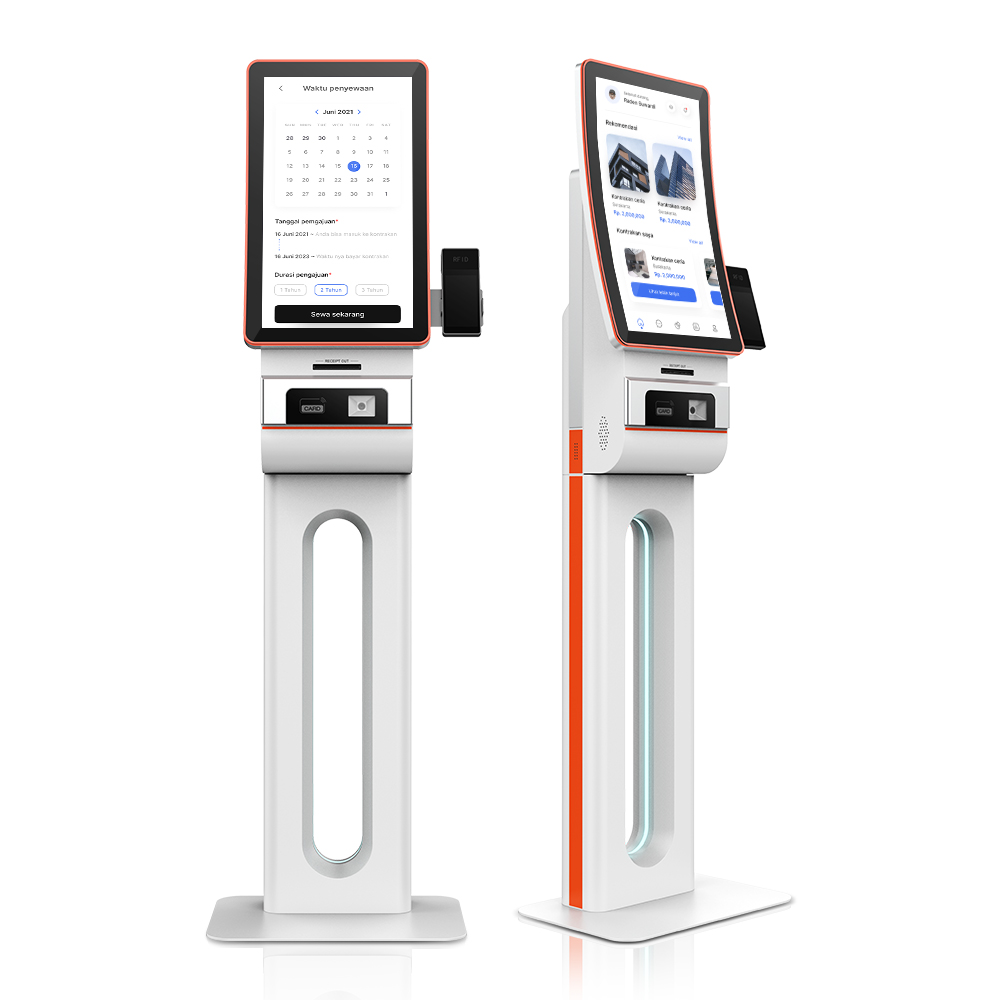
Bucket 2 is usually the largest single swing, and bucket 6 is the one most often mis-stated. When a cash-accepting unit is specified for a lobby with continuous footfall, the cash module’s duty cycle and the service interval are the numbers that determine whether the hardware survives the five-year plan — not the purchase price. A freestanding cash-handling platform such as the freestanding cash-handling self-service kiosk is scoped exactly along these lines, which is why the cash module make and model belongs in the quote body, not in an appendix.
The quote-normalising checklist to send back to every vendor
Before you re-score the shortlist, send this back to all bidders and require re-issue in identical format. This is the fastest way to kill the 3x illusion. For the wider tender structure — acceptance criteria, scoring weights and contract terms — pair this with the self-service kiosk RFP procurement checklist .
- Itemise the quote into the seven buckets above, one line each, with part numbers where a component is named.
- State the cash module make and model, deposit or recycling, cassette count, and accepted currency and denominations.
- State each certification held today with its reference, the countries covered, and which certifications are planned rather than held.
- State clearly whether freight, duty, installation, commissioning and first-line field service are included, optional or excluded.
- State the MOQ and lead time for the exact configuration quoted, in writing, with the validity period of the quotation.
- State the warranty duration, what it covers, and whether the cash module carries a separate warranty period.
- State the spare-parts list and the MTTR commitment, plus where spares are held relative to your branch footprint.
- List everything excluded that you would have to buy separately — middleware, licences, spares, SIM or connectivity, consumables.
Then re-request all quotes against this format and compare bucket to bucket. Where two bids differ in a bucket, you now have a specific question to ask instead of a price to negotiate. Note that no universal price, MOQ or lead-time figure applies across the market — any number in a quote is valid only for one configuration, one destination country and one validity window, so treat figures from different vendors’ marketing material as non-comparable by default.
The five configuration decisions that move price the most
If you need to close a budget gap without losing capability, these are the levers, in descending order of typical impact.
- Cash module: deposit-only vs recycling. Recycling adds cassettes, note validation and fitness sorting, and more servicing touchpoints — the single biggest swing in most bills of materials.
- Screen size and brightness. A larger, high-luminance panel for a glazed or daylight-facing lobby costs more than a standard indoor panel of the same diagonal.
- Compute grade. A transaction terminal and a full multimedia or interactive-teller-class device differ in board, memory, cooling and enclosure design.
- Payment and identity stack. Adding PIN pad, contactless and biometric capture lays on hardware, certification effort and integration work simultaneously.
- Certification scope. A single-country build versus a multi-country certified build changes test, documentation and approval effort — and changes which market you can deploy the same SKU into.
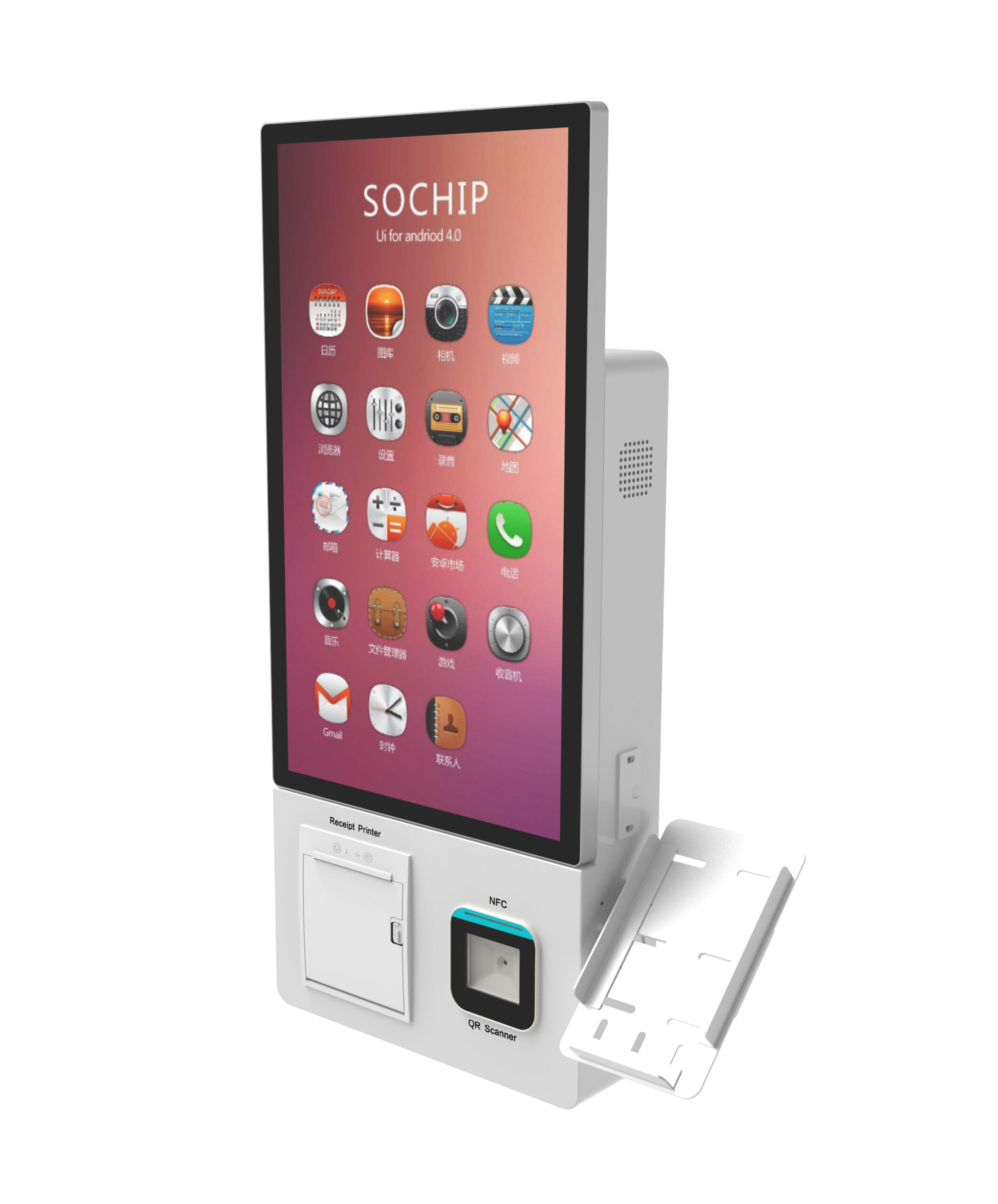
Each lever maps back to one bucket in the table above, which is what makes the trade-off arguable with finance: you are not “reducing the kiosk price”, you are removing a named capability with a named service consequence. Chassis and mounting choices matter here too — a wall-mount or compact footprint specification changes metalwork, cable routing and installation labour before any electronics are touched, as with the wall-mount self-service kiosk format for constrained branch layouts.
What the unit price leaves out: TCO beyond the quote
The lowest unit price frequently loses on total cost of ownership. Four items sit outside the hardware line and are usually the reason:
- Integration and middleware. Someone must build and maintain the connector to your host or branch system. Establish who owns it and who pays for change requests after go-live.
- Spare parts, MTTR and field service. Ask how quickly a failed cash module can be swapped, by whom, and at what contract cost — and whether that response time holds across your whole branch footprint, not just metro branches.
- Software licensing and remote management. Management agents, monitoring and OS support are often subscription lines that do not appear in a hardware quotation.
- End-of-life and migration. Ask how long the specific hardware revision will be supported and what the migration path is when it is not.
The full lifecycle model — including how peripherals, integration model and service model each shift TCO — is set out in the bank kiosk TCO comparison . Read that before finalising a shortlist; this page only decomposes the unit price.
Questions to put to every bank kiosk vendor before you shortlist
- Can you re-issue this quote itemised into the seven buckets, with part numbers for named components?
- Which certifications are held today, with references, and how does the certification scope change for each of our destination countries?
- What MTTR and spare-parts commitment will you sign in writing, and where are spares held?
- What is your MOQ and lead time for our exact configuration, and how long is this quotation valid?
- What is excluded from this price that we will have to buy separately?
- Which single configuration decision would you change to reduce cost, and what capability would we lose?
Common questions on bank kiosk quote comparison
Why do bank branch self-service kiosk quotes differ so much in price?
Because “kiosk” is a scope, not a product. Differences cluster in the cash module (deposit-only vs recycling), the certification scope actually held for your destination countries, and whether freight, duty, installation, middleware and support are inside or outside the number.
How much does a cash-recycling module add to a bank kiosk cost?
There is no universal figure — it depends on cassette count, note validation requirements, currency set and service contract. Request the module make and model, cassette count and duty cycle, then ask each vendor to price the identical module specification so the delta is comparable.
What should a kiosk cost breakdown include besides the unit price?
Integration and middleware ownership, software and remote-management licensing, spare parts and MTTR commitment, installation and commissioning, and end-of-life support horizon. These are commonly excluded from a hardware quotation.
Does certification scope change the cost of a bank self-service kiosk?
Yes. A single-country build and a multi-country certified build require different test, documentation and approval effort. Ask for certificates held today with references, and confirm which markets each certificate actually covers rather than accepting a general compliance statement.
Request a costed bank-branch kiosk quote
We will return a line-item costed quote — configuration by configuration, with MOQ, lead time and certification scope stated explicitly — so it can be compared directly against the other bids on your shortlist without a reconciliation exercise.
To make it accurate on the first pass, send: your branch count and the split between high-footfall and low-traffic sites, the transaction mix you intend to move to self-service, your cash handling requirement (deposit-only or recycling, currencies and denominations), the destination countries, and your required certification scope and service commitment.
Request a costed bank-branch kiosk quote (config, MOQ, lead time, certification scope) →