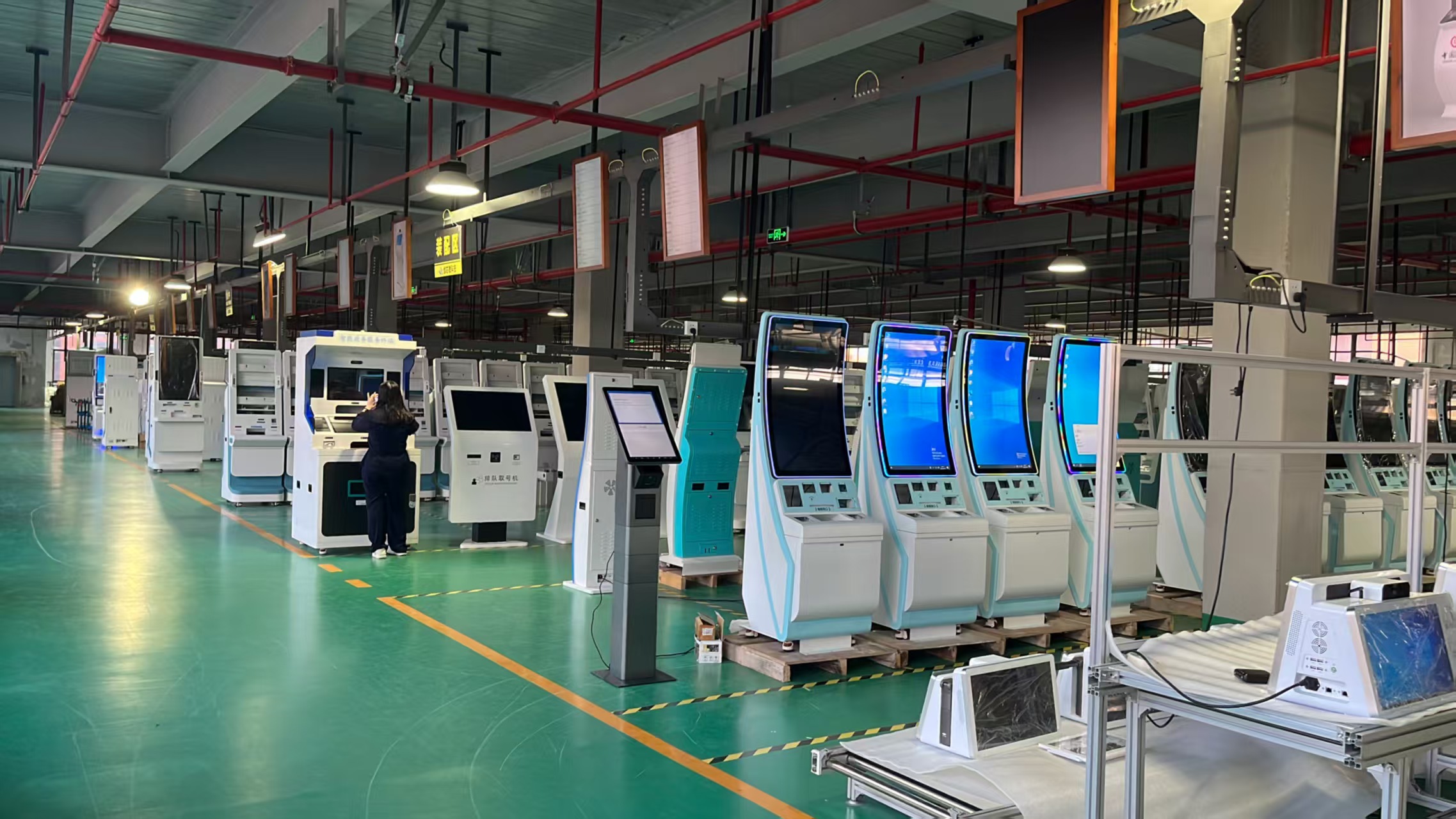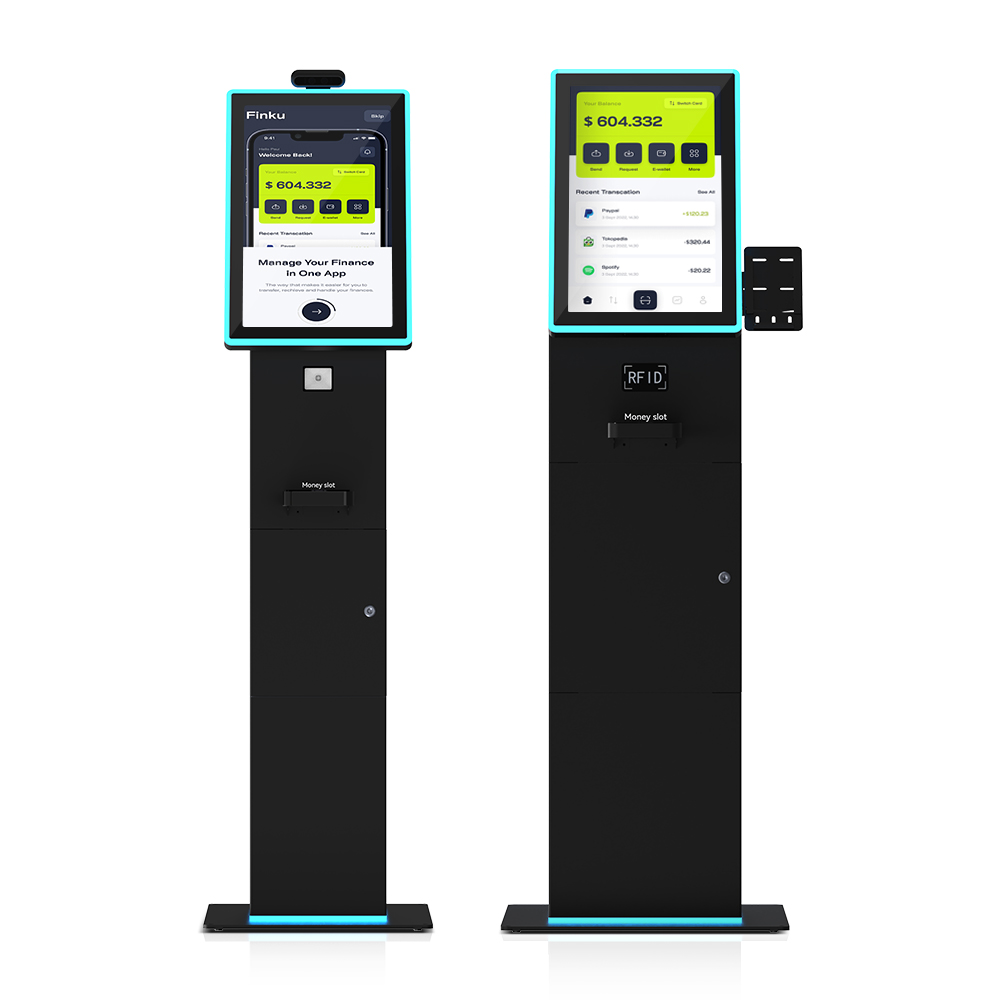
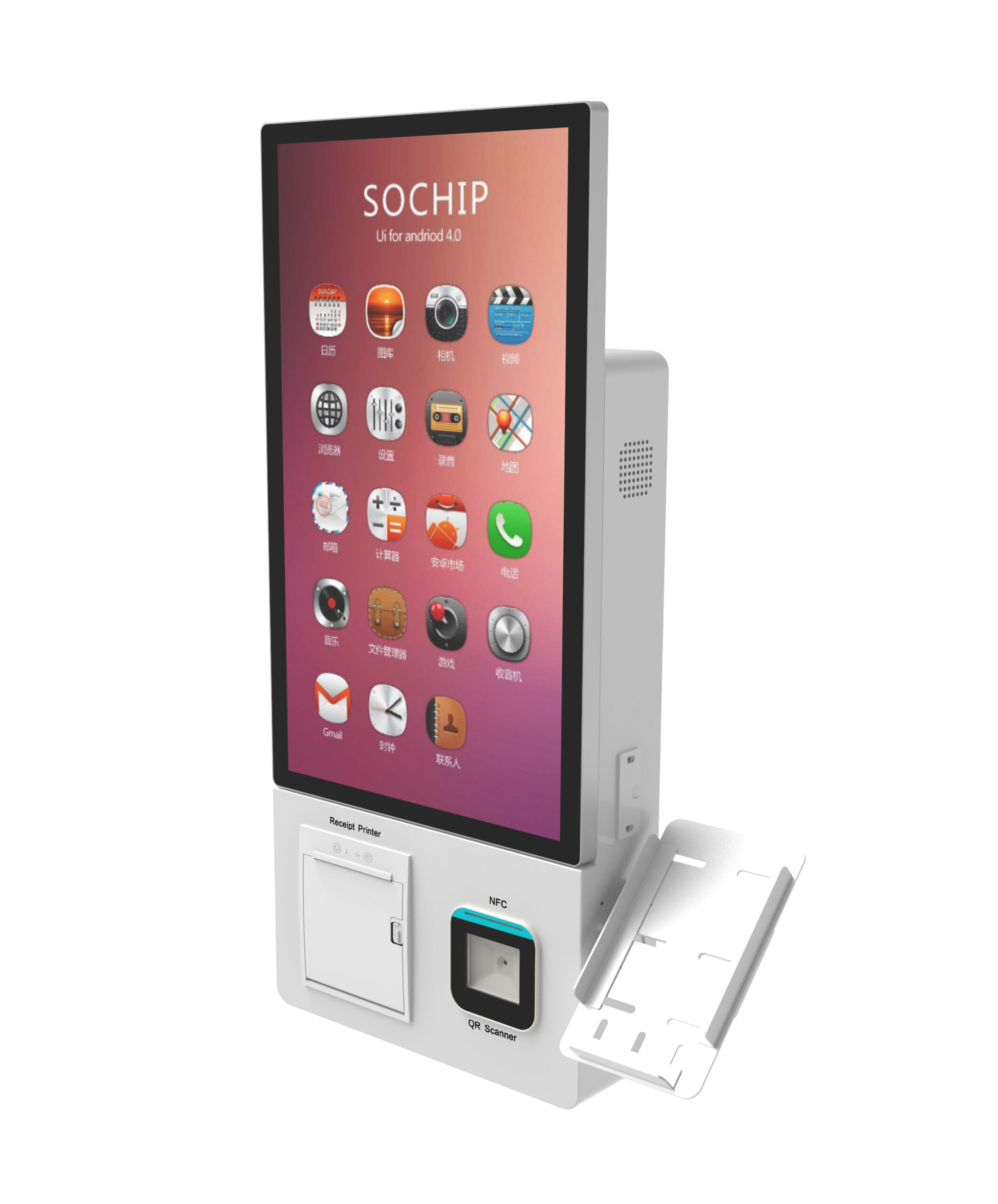
Quick answer: A bill acceptor takes cash in only and is the lowest-cost module per unit. A cash recycler accepts and re-issues the same notes, so the site pre-loads less cash and books fewer refill visits. A cash dispenser kiosk pays out from pre-loaded cassettes and is the simplest to service, but it ties up a float. Your transaction mix — deposit-heavy versus payout-heavy — notes handled per shift, and tolerance for servicing visits decide the pick. Unit price alone does not.
Bill acceptor, cash recycler or cash dispenser — which belongs in your cash recycling kiosk?
A bill acceptor takes cash in only and is the lowest-cost module per unit. A cash recycler accepts and re-issues the same notes, so the site pre-loads less cash and books fewer refill visits. A cash dispenser kiosk pays out from pre-loaded cassettes and is the simplest to service, but it ties up a float. Your transaction mix — deposit-heavy versus payout-heavy — notes handled per shift, and tolerance for servicing visits decide the pick. Unit price alone does not.
Everything below is a selection framework, not a quotation. No price, cassette capacity, cycle figure or certification is published here, because supplier-verified module data for a specific SKU is not yet available to us. Every number in your business case must come from the supplier’s written datasheet or your own site operations — we mark those points as verify with supplier throughout.
The core difference in bill acceptor vs cash recycler: cash flow direction
A recycler closes the cash loop. Notes accepted at the intake are authenticated, sorted into fit and unfit, and routed to a stacker or recycling drum that can feed the payout path. The same physical notes that came in go back out. The practical consequence is that a retail back office or branch deposit kiosk can run for longer on one service visit and needs a smaller starting float, because the payout inventory is replenished by customers rather than by a cash-in-transit (CIT) delivery.
A bill acceptor kiosk only accumulates. Every accepted note stays in the box until someone empties it, and any payout side of the kiosk — if there is one — is fed from a separate cassette that a courier or an attendant must top up. That single difference cascades into three things:
- Cassette count and note-path complexity — a recycler needs routing, stacking and re-feeding mechanisms where an acceptor needs a straight transport to a single box.
- Service-call frequency — acceptor boxes fill up and payout cassettes empty on a schedule; recyclers self-replenish within their capacity band.
- CIT exposure — every additional delivery or collection is a cost and a risk event, both of which are line items in your payback model.
Verification method: ask the supplier to describe the module’s note states end to end — accepted, escrowed, retracted, rejected — and what happens on a double-feed or a note that fails authentication. If that behaviour is not documented, it is not a specification.
Self-contained comparison: bill acceptor vs cash recycler vs cash dispenser
| Bill acceptor | Cash recycler | Cash dispenser | |
|---|---|---|---|
| Upfront cost drivers (verify with supplier) | Single note path, one box, smallest sensor set, one motor group, simple controller interface. The lowest module capex of the three. | Note recognition and fitness sensors, escrow and retry logic, recycling drum or stacker assembly, more motors and cassettes, richer controller firmware. The highest consideration, driven by mechanism count and firmware complexity. | Cassette hardware, locking, dispensing rollers and payout sensors. Lower than a recycler because there is no intake path, but above an acceptor because of cassette count and float hardware. |
| Cash capacity handled (verify with supplier) | One accumulating box. Capacity is a function of box size and note bundle thickness — a supplier-confirmed figure only. | Accept and re-issue within a cassette/stacker band that depends on note mix and fitness rejection rate. Never treat a nominal capacity as an operational capacity. | Cassettes that only ever deplete. Capacity is straightforward but must be sized against peak payout days, not average days. |
| Best-fit scenario | One-way intake: vending-style payment, donation, ticketing, deposit-only where the site is happy with a fixed collection schedule. | Deposit automation where the same site also pays out: retail back office, staffed branch deposit, mixed intake/payout lobbies. | Redemption, cash-out and till-payout tasks where intake is not the problem: gaming-floor redemption, change-making, staff payout. |
| Maintenance and refill profile | Simple jam access, cheap wear parts, but the box must be emptied on a schedule and the emptying is a security event. | More cleaning points along the note path, recycler wear parts, and cash usually should be removed before deep service. Fewer scheduled CIT visits. | Fewest jam types, but cassette refill logistics are a standing operational task regardless of transaction volume. |
| Ask the supplier | Accepted denominations and mixed-bundle handling; escrow/retry behaviour; jam access route; interface protocol. | Note-fitness test standard; rejected-note destination; recycler consumable life; behaviour when a denomination runs out. | Cassette locking standard; payout accuracy test method; refill time; whether cassettes are site-swappable. |
Two rows in this table usually decide the whole project: whether cash must be removed before service, and whether the chassis locks you to a single module family. The second one is a design decision, not a module decision — see the field serviceability checklist in Modular Kiosk Design: Field Serviceability Checklist .
Cash recycling kiosk ROI: a payback model you can defend to finance
Do not accept a payback claim from any supplier, including us. Build the case from your own numbers with this formula:
Extra module capex ÷ (CIT visits avoided + labour minutes saved + float reduction value) = months to payback
Each term has a source, and each source is either your operations team or the supplier’s written data:
- CIT visits avoided per site per month — verify with your site operations. Compare scheduled collections before and after recycling, not theoretical maximums.
- Cost per CIT visit — verify with your cash logistics provider. Include the security handling component, not just transport.
- Attendant or teller minutes per refill or collection — verify with your site operations. Include the dual-control time if two staff must be present.
- Float reduction value — verify with finance. A recycler reduces the standing float; assign it your internal cost of capital, not a marketing number.
- Extra module capex — verify with supplier. Ask for the delta between the acceptor configuration and the recycler configuration in the same chassis.
Separate one-time costs (module, integration engineering, certification testing, initial spares kit) from recurring costs (consumables, service contract, note-path cleaning). Conflating the two is the most common way an internal ROI case collapses in review. For the line-item structure a bank-side committee will expect, the existing breakdown in Bank Branch Self-Service Kiosk Cost: Line-Item Breakdown maps directly onto this model, and the wider ownership view sits in Bank Self-Service Kiosk Procurement: TCO Comparison .
Sensitivity matters more than the base case. At low deposit volume with a reliable collection schedule, an acceptor plus planned CIT often wins. The recycler case strengthens as deposit volume rises and CIT frequency becomes the binding cost. Model both.
Cash recycling module market landscape: what is actually supply-constrained
Treat the cash recycling module market as four supply layers, because they have different supplier bases and different replacement cycles:
- Note recognition and transport engine — the sensor set and firmware that decide what you can accept. This is the hardest layer to second-source.
- Recycler drum or stacker assembly — mechanical, wear-prone, and the layer most likely to change design between platform generations.
- Cassettes and locking hardware — commodity-adjacent, but the interface is proprietary per platform, which is how lock-in starts.
- Controller firmware and host interface — where your integration effort concentrates and where an EOL announcement hurts most.
Published market-size figures for this space vary widely because analysts define the category differently — module-only versus complete kiosk, banking versus retail, accept-only versus recycling. Before quoting any figure in an internal document, confirm the analyst’s category definition and currency year; a number without a definition is not evidence.
Probe supplier reality with four questions: which named module platform is offered and what is its stated support and end-of-life window; what is the roadmap for a new note series or denomination change; what spares availability commitment is written into the contract; and does the OEM design around a single module source. The long-tail risk is documented in Kiosk Spare Parts End of Life Management: Fleet Checklist , and it should be read before, not after, the launch spec is signed.
Cash recycler Einzelhandel: what German retail buyers screen for first
For a cash recycler einzelhandel deployment, German-speaking retail procurement typically screens in this order: back-office cash process fit, staff acceptance, and in-country service-partner coverage — before unit price. That ordering is rational. A back-office recycler is judged on cash-office labour minutes, not on customer-facing throughput, so the business case is a staffing case.
Put these questions to any module supplier:
- Is integration documentation available in German, or only English?
- Where is the spare-parts depot, and what response time is contractually committed?
- What is the conformity documentation route for the assembled kiosk, and who holds the declaration for the finished unit?
- Which party owns the firmware configuration and the field-service procedure?
Keep conformity claims precise: confirm the applicable directive and who signs the declaration for your assembled kiosk, rather than assuming a duty transfers with the module. Where card data is in scope, the nine-point review in PCI DSS Scope for Branch Kiosks: 9-Point Checklist is the right companion document.
Choosing a cash handling kiosk OEM: module flexibility, MOQ and your exit path
The OEM/ODM decision reduces to three risks you can name in a contract: single-module lock-in, tooling and IP ownership, and MOQ versus pilot volume. Ask any cash handling kiosk OEM whether the chassis can accept a different acceptor, recycler or dispenser platform later; who owns the tooling, firmware and artwork; and what happens to spare-parts supply if the programme ends. That analysis is covered in full in OEM vs ODM Kiosk Manufacturing: Tooling, IP & Exit Risk — the point here is simply that module choice and manufacturing model are the same conversation.
Lead time is not a fixed number either. It moves with module platform availability, tooling scope, and how much certification testing your market requires; the staged view is in Self-Service Kiosk Delivery Lead Time: 9-Stage Checklist .
Cash dispenser kiosk vs recycler: the payout-side decision
A payout-only build has its own logic. Where intake is not the problem — redemption counters, change-making, staff till payout — a cash dispenser kiosk removes intake complexity and reduces the module cost, at the price of a standing float and scheduled cassette refills. Compare it against a recycler on three axes: capital tied up in cassettes, cassette refill logistics, and note quality. If your site’s notes are frequently rejected as unfit, recycling loses much of its advantage and payout from verified cassettes becomes the safer design.
Gaming-floor redemption is a common payout-only case; cabinet platforms such as the SLOT-GAME CABINET and SKILL-GAME CABINET are configuration examples where the payout module decision sits inside a larger cabinet specification. Request the module datasheet for whichever cabinet you shortlist rather than assuming a payout configuration from a product name.
Matching module type to kiosk format
- Desktop and back-office units — low-volume intake or deposit, staffed locations, short service paths.
- Wall-mount units — redemption and payout where floor space is constrained.
- Freestanding cash handlers — higher-volume deposit or mixed intake/payout where the recycler case is strongest.
- Currency exchange units — where accepted and re-issued notes are the product itself, not a side function.
Verification step before any production order: request the module datasheet plus a sample unit, and test it with your own note mix, your own controller and your own service procedure. A demonstration with clean notes on a bench does not predict field behaviour.
FAQ: cash recycling kiosk questions buyers actually ask
What is a cash recycling kiosk and how is it different from a cash dispenser kiosk?
A cash recycling kiosk accepts banknotes, authenticates them and re-issues accepted notes for payout, so intake replenishes the payout inventory. A cash dispenser kiosk only pays out, from cassettes that must be refilled on a schedule. An acceptor-only kiosk only takes cash in. The difference that reaches the P&L is cash flow direction, not hardware appearance.
How do I calculate cash recycling kiosk ROI without supplier data?
Collect four site numbers first: CIT visits per month before and after, cost per CIT visit, attendant minutes per refill, and the float your site must hold. Then divide the extra module capex by the monthly savings from visits avoided, labour saved and float reduction. Every input must come from your operations team or a supplier datasheet — mark each one in the model so reviewers can see its source.
Is it better to buy a bill acceptor or a cash recycler for a retail back office?
Conditionally: at low deposit volume with a dependable collection schedule, an acceptor plus scheduled CIT is usually the cheaper design. The recycler case strengthens as deposit volume rises, CIT frequency increases, or the site also needs to pay out. Validate the break-even with your own volumes rather than a supplier’s reference case.
What MOQ and lead time should I expect from a cash handling kiosk OEM?
Both move with the module platform, the amount of custom tooling, and the certification testing your target market requires. A standard chassis built around an existing module platform behaves very differently from a bespoke enclosure. Exact MOQ and lead time must come from the supplier’s written quote for your configuration — treat any verbal figure as indicative only.
Does a reissued note create a counterfeit or fitness risk?
Note authentication and fitness decisions are module-level specifications. Ask the supplier which test standard the module is validated against, what happens to a note that fails authentication, and whether rejected notes are routed to a separate retract box. Confirm the stated test standard in writing; do not infer it from the product category.
Can one kiosk chassis support both a recycler and a dispenser?
That is a chassis and controller question, not a module question: it depends on shared cassette bays, mounting interfaces and whether the firmware supports both configurations. Ask whether the design allows a module swap after launch, and confirm it for the specific SKU — a general capability statement is not a commitment for your build.
Next step: request a quote, spec sheet or sample
Request a quote, spec sheet or sample for our cash-handling kiosk modules. To get an accurate reply rather than a generic brochure, send five things: your target market (US or DACH), your kiosk format (desktop, wall-mount or freestanding), expected transactions per day, the note denominations you must handle, and whether you need intake, payout or both.
Prices, cassette capacities, cycle figures and lead times are quoted per configuration once the requirement is confirmed — we do not publish blanket numbers, and we will not quote a payback result we cannot support. If you are still validating the module choice, start with the cash-module and chassis cost structure in the bank branch cost breakdown and the ownership model in the bank kiosk TCO comparison , then bring your filled-in assumptions to us for a configuration-specific quote.