Quick answer: A self-service currency exchange kiosk is worth deploying when a location has predictable international footfall, a cash-heavy transaction mix, and staff costs high enough that a teller window cannot cover 24/7 demand. In 2026 the decision is no longer “kiosk or counter” — it is which configuration the site can support: how many note denominations it must hold, which compliance regime applies at that jurisdiction, and whether the enclosure can be serviced on-site without removing the unit from the floor. Spec those three first; screen size and branding are last.
Overview
A self-service currency exchange kiosk is worth deploying when a location has predictable international footfall, a cash-heavy transaction mix, and staff costs high enough that a teller window cannot cover 24/7 demand. In 2026 the decision is no longer “kiosk or counter” — it is which configuration the site can support: how many note denominations it must hold, which compliance regime applies at that jurisdiction, and whether the enclosure can be serviced on-site without removing the unit from the floor. Spec those three first; screen size and branding are last.
Why FX automation is moving now
Start with site-level evidence: international footfall, current exchange transactions, staffing cost, cash servicing cost and licensed operating scope. This guide does not supply a verified market forecast or a measured Usingwin FX deployment result. Model the pilot from your own demand and service records rather than using an uncited global market estimate.
At the same time, travellers have been trained to expect self-service across check-in, bag drop and immigration. A currency desk that closes at 22:00 in a terminal that runs international arrivals until 03:00 is now a visible service gap, not an accepted constraint. For hotel groups, the pain is different but sharper: front-desk staff being pulled into cash handling during peak check-in, and a vault balance that nobody on the night shift is authorised to reconcile.
What this means for a procurement decision: the buyer is no longer only a bank or a licensed money-services business. It is increasingly an airport operator, an F&B or retail concessionaire with an FX licence, a casino cage operator moving into the arrivals hall, or a hotel group with a licensed partner. Each of those has a different tolerance for compliance risk and a different service model.
Scenario fit: which site actually supports a kiosk
Before comparing hardware, review the following four conditions as a procurement checklist. They are not a scored prediction of return on investment or a measured decommissioning timeline.
- Transactional density. International arrivals and departures with dwell time. Measure eligible exchange demand and compare it with operating costs; a passport mix alone does not establish payback.
- Cash persistence. The site must already handle physical cash at scale. A property moving to a fully cashless F&B operation has no reason to add a cash-recycling FX terminal.
- Licensing and reporting capability. Someone on site — or a partner — must hold the money-services authorisation and file the reports. Treat this as a prerequisite for project review.
- Service access. Power, data, a floor area with rear or front service clearance, and a route for the cash-in-transit crew that does not cross the passenger queue at peak.
Airport arrivals vs. hotel lobby: how the requirements diverge
| Decision criterion | Airport / transit | Hotel & hospitality |
|---|---|---|
| Traffic profile | Sharp peaks tied to flight banks; burst throughput matters | Longer dwell, lower volume, spread across the day |
| Currency pairs held | Broad basket; inbound currency often needs to leave the terminal same day | Narrower basket; local currency out, one or two majors in |
| Positioning | Concourse / arrivals hall, high-visibility, must meet wayfinding and accessibility rules | Lobby or business centre, must match interior design language |
| Access control | Airside access permits, escorted service visits, security screening of technicians | Front-desk or duty-manager access, 24/7 staffing present |
| Failure tolerance | Very low — a dark kiosk in a terminal is an operator-relations problem | Moderate — front desk can cover during a fault window |
| Cash logistics | Coordinated with airport CIT rules and windowed access | Combined with the property’s existing cash cycle |
The practical consequence: an airport unit is specified for throughput, serviceability under escort and remote monitoring. A hotel unit is specified for footprint, aesthetics and a lower-capacity cash module that the existing front-office process can reconcile. Do not buy the same configuration for both and expect the same result. Hotel-specific requirements — identity capture, room-card issuance and PMS integration — are covered in our hotel self check-in kiosk requirements guide .
Compliance: the specification you cannot cut
This is where kiosk projects fail after they are installed. The hardware must be able to enforce the rules that apply in the jurisdiction, and the operator must be able to evidence them. The kiosk does not create the obligation — it must not obstruct it.
These examples are review prompts, not a complete statement of the current law. The licensed operator must confirm applicability, aggregation, identification and recordkeeping rules before setting transaction limits:
| Jurisdiction | Regime | Threshold / obligation an FX kiosk must support |
|---|---|---|
| United States | FinCEN — MSB rules | Electronic filing of FinCEN Form 112 (Currency Transaction Report) for cash-in or cash-out transactions, or multiple transactions, totalling more than USD 10,000 in one business day for or on behalf of one person; separate suspicious-activity reporting obligations apply. Review FinCEN guidance with the operator; this reporting threshold is not an anonymous-use allowance or the MSB registration threshold. |
| Saudi Arabia | SAMA money-exchange rulebook | Confirm licensing, customer identification, membership, due diligence and applicable limits against the current SAMA money-exchange rulebook with the licensed operator; do not configure a kiosk from a historical threshold alone. |
| European Union | AMLD framework, transposed nationally | Customer due diligence triggers vary by member state; identity capture and record retention must be supported at the terminal where required |
What this means at the hardware and software level, and what to put in the RFQ:
- Identity capture path. If the jurisdiction requires CDD above a threshold, the kiosk needs a document reader and/or a means to route the customer to an assisted step — not a dead end.
- Transaction limits and velocity rules configured per currency pair, per customer, per day, adjustable by the operator without a firmware project.
- Auditable transaction logging with export that your compliance officer can reconcile against the CIT and vault records.
- Rate-of-exchange governance. The rate displayed and applied must be centrally controlled and time-stamped; agree permitted cache age, timestamping and stale-rate blocking with the operator.
- Record retention that matches the retention period of the operator’s licence.
Confirm each of these against your own regulator before you sign a hardware PO. This article is a procurement checklist, not legal advice — jurisdictions differ, and thresholds change. For the payment-side audit trail, pair this with our payment kiosk hardware and cash integration guide .
Specifying the hardware: the questions that decide the unit
Once compliance is settled, the remaining specification work is about cash physics and service model.
Cash modules
Determine three numbers before you talk to any supplier: how many note denominations the site must hold simultaneously, the maximum value the vault must hold between CIT visits, and the acceptance/dispensing split (how much traffic is local-currency-in versus foreign-currency-out). Those three numbers, not the screen size, determine the chassis. An arrivals hall with a broad currency basket needs far more cassette positions than a hotel lobby exchanging two majors. If you are still comparing cash-module architectures, start with cash recycling vs. cash deposit machine before you fix the cassette count.
Uptime and serviceability
Ask for the mean time between jams under your own note mix, not a laboratory figure. Then ask how a jam is cleared: front access, rear access, or does the unit have to be moved? In an airside deployment, a fault that requires moving the kiosk to a workshop is a multi-day outage. Modular cash modules and note-path access from the front are worth more than a marginal cost saving on the enclosure.
Software integration
The kiosk is the front end. It has to talk to a rate engine, a transaction ledger, and the operator’s reporting stack. Confirm the interface model early — API availability, whether the rate feed is pushed or polled, and who owns the application layer. An OEM/ODM supplier that ships the chassis and the cash modules but not the application should say so plainly, so you can budget the software work separately.
Accessibility and site compliance
Reach height, screen angle, tactile or auditory guidance where local rules require it, and the floor fixing detail. In an airport, accessibility rules are enforced; in a hotel, the constraint is often the interior design review. Retrofitting either after the enclosure is tooled is expensive.
Risk and de-risking
| Risk | What it looks like | How to de-risk before the order |
|---|---|---|
| Licensing not in place | Kiosk installed but not legally permitted to trade | Confirm the money-services authorisation and reporting workflow before tooling |
| Note mix not matched to cassettes | Frequent fills, jams, poor customer experience | Run a one-week manual transaction log at the site and size cassettes from real data |
| Service model assumed, not agreed | First fault becomes a week-long outage | Write the response-time and spares commitment into the contract |
| Rate governance gap | Audit finding or customer dispute | Agree rate authority, timestamps, permitted cache age and stale-rate blocking |
| Integration underestimated | Delivery slips by a quarter | Confirm who writes the application layer and test the API against a sandbox early |
| Pilot not defined | Single unit judged on anecdote | Agree the metrics — transactions per day, average ticket, uptime — before installation |
Where Usingwin fits
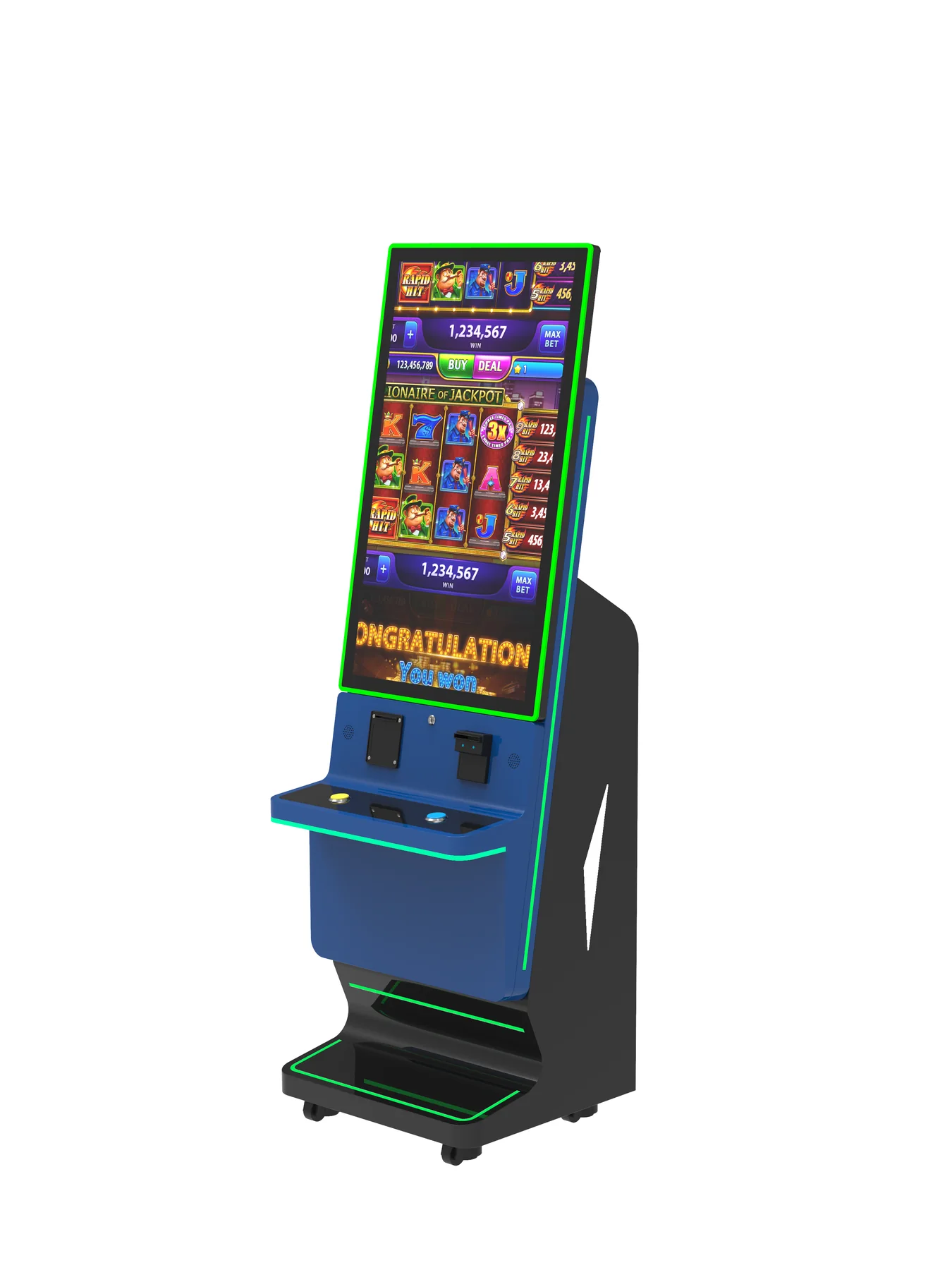
Usingwin manufactures OEM/ODM self-service and cash-handling hardware for FX, hospitality, gaming and retail deployments. The US-K236CB-2 currency exchange kiosk is built for hotel, travel and finance environments, with configuration-based OEM/ODM on the enclosure, hardware, peripherals and branding — so the cassette count, identity-capture path and application-hosting arrangement follow your project configuration rather than a fixed catalogue SKU. Minimum order is one unit and lead time runs 20–25 business days, which makes a single-site pilot realistic before you commit a concourse roll-out.
Next step: send us the site profile — location, licence regime, note denominations, peak transactions per hour and whether you need the application layer — and we will return a configuration with a datasheet and a pilot quotation.
- Product page: US-K236CB-2 Currency Exchange Kiosk
- Specification download: US-K236CB-2 original specification (PDF)
Request a quote or a sample configuration through the product page — tell us the jurisdiction and the note mix, and we will tell you which configuration is manufacturable and which parts of your requirement need a software partner rather than a hardware change.
FAQ
Does a currency exchange kiosk remove the need for a money-services licence?
No. The licence obligation sits with the operator, not the machine. The kiosk must be able to enforce the limits and produce the records the licence requires, but it does not confer authorisation.
What is the minimum order quantity for an OEM/ODM FX kiosk?
Usingwin quotes from one unit, which supports a genuine pilot at one site before a multi-site roll-out.
How long does delivery take?
For the US-K236CB-2 configuration, lead time is 20–25 business days from confirmed specification. Final lead time depends on the selected peripherals and any application work.
Can the same kiosk serve an airport concourse and a hotel lobby?
The chassis family can, but the configuration should not be identical. Airport units are specified for throughput, escorted serviceability and remote monitoring; hotel units are specified for footprint, finish and reconciliation against an existing front-office cash process.