Quick answer: A kiosk OEM quote is only as good as the duty assumption behind it, so at shortlist stage in 2026 you should treat the tariff line as a negotiated variable in the contract — not a fixed input you accept with the unit price. A quoted unit cost that arrives without a stated duty assumption is an estimate, not a commitment.
Why 2026 Tariff Exposure Changes Your Kiosk BOM Math
A kiosk OEM quote is only as good as the duty assumption behind it, so at shortlist stage in 2026 you should treat the tariff line as a negotiated variable in the contract — not a fixed input you accept with the unit price. A quoted unit cost that arrives without a stated duty assumption is an estimate, not a commitment.
No tariff rate, HTS code or effective date is quoted anywhere in this article, deliberately. Rates, measures and their scope change, and the only rate that matters is the one in force on the day your goods clear customs. Your freight forwarder or customs broker must confirm that rate in writing against your own classification before you sign anything.
Three line items do most of the moving on a kiosk BOM: the display and touchscreen assembly, the payment or cash-handling module, and the enclosure metal content. On a payment-enabled self-service unit, those three can dominate the import value of the machine — which is why contract clauses written for “the kiosk” as a single unit frequently misallocate the risk.
What follows is a pre-signature checklist for procurement and product managers, not a tariff explainer. Each step produces something you can attach to a purchase order or send back to the OEM as a written question.
Step 1 — Map Every Tariff-Exposed Line Item in the Kiosk BOM
Split the BOM into tariff-exposed and non-exposed lines before you discuss price at all, because clause negotiation is only effective when it targets the items that actually move landed cost. A single blended “kiosk” price hides which lines carry the risk and by how much.
Isolate these lines first and treat each as its own risk item:
- Touchscreen and display assembly, including the panel and any bonded glass or frame
- Payment module, EMV reader, or card reader assembly
- Cash acceptor, recycler or dispenser module, where the unit handles notes or coins
- Mainboard, PCBA and any separately shipped control electronics
- Enclosure metal, sheet metal sub-assemblies and stands
- Cabling, connectors and harnesses
For each exposed line, record three things in the same table: country of origin, supplier tier (Tier 1 OEM versus sub-supplier), and whether a qualified alternate source exists today. Any line sourced from a single country with no alternate is your highest-risk item, and it is the line that should drive your clause wording.
One caution: do not assume a component’s category determines the measure that applies to it. Trade measures are written with specific scope, exemptions and exclusions, and whether your touchscreen assembly or cash module falls under a general measure or a product-specific one has to be confirmed with your broker, not inferred from the part name. If your deployment is cash-accepting, the module-level risk map in our cash handling kiosk buying checklist is a useful cross-check on which modules you are actually importing.
Step 2 — Get the HTS Classification Confirmed Before You Sign
An unconfirmed HTS classification is the most common reason a quoted kiosk price and the final landed cost diverge, so treat classification as a pre-signature deliverable rather than a shipping-desk detail. If nobody can show you the classification in writing, the price is not comparable to any other quote you hold.
Run the sequence in this order:
- Ask the OEM for the classification used on prior US shipments of a comparable configuration, with entry documentation rather than a verbal answer.
- Have an independent broker review that classification against your specific configuration — a different screen size, a different payment module or an added cash recycler can change how the goods are described.
- Ask explicitly whether the touchscreen assembly and the payment module clear under separate lines or as one machine, and get the broker’s answer in writing.
- Build re-verification into the contract: classification is re-checked at each shipment, not once for the life of the agreement.
Classification can change with configuration and with the measures applied to a heading, so a classification confirmed for a previous build does not automatically carry to the next one. If the OEM or broker cannot produce prior entries, mark the classification unverified in your comparison sheet and price that uncertainty as risk.
Two further cost components belong on the same worksheet: the merchandise processing fee and the harbor maintenance fee, where applicable. These are charged on the customs value and are independent of the ad valorem rate, so they move when your declared value moves — ask who absorbs them in the quote.
Step 3 — Decide the Price Clause: Fixed vs Floating
A fixed price clause buys certainty but prices in the OEM’s worst-case duty assumption, while a floating clause tracks the duty actually paid and shifts that movement onto you. Neither is wrong; the decision should follow your risk appetite, your margin structure and how long the delivery window runs.
The workable shortlist answer is usually the middle path: a floating clause with a passthrough cap and a defined reallocation trigger. You accept duty movement up to an agreed ceiling, and beyond that ceiling the contract reopens or the OEM absorbs the excess. To make that clause enforceable, the duty assumption used in the quote must be written into the contract as a named figure — otherwise there is no baseline against which “movement” can be measured.
State the trade-off plainly to your own stakeholders: you either pay for certainty or you accept duty movement. No clause removes both, and any supplier implying otherwise is describing an unpriced risk somewhere else in the agreement.
Fixed Price vs Floating Clause: Comparison Table
| Clause type | Cost certainty | Who absorbs duty movement | Effect on quoted unit price | MOQ / volume | Lead time | Best fit |
|---|---|---|---|---|---|---|
| Fully fixed price | High for the contract term | OEM, within the stated term | Highest — includes a risk buffer | Often higher minimums | Longer, if OEM hedges supply | Fixed-budget public tenders |
| Floating with passthrough cap | Medium — capped upside | Shared up to the cap, then renegotiated | Closer to true landed cost | Flexible, subject to trigger | Depends on re-verification cadence | Shortlist-stage OEM buyers |
| Open floating (no cap) | Low | Buyer | Lowest headline, least predictable landed cost | Lowest minimums | Shortest to first shipment | Short-run pilots with a re-quote exit |
Reading guide: if you are shortlisting for a 500–1,000 unit hotel check-in deployment on a fixed budget cycle, the capped floating row is the one to negotiate. The middle row is the only one where your downside is bounded and the OEM still has an incentive to keep the classification and sourcing efficient.
Step 4 — Dual-Source the BOM
A dual-source BOM is the only structural hedge that survives a tariff change, because it lets you move a line item’s origin without redesigning the kiosk or re-running certification. Price clauses redistribute cost; dual-sourcing actually removes exposure.
Work line by line through the exposed items from Step 1:
- Confirm a qualified second source exists and has been sampled or qualified, not merely named
- Confirm who owns the tooling, moulds and fixtures for each alternate
- Confirm whether switching to the alternate triggers re-certification, re-testing or a new EMC or safety file
- Confirm the alternate’s own origin and whether it introduces a new classification question
Ask the OEM directly how dual-sourcing changes MOQ, tooling cost and lead time — do not assume it is free, and do not accept a verbal yes. Where the unit handles currency, the module mix itself affects both sourcing and import value; the acceptor-versus-recycler comparison in our cash recycling kiosk ROI breakdown is a practical way to see how module choice changes the capital profile before you commit to a sourcing plan.
Red flag: an OEM that resists dual-sourcing an exposed line is transferring all tariff risk to you, whatever the price clause says.
Step 5 — Write Duty Reallocation and Delay Protection Into the Contract
Clauses that only address price leave you exposed to clearance delays, so the contract must also allocate duty reallocation and schedule risk. Duty is a cost problem; clearance delay is a delivery problem, and a kiosk rollout cannot open with half its units stuck at port.
Checklist for the agreement:
- Duty reallocation trigger and cap, with the calculation method stated
- Explicit allocation of merchandise processing fee and harbor maintenance fee
- The duty assumption used in the quote, written in as a named figure
- Re-verification cadence — how often classification and rate assumptions are re-checked
- Delay remedies, including who bears storage, demurrage and re-scheduling cost
- A termination or re-quote path if a measure makes the unit uneconomic
- A written escalation route if classification changes mid-contract
Require the OEM to name the forwarder or broker of record and to notify you in writing before shipment if the classification or the duty assumption changes. Notification ahead of shipment is what turns a clause into something you can act on.
Step 6 — Red-Flag Check Before Signing
If any of these flags is present, the quoted unit price is not a reliable landed cost and should be treated as an indicative figure only. Any single flag is enough to reopen the clause conversation before you commit volume.
- No HTS classification confirmed in writing by a broker
- Single-source on an exposed line with no qualified alternate
- Floating clause with no passthrough cap
- Duty assumption not stated as a figure in the quote
- No re-verification cadence and no notification duty before shipment
- OEM cannot show prior US entry documentation
- No named party responsible for merchandise processing fee and harbor maintenance fee
Questions to send your OEM this week, copy-ready: What HTS classification applies to the touchscreen assembly and to the payment module, and can you supply the prior entry documents? What duty assumption is built into this unit price, stated as a figure? Which exposed lines have a qualified second source today, and what does switching to it change in MOQ and lead time? Who is the importer of record, and who absorbs merchandise processing and harbor maintenance fees? What triggers a price reallocation, and what is the cap?
A credible 2026 quote should arrive with two deliverables attached: tariff-adjusted pricing with a stated duty assumption, and a dual-source BOM. If either is missing, you are being asked to underwrite the risk.
Frequently Asked: Duty Liability and Price Clauses
Should a kiosk OEM contract use a fixed price or a floating tariff clause?
Use a capped floating clause if you are buying at shortlist stage on a defined rollout schedule, because it bounds your downside while keeping the unit price tied to the duty actually paid. Choose fully fixed only when budget certainty outweighs the risk buffer in the price, and avoid an uncapped floating clause unless you can re-quote or exit before volume commitments.
Who pays the import duty on a kiosk OEM order — us or the factory?
Whoever is named as importer of record pays the duty at clearance, unless the contract says otherwise, so confirm that role in writing before the first shipment. Under an ex-works or FOB arrangement the buyer typically carries the duty; under a delivered-duty arrangement the seller does, but the cost is already embedded in the unit price — so ask for the assumption in writing either way.
How do I find the HTS classification for a kiosk touchscreen or payment module?
Start with the OEM’s prior US entry documentation, then have an independent customs broker review it against your exact configuration and confirm the result in writing. Do not rely on a distributor’s summary, a catalogue description or an online lookup, and re-verify whenever the configuration, module mix or applicable measures change.
What is a dual-source BOM and does it raise kiosk MOQ or lead time?
A dual-source BOM qualifies a second supplier or origin for each tariff-exposed line so production can shift without a redesign. It can raise minimum order quantities on the alternate line and add qualification or re-certification lead time, so ask the OEM to price those effects explicitly instead of assuming the hedge is free.
Turn the Checklist Into a De-Risked 2026 Quote
Tariff exposure on a kiosk programme is a contract-design problem before it is a price-negotiation problem. Buyers who fix the clauses, the classification trail and the sourcing structure first tend to get a unit price they can still defend twelve months later.
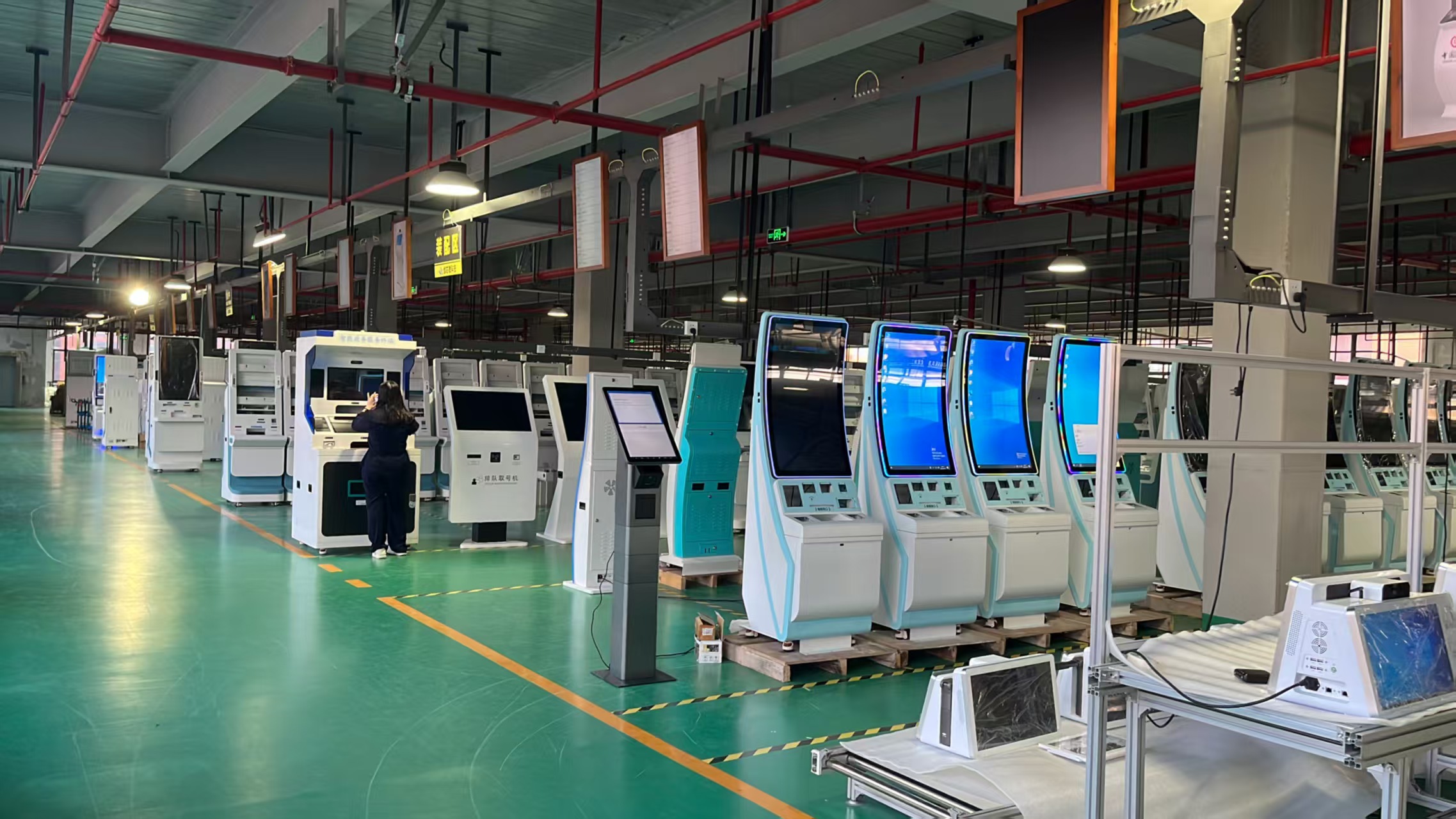
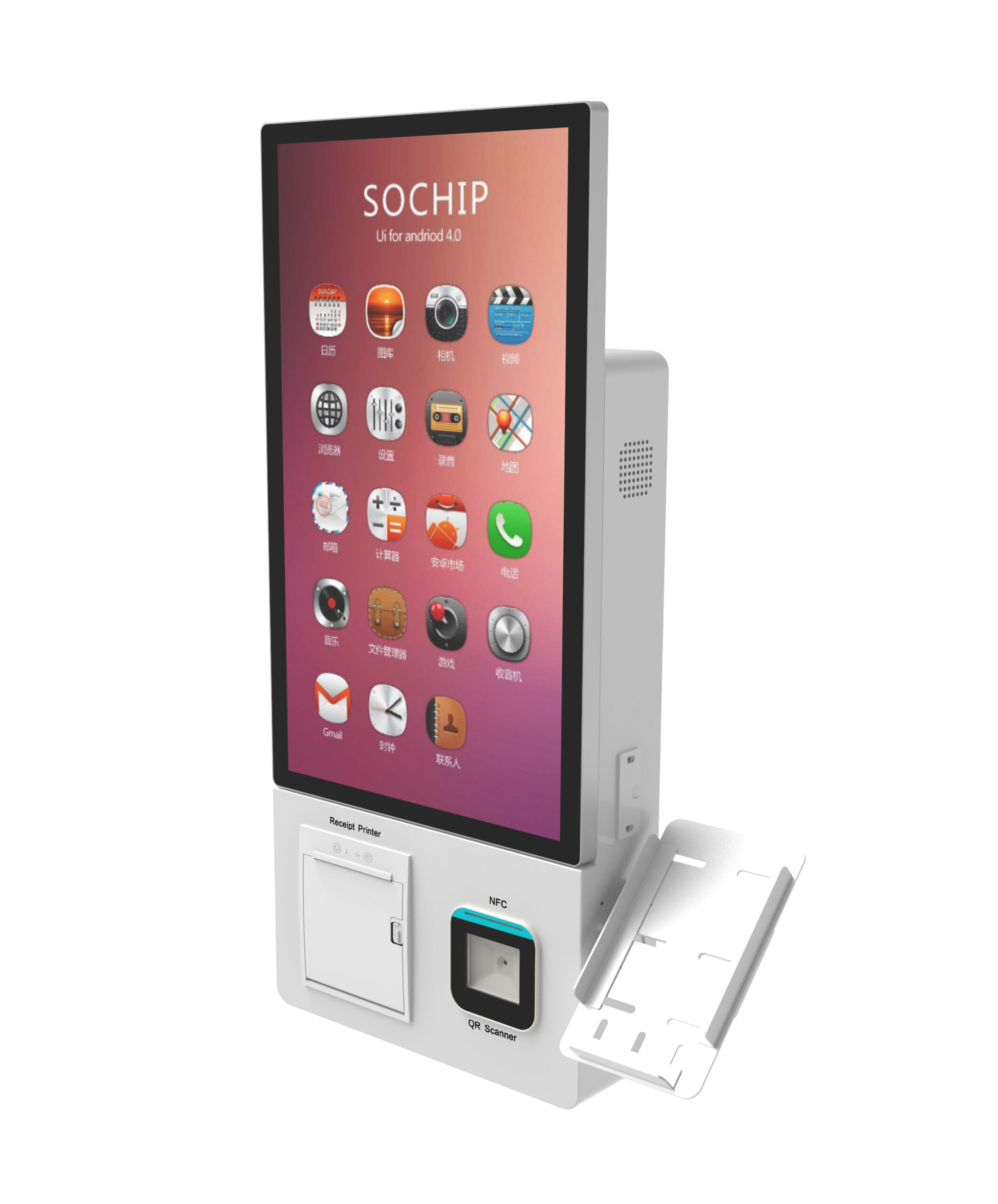
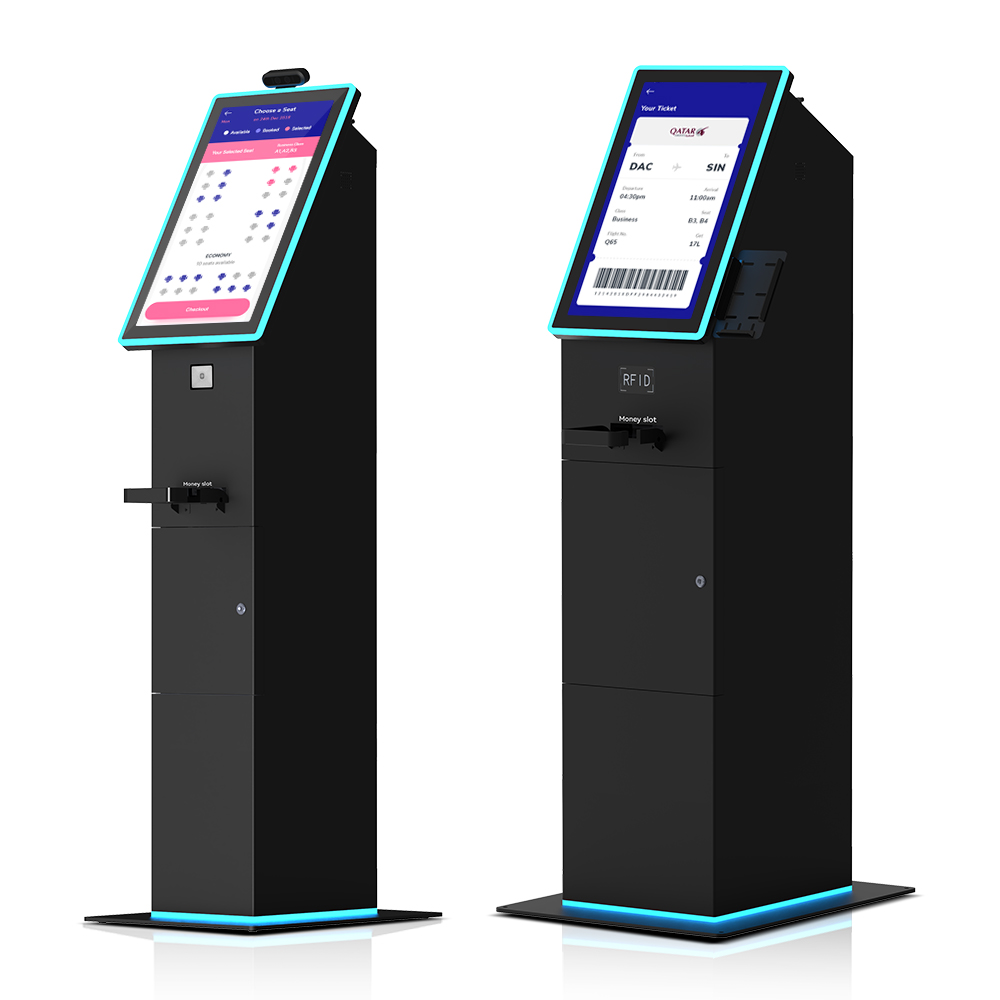
Usingwin manufactures self-service kiosk and cash-handling hardware for OEM and ODM programmes, including freestanding payment and cash-handling platforms such as the freestanding cash-handling self-service kiosk , wall-mount and tabletop formats like the wall-mount self-service kiosk and the small-footprint tabletop kiosk , and currency-exchange configurations for cross-border deployments.
Request a 2026 OEM quote with tariff-adjusted pricing and a dual-source BOM. Ask us to state the duty assumption behind the unit price, list a qualified alternate for every tariff-exposed line, and name the classification and fee responsibilities in the offer. If your programme is still at specification stage, request a datasheet or a sample unit first and we will supply the same BOM-level risk map alongside it.