Quick answer: In the EU, a cash-recycling kiosk has to clear four separate compliance layers — euro banknote recirculation, card-payment security, terminal accessibility, and electrical/EMC — and each one must appear as a written acceptance criterion in your RFQ. The machine’s paperwork travels with the machine: if the documents don’t arrive, you cannot formally accept the unit or close the rollout.
Overview
In the EU, a cash-recycling kiosk has to clear four separate compliance layers — euro banknote recirculation, card-payment security, terminal accessibility, and electrical/EMC — and each one must appear as a written acceptance criterion in your RFQ. The machine’s paperwork travels with the machine: if the documents don’t arrive, you cannot formally accept the unit or close the rollout.
Why compliance now belongs in the RFQ, not the support contract
Two years ago a buyer could specify “cash in / cash out” and negotiate compliance afterwards. That no longer holds. Recirculation rules attach to the note-handling process itself — how notes are checked for authenticity and fitness before they go back out to the public — not just to the box that holds them. The ECB’s banknote-recirculation page sets this out directly: Decision ECB/2010/14 establishes the procedures cash handlers must follow when checking euro banknotes for authenticity and fitness, and that decision has been amended since (including by ECB/2012/19 and ECB/2019/39) to cover new banknote series and to allow reprocessing under stated conditions. You can read the current position on the ECB banknote recirculation page .
The procurement consequence is simple. A bill of materials that lists a “cash recycling module” without naming the model, the denomination set or the compliance pathway is not evidence of anything. If a regulatory question is raised after go-live, you are the party holding an installed terminal that cannot be evidenced as compliant — and acceptance disputes delay the whole site programme, not just one machine.
Compliance also changes the commercial structure. If you are weighing outright purchase against a service model, note that compliance ownership and document hand-over sit differently in each — the trade-offs are set out in buy vs KaaS for cash recycling kiosks .
The four compliance layers a recycling kiosk must clear
- Banknote recirculation and authenticity. The governing instrument is ECB Decision ECB/2010/14, as amended. Practically, this means the module must support authenticity and fitness checking on the euro denominations you intend to recirculate. Buyers in Germany can cross-check a model against the register published by the Bundesbank, which points to the systems approved for cash recycling as listed by the ECB and the European Commission: cash processing systems . Treat a register entry as something you verify yourself, not something you take from a sales deck.
- Card-payment acceptance. If the same kiosk takes cards, the payment chain has its own scope. Ask the OEM to state in writing which part of the card path sits inside PCI DSS scope, which part is the acquirer’s, and how the payment module is separated from the cash module. A structured way to map that boundary is the nine-point scope review in PCI DSS scope for branch self-service kiosks .
- Accessibility. The European Accessibility Act and EN 301 549 both bear on self-service terminals. Because application dates and technical detail are amended over time, treat the effective-date specifics as “verify against the official text” rather than a fixed fact you carry into a contract signature.
- Electrical safety and EMC. CE marking applies to the terminal and to the cash module as components. Request the declaration of conformity that names the module, not just a logo on a datasheet.
Buyers who want the wider regional picture — including non-EU markets — should start from the broader cash-accepting kiosk compliance checklist (LatAm & EU) ; this page stays on the EU/Germany recycling-module and acceptance-testing angle.
RFQ and acceptance checklist: documents the OEM must hand over
Write these into the RFQ as deliverables with a named hand-over point, not as “available on request”.
- Declaration of conformity (CE) for the terminal and for the cash-recycling module, with the module identified by model.
- Recirculation compliance pathway — a written statement of how the module meets authenticity and fitness checking, cross-referenced to the applicable ECB decision, plus the model’s status in the relevant approved-systems register.
- PCI DSS scope statement describing, component by component, who is responsible for which part of the card path.
- Accessibility conformance statement covering audio guidance, tactile or braille keypad provision, and reach heights at the installed configuration — not just software settings.
- Recycling configuration sheet : denominations accepted and recirculated, note capacities, and the exact configuration the acceptance test will be measured against.
- Software integration specification : cash-event logging, reconciliation export format, and the API or file interface your POS or back office will consume.
- Firmware and security patch policy with stated end-of-support dates, so the terminal does not drift out of compliance mid-lifecycle.
- Spare-parts and module-replacement commitment , including what happens to compliance documentation if the cash module is swapped.
FAT vs SAT: what to physically test on the pilot unit
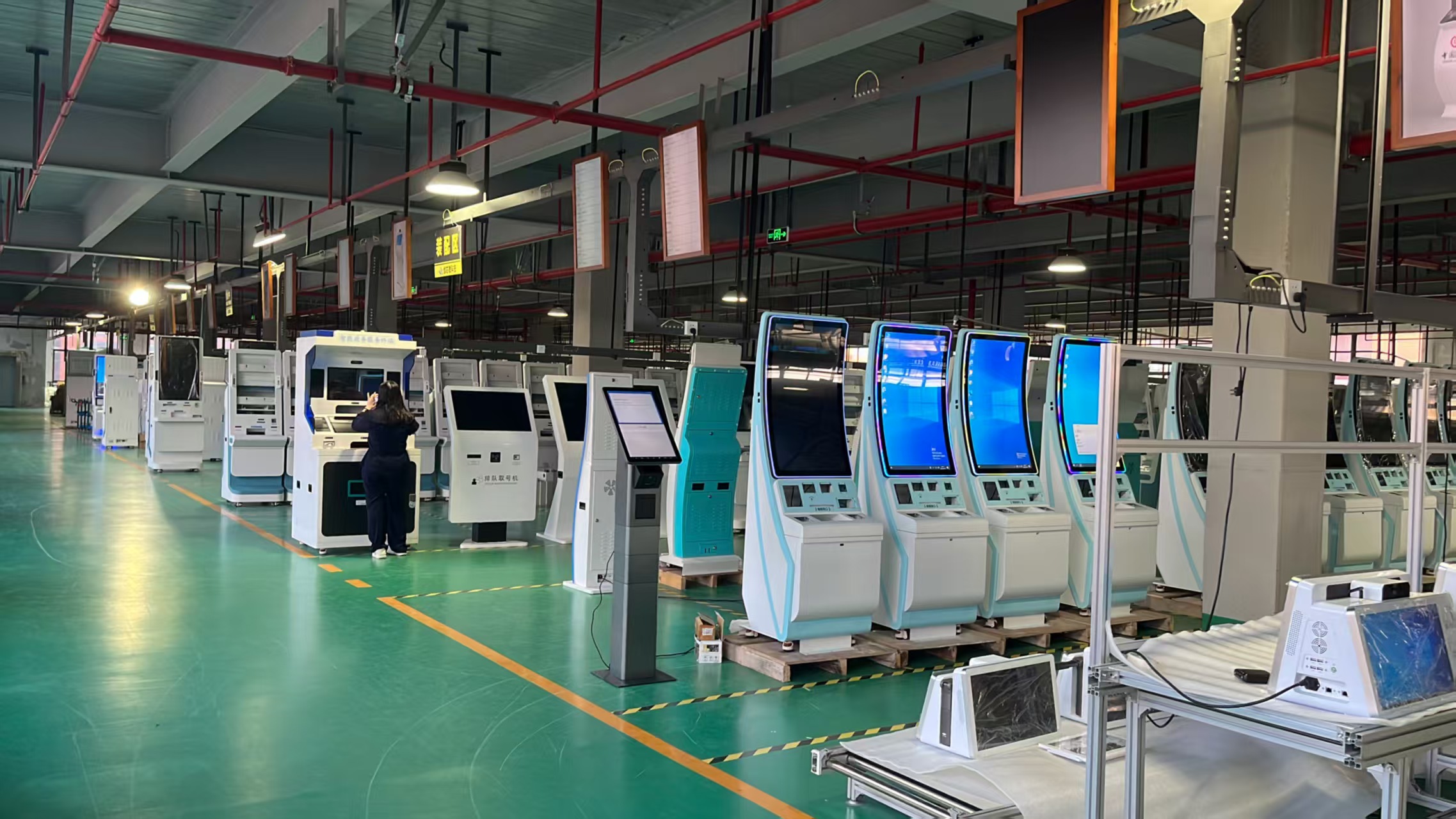
Factory acceptance and site acceptance answer different questions. FAT confirms the unit matches the accepted specification; SAT confirms it behaves that way in your building, at your counter height, on your network.
| Test area | Factory acceptance (FAT) | Site acceptance (SAT) |
|---|---|---|
| Specification match | Denominations, capacities and recycling configuration against the RFQ line items | No re-specification at install; unit still matches the accepted configuration |
| Note handling | Authenticity and fitness checking behaviour on all agreed denominations | Same checks repeated with live, circulation-condition notes |
| Documentation | Full document pack travels with the unit | Documents match the delivered serial number |
| Recovery | Jam and clearance sequence, time to clear, restart behaviour | Same sequence performed by your own operators, not the OEM technician |
| Reconciliation | Log and export format demonstrated | Recycler log reconciled against the till over a live shift |
| Accessibility | Features present in the build | Audio guidance, tactile keys and reach heights checked at installed position |
| Failure modes | Rejected-note behaviour, full-bin and empty-rollover handling, power-loss recovery | Same failure modes triggered on site |
Record every result as pass/fail against the RFQ line item that produced it. An acceptance test that produces prose instead of pass/fail lines is not contractually useful.
Common acceptance pitfalls that stall go-live
- The spec says “cash recycling” but never names the module, so the delivered unit is not the accepted unit.
- Payment and cash chains are attested separately, and the PCI DSS scope gap only surfaces at site acceptance.
- Accessibility is treated as a firmware setting rather than a hardware reach, height and feedback requirement.
- Compliance documents arrive after delivery, leaving the terminal formally unaccepted and the site unbillable.
- No agreed reconciliation or log export format, so operations cannot close the cash loop after go-live.
- The recycling configuration is changed during commissioning without a written change note, invalidating the FAT result.
Verify these yourself before you commit
The following are verification steps, not confirmed facts. Check each against the current official text or the named authority before you put it in a contract:
- The current scope, threshold and application date of any EU-level limit on large cash payments. Confirm the wording in the official legal text, not in secondary commentary.
- The current application dates and technical detail of the accessibility obligations that apply to self-service terminals in your market.
- The exact entry for your chosen model in the relevant approved-systems register — take a dated screenshot into the project file.
- Any status change to the ECB decision governing euro recirculation, including its amendments.
- Where you need performance or durability numbers we have not verified here, request the OEM’s own test report or a third-party laboratory report instead of accepting a marketing figure.
Questions buyers ask during validation
What compliance requirements apply to a cash recycling kiosk in the EU? Four layers: euro banknote recirculation and authenticity (ECB Decision ECB/2010/14, as amended), card-payment security where cards are accepted, terminal accessibility, and CE conformity for electrical safety and EMC.
Does a cash recycling kiosk need PCI DSS certification separately from the terminal? PCI DSS applies to the cardholder-data environment, not to the kiosk as such. Ask the OEM for a written scope statement identifying which components are in scope, and confirm the boundary with your acquirer.
What documents should I demand from the OEM before signing? At minimum: the CE declaration naming the module, the recirculation compliance pathway and register status, the PCI DSS scope statement, the accessibility conformance statement, the configuration sheet, the integration spec, and the patch and end-of-support policy.
How do I verify a recirculating kiosk passes factory and site acceptance testing? Run FAT against the accepted specification at the factory, then repeat the critical items — note handling, jam clearance, reconciliation, accessibility and failure modes — on site with your own operators, recording pass/fail against the RFQ line items.
Next step: lock compliance into the quote
Your RFQ should carry four things: the four compliance layers named by instrument, the document hand-over list, the configuration sheet the test is measured against, and an explicit FAT/SAT acceptance clause with pass/fail recording. Everything else is negotiation detail.
If payback modelling sits alongside compliance in your business case, the labour and throughput assumptions are covered in cash-recycling kiosk ROI and payback .
Request a compliance & acceptance spec sheet + quote for cash recycling kiosks. Send us your denominations, capacity and site constraints, and we will return a configuration sheet, the document hand-over list and the FAT/SAT test schedule you can attach to the purchase order.