Quick answer: Buy-outright suits a branch with stable, high cash-in volume and a lease term long enough to absorb the asset. Kiosk-as-a-Service (KaaS) suits volatile volume, short leases, or a transformation timeline that cannot wait for capital approval. Everything else follows from five facts about your own branch.
Overview
Buy-outright suits a branch with stable, high cash-in volume and a lease term long enough to absorb the asset. Kiosk-as-a-Service (KaaS) suits volatile volume, short leases, or a transformation timeline that cannot wait for capital approval. Everything else follows from five facts about your own branch.
This is a procurement-model comparison, not a product explainer. It compares two ways to put a cash recycling kiosk on a branch floor — purchase the asset, or contract the capability — and it stays deliberately neutral about which one wins, because the answer changes with your lease term, your cash-in curve and your internal service capacity. If your institution has no cash-in-transit contract in place yet, or has not settled the target branch format, stop here: the procurement model is downstream of those two decisions, and any comparison you build now will be invalidated by them.
No benchmark prices, payback periods or savings figures appear below. Every number that matters to this decision has to come from your own branch data or from a written supplier quote.
Why this decision is landing on desks now
Two market signals are pushing capital and service-model questions onto branch transformation agendas at the same time.
The first is kiosk demand itself. SNS Insider’s bank kiosk market research, reported through Yahoo Finance, projects the bank kiosk market reaching USD 2,554.66 million by 2032, framed around automation and self-service demand in financial services. That is a demand-side projection, not a branch economics model — it tells you the category is being capitalised, not what your branch should buy.
The second is network consolidation. TROY’s branch transformation blog post references Q1 2025 US branch closures and an Accenture study on the trend. Treat that as a reported trend, not as verified data: if branch consolidation is a material input to your business case, go to the Accenture study itself and to your own regulator’s branch-data sources rather than citing a vendor blog.
The procurement consequence is straightforward. Fewer branches, staffed differently, make the assisted self-service pod the primary cash touchpoint rather than a supplement to the teller line. When the kiosk becomes the cash touchpoint, the cash recycler module, the safe/chassis class and the service model behind them stop being peripheral line items.
There is a counterpoint worth reading before you assume the category is mature. NextBranch’s commentary on cash recycling ATMs reports that US adoption has lagged the branch-transformation and transaction-migration wave, and notes institutions buying capable hardware to switch recycling on later. If that description matches your institution, you are a later mover — which gives you leverage on module configuration and service terms that early buyers did not have.
Buy-outright vs Kiosk-as-a-Service: side by side
The table below is structural on purpose. It describes who owns what under each model, not what each model costs.
| Decision area | Buy-outright | Kiosk-as-a-Service | Hybrid (own hardware, contracted service) |
|---|---|---|---|
| Capital treatment | Capital expenditure, depreciated over the FI’s own schedule | Operating expense, contracted term | Capital purchase plus a separate service line |
| Ownership of the cash recycler module | FI owns the module and its spares | Usually the provider, unless the contract says otherwise | FI owns the module; provider owns the service obligation |
| Upgrade and retrofit rights | FI decides if, when and by whom | Provider schedules; FI may have limited veto | FI decides, within the service contract’s terms |
| Maintenance and SLA | FI’s own first-line capacity or a purchased SLA | Provider’s SLA, usually with uptime language | Contracted SLA, FI retains site responsibility |
| Software and firmware updates | FI applies and validates | Provider applies; confirm change-notification terms | Negotiate who applies security patches |
| End-of-term disposition | FI resells, redeploys or decommissions | Provider removes; confirm de-install and data-wipe scope | FI owns removal and disposal |
| Cash-in-transit interface | FI’s CIT contract and schedule | Unchanged — CIT is almost always outside the kiosk contract | Unchanged |
Each row is only true if the contract says so. Before signing, confirm in writing: the depreciation and disposal terms (outright), the escalation and uptime remedy language (KaaS), and which party applies security patches and how quickly it must notify the FI after a module change (both).
Five branch facts that decide it
- Cash-in volume and its volatility. A recycling module earns its place on recirculation. If volume swings hard across the week or the year, model the peak and the trough separately — a KaaS term that assumes average volume can be repriced when reality differs.
- Remaining lease term and branch-format certainty. Ask what happens to an owned unit if the branch closes or downsizes inside your depreciation window. Ask the same question of a KaaS term with a minimum commitment.
- Internal service capacity. Can your team hold spares and first-line swap a module, or do you need a contracted SLA with a stated response time? This single answer moves most programmes off the outright-only option.
- Compliance ownership. Under each model, which entity holds the audit trail for note fitness, safe/chassis rating and payment-data scope? Get the answer as an entity name in the contract, not as a marketing statement.
- Upgrade horizon. If you intend to switch recycling on later, or add peripherals after the first deployment, confirm whether the enclosure and compute platform support that without a chassis change.
Where the OEM enclosure and module choices bite later
A cash recycling kiosk is a stack of separately regulated parts, and the procurement model determines who owns the consequences of changing one.
The modules that drive maintenance frequency and compliance scope are the cash recycler module and its cassette configuration, the note validator, the dispenser, the safe/chassis class, the compute platform, and the card/ID peripherals. A standard OEM enclosure shortens time-to-deployment because the chassis, ingress protection and mounting have already been through their own testing. A custom enclosure delivers better fit for a specific pod or lobby layout, but it changes which downstream certification and re-testing applies to the finished unit — and that re-testing is a schedule item, not a formality.
KaaS hides module replacement, spares logistics and firmware cadence inside the monthly figure. It does not hide site preparation, network provisioning, cash-in-transit, or the internal process change of moving cash handling from the teller line to a self-service pod. Budget those separately under both models.
Written-verification checklist for the configuration you are actually quoted:
- Which certifications apply to this exact configuration, and which entity holds them?
- Does a module change invalidate any of them, and who pays for re-testing?
- Which recycler and validator modules are named in the quote, and what is the stated replacement source across the term?
- What is the safe/chassis class, and does it match what your insurer and internal policy require?
Questions to put to every cash recycling kiosk supplier
- Are you the OEM, an ODM with your own tooling, or a rebrander of a third-party platform? Get the platform lineage in writing.
- What is your MOQ and lead time for this configuration, and how much of that lead time is tooling, module procurement, certification and shipping?
- Which recycler and validator modules are in the quote, and what is their stated supported life?
- Across a KaaS term versus an outright purchase, what happens to firmware and security patches, and who notifies whom?
- What payment-data scope applies to this kiosk configuration, and who validates it — the supplier, the acquirer, or the FI? Ask for the documentation, not an assurance of compliance.
- What spares and service levels are included, and what is explicitly excluded?
Building your own comparison without vendor-supplied numbers
Build a three-column worksheet: rows are the five branch facts above, columns are buy-outright, KaaS and hybrid. Fill the cells with your own volumes, lease terms and quoted service levels. If a cell cannot be filled from a written source, it is not ready for a committee paper.
Then normalise the quotes. A monthly KaaS figure and a capital figure are only comparable over the same term, with the same module set, the same replacement assumptions and the same assumed service hours. Where a quote omits a module, the comparison is invalid regardless of the headline number. Module differences, not brand, are the most common cause of apparent quote divergence — for the line-item view of those differences see the line-item cost drivers behind a kiosk quote , and for the lifecycle comparison across service models see comparing bank kiosk TCO across service models .
Questions buyers ask at this stage
Is a cash recycling kiosk the same as a cash recycler ATM?
No. A cash recycler ATM sits on the ATM network and its transaction set; a branch cash recycling kiosk is typically deployed for teller-assisted or self-service cash-in and cash-out inside the branch, often alongside card, document and identity functions. The distinction matters commercially because the two are usually funded, serviced and audited under different contracts.
What is a typical MOQ and lead time for a custom cash recycling kiosk?
Both are supplier- and configuration-specific and should never be assumed from a category average. Ask for the figure in writing, broken into tooling, module procurement, certification and shipping, and treat any verbal estimate as non-binding.
Does PCI DSS apply to a branch cash recycling kiosk, and who validates it?
It can, depending on what the kiosk does with card data and how it connects to the payment environment. Do not accept a yes or no — ask what scope applies to your configuration and which party documents it: the kiosk supplier, the acquirer, or your own compliance function. The answer determines a workstream, so it belongs in the procurement plan.
Can a cash recycler module be retrofitted to a kiosk after installation?
Sometimes, and the constraint is usually the enclosure and compute platform rather than the module. Confirm field-retrofitability for the specific chassis in the quote, and confirm whether the retrofit triggers re-certification and who bears that cost.
Next step: get a comparable quote
Choose the model after the five branch facts are answered, not before. The buy-outright and KaaS cases are decided by volume stability, lease term, service capacity, compliance ownership and upgrade horizon — not by a headline monthly figure.
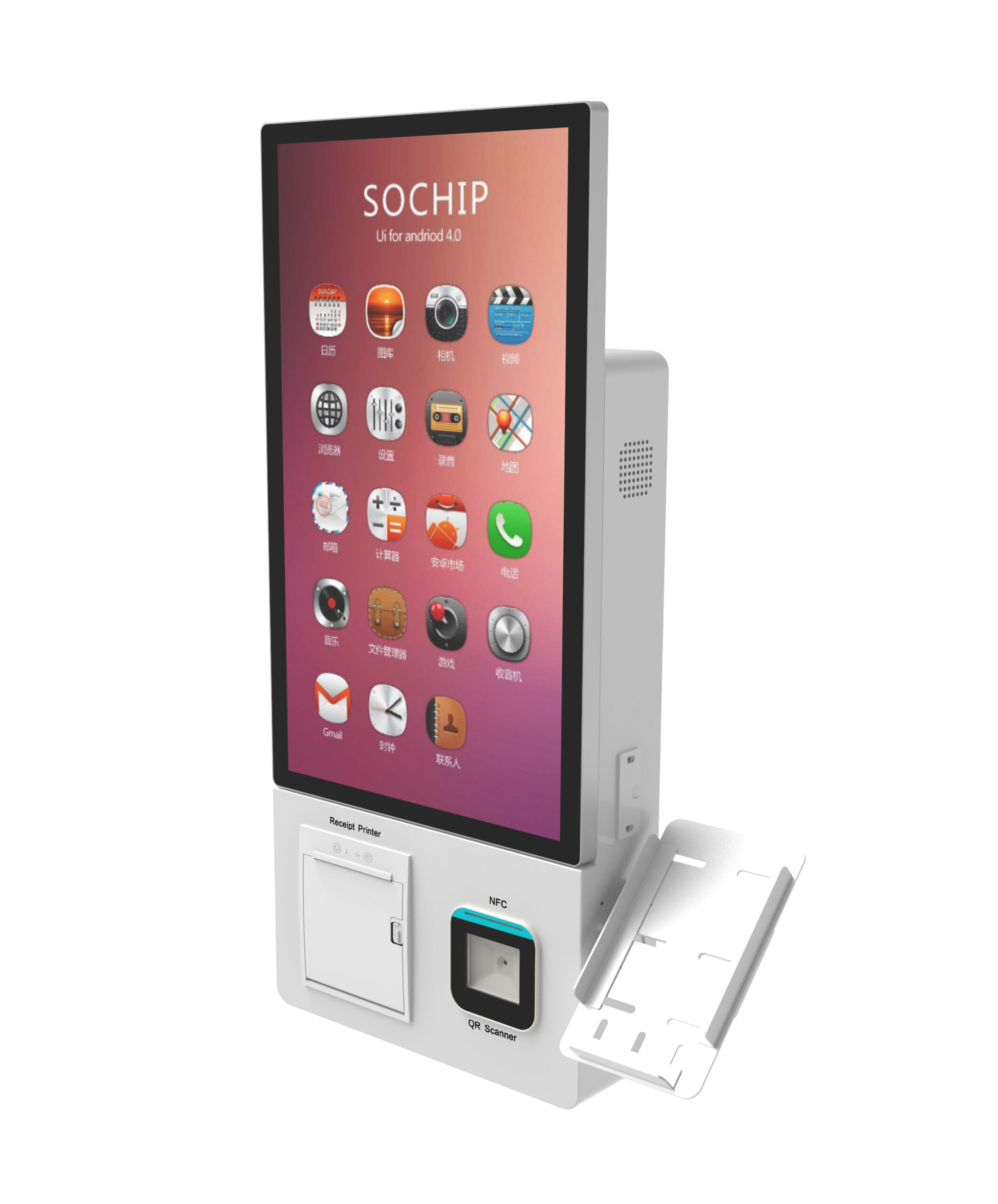
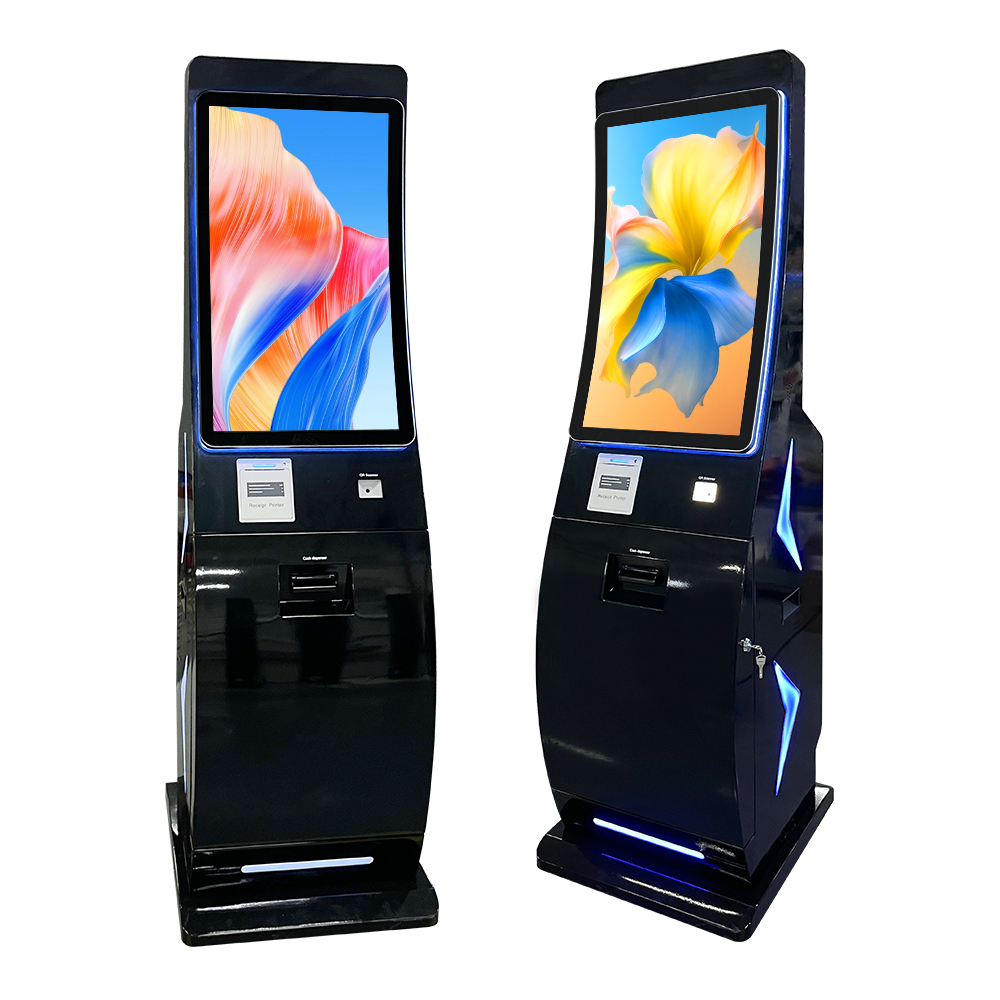
Send one request to multiple suppliers containing the same inputs: branch format (staffed teller line, assisted self-service pod, or after-hours lobby), expected cash-in volume band, remaining lease term, target deployment date, and the module set you require. Quotes built on identical inputs are comparable; quotes built on different ones are not. If your programme involves cash handling across more than one branch format, review the cash recycling kiosk and teller cash recycler configurations before you scope, and consider the wall-mount option for after-hours lobby deployments or the small-footprint tabletop unit for assisted pods where floor space is the binding constraint.
Request a quote, sample unit and spec sheet for teller cash recycler / self-service kiosk integration. Include the branch format, cash-in volume band, lease term and target deployment date so the response is directly comparable with the quotes you already hold.