Quick answer: You cannot lock a cash redemption kiosk peripheral BOM by picking parts from a catalog. Each peripheral decision sets a downstream constraint — cable routing, power budget, enclosure cut-outs, firmware interfaces, service access — and changing any of them after the sample cabinet is built is where sample approvals stall and schedules slip. The practical rule: specify in payout order , and agree the acceptance criterion for each module before you name a model.
Overview
You cannot lock a cash redemption kiosk peripheral BOM by picking parts from a catalog. Each peripheral decision sets a downstream constraint — cable routing, power budget, enclosure cut-outs, firmware interfaces, service access — and changing any of them after the sample cabinet is built is where sample approvals stall and schedules slip. The practical rule: specify in payout order , and agree the acceptance criterion for each module before you name a model.
This is the peripheral-level companion to our gaming cash-dispensing kiosk requirements and GLI-20 checklist , which covers venue needs and compliance framing. Here the question is narrower and more commercial: which dispenser, validator, ticket scanner and cash box do you put in the BOM, and what test proves each one before you commit to MOQ.
The six modules, in the order they constrain each other
- Note dispenser — sets payout uptime, replenishment frequency and the physical height of the payout path.
- Banknote validator — acceptance is a currency-version and firmware question, not a sensor-count question.
- TITO / ticket scanner — read the damaged ticket, not the clean one.
- Ticket authorization logic — the offline duplicate-payout decision, which no scanner can make for you.
- Cash box and physical security — capacity is a labor decision before it is a hardware decision.
- Mainboard interfaces, power and thermal headroom — the envelope everything else has to live inside.
| Module | Decision it drives | Evidence to demand before sample sign-off |
|---|---|---|
| Note dispenser | Payout uptime, replenishment labor, denomination flexibility | Jams per 1,000 notes dispensed on mixed-condition notes; recovery time per jam |
| Banknote validator | Cash-in acceptance rate and exception handling | Supported currency/version list; first-pass acceptance and reject reasons from your own note batch |
| Ticket scanner | Redemption throughput at the counter or in the aisle | First-read rate on 100 creased/folded/faded tickets you supply |
| Authorization logic | Duplicate-payout exposure during network loss | Documented offline policy plus a repeat-presentation test with the network physically disconnected |
| Cash box | Collection frequency, chain of custody, cash-in-transit exposure | Timed replenishment and removal sequence; event log for every door open |
| Mainboard / power / thermal | Field stability and remote diagnostics | Port map, power budget with motor inrush, thermal soak readings at rated ambient |
One evidence gap before we start: we are not supplying a current, citable US benchmark for the cost of manual cash handling in an FEC. Older third-party figures circulate widely and are frequently republished as if current; if a supplier quotes a percentage saving, ask for the report name, year, sample and method, and treat an undated figure as marketing. The verification method in this article is your own sample-unit test record, not an imported statistic.
Module 1 — Note dispenser: recycler, hopper or multi-cassette
Three payout architectures are commonly offered, and they fail differently.
- Recycler / recirculating dispenser — notes deposited by players are validated and reused for payout. Fewer manual refills, but payout quality depends entirely on note fitness: a damp or curled note accepted at the input becomes a jam at the output. Denomination mix is whatever the machine is holding.
- Preloaded cassette payout — the dispenser pays from cassettes staff load. Predictable note condition and denomination control, at the cost of scheduled replenishment regardless of demand.
- Hopper payout — a bulk hopper feeds notes into the transport. Simple and fast to load, but typically weaker on denomination separation and more sensitive to how notes are stacked.
Calculate replenishment from peak-day payout volume divided by usable cassette capacity , not from nameplate maximum capacity. Usable capacity is lower once you allow for note stack quality and the low-note warning threshold; ask the vendor to state both figures. Then convert to labor: refills per week × minutes per refill × loaded labor rate. That number, not the cassette count, is the procurement argument.
Sample test: run at least 1,000 dispensed notes drawn from your own venue’s cash, including notes that have been folded, damp, or handled heavily. Log jams per 1,000 notes, mean recovery time, and how many notes had to be removed from the transport per intervention. A dispenser that performs on new notes in a demo bay has told you nothing about your floor.
Module 2 — Banknote validator: acceptance is a currency-version question
Validator performance is a function of the currency series it is programmed for, the firmware build, and the condition of the note — not the number of sensors in the datasheet. Ask for the supported currency and series list with firmware version, the firmware update path and cadence, and the error-code documentation that your service technicians will actually use.
Sample test, legal and documented: test only with vendor-approved test notes and genuine bank-confirmed notes in mixed condition. Do not source, handle or test with counterfeit notes. Record first-pass acceptance, rejects by condition category, and reject reasons — then separate true rejects from transport jams, because the two have different fixes and different owners.
Also require a written note-handling policy: when a note is rejected or suspected, does the validator retain it, return it, or route it to a secure escrow bin, and what audit event is written? This is where operators get surprised after deployment — not in the acceptance rate.
Module 3 — TITO ticket scanner: test the damaged ticket
Specify the symbologies your venue system actually prints — common 1D ticket codes, plus 2D codes such as QR or PDF417 only if your redemption software uses them. Then verify the optical figures against real print, not a datasheet: resolution against the smallest printed element width, plus scan angle and depth of field at the mounting position inside the bezel.
Sample test: prepare 100 tickets from live stock covering clean, creased, folded-corner, smudged and faded thermal print. Record first-read rate, second-read rate, and the operator recovery step when a ticket fails. Confirm the bezel gap allows cleaning without tools and that ambient light at the installed location does not degrade reads — a scanner tested on a bench in office lighting is not tested for a bright arcade floor.
A clean-ticket demo is not evidence. If a supplier will not let you run your own damaged-ticket batch, that is a sample-approval risk you are accepting in writing.
Module 5 — Cash box and physical security
Compare fixed cassette, removable cash box and multi-cassette designs on three axes: replenishment labor, auditability, and cash-in-transit exposure. Specify lock type, key control and custody rules, cassette ID and tamper-evident seals, then time the full replenishment and removal sequence with the person who will actually do it.
Calculate collection frequency from peak payout rather than average — an average hides the Saturday night that fills the box. Show the formula and the assumptions in your own business case. Require a chain-of-custody event for every door open, cassette change and jam clearance, because unlogged access is what makes a shortage investigation impossible.
Jurisdiction note: cash payout devices are regulated in some jurisdictions and under some gaming licences, with restrictions on where they may be installed, who may operate them and what may be paid out. Confirm requirements with local counsel and your licensing authority. Nothing here is legal advice, and hardware supply does not establish regulatory approval.
Module 6 — Mainboard interfaces, power and thermal headroom
Inventory every peripheral interface — USB, serial or other — and require a port map with connector types and cable routing before the enclosure is cut. Then demand the power budget, sized for dispenser motor inrush and printer heater peaks rather than idle load. An undersized supply shows up as intermittent peripheral dropouts months after installation, which is the most expensive kind of fault to diagnose.
Sample test: thermal soak at the enclosure’s rated ambient, running repeated payout and print cycles, recording internal temperatures at the PSU, dispenser and display. Also require per-peripheral error codes and remote diagnostic counters, and verify that the counters you were promised are visible in the interface you will actually use. If card acceptance is a future option, note now that it changes the BOM and brings the payment path into PCI DSS scope — retrofitting it into a fixed enclosure is the classic change order.
For enclosure sizing and peripheral fit in smaller transactional footprints, see our notes on compact kiosk enclosure and peripheral sizing .
The sample-unit acceptance sheet: what pass looks like
Build a one-page pass/fail sheet and require the vendor to run and sign the same protocol, so shortlisted suppliers are compared on identical tests.
- Jams per 1,000 notes dispensed, plus mean recovery time.
- First-pass note acceptance and reject reasons on your mixed-condition batch.
- First-read rate on 100 tickets you supplied, including damaged stock.
- Duplicate-payout result with the network physically disconnected.
- Replenishment and cassette-removal time, measured.
- Thermal readings at rated ambient after sustained cycles.
Record the unit serial number, firmware versions and the note and ticket batches used. Results are not transferable without them, and a supplier who resists recording them is telling you something about their change control.
On lifecycle planning, Kiosk Industry’s hardware guidance notes that operators often budget a 5–7 year kiosk lifecycle and that remote diagnostics and break-fix parts planning are part of hardware strategy ( kioskindustry.org ). Use that to justify asking for spare-parts availability and diagnostics access — not as an MTBF figure for any specific dispenser.
Vendor-published throughput figures are exactly that. One competitor states its F600-V pays out at 3.2 bills per second, 60% faster than its F600, in a 13.78-inch cabinet ( redplumgames.com ). That is a vendor claim published without test conditions; it is not an independent test and it is not our specification. Ask any supplier for the conditions behind a speed number — note mix, denomination, cassette state, ambient — or benchmark it yourself on the sample.
What to put in the RFQ — and what not to accept
- A line-item peripheral configuration sheet: model, interface, voltage, capacity and firmware version per module. Not a brochure.
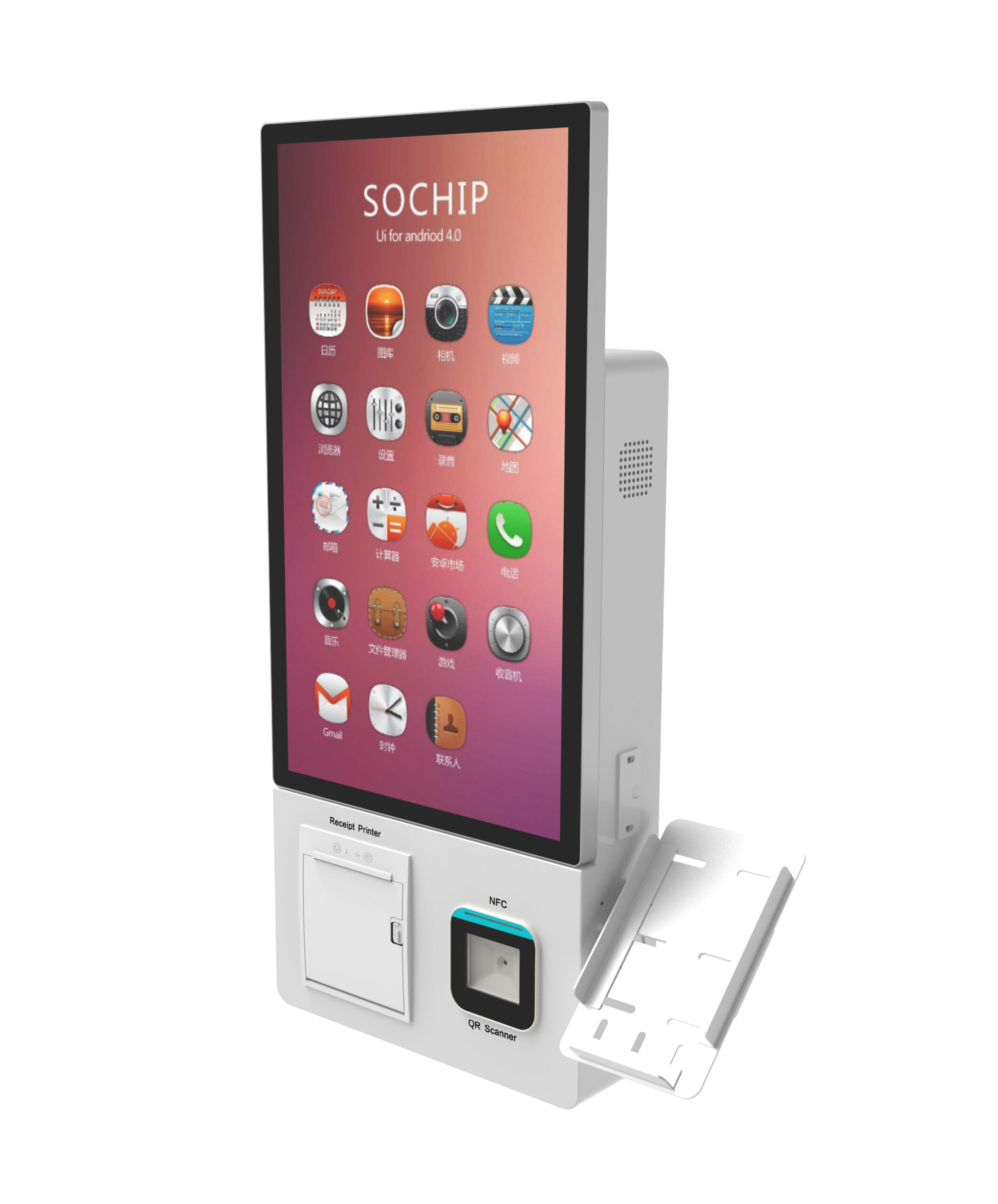
- MOQ, lead time and configuration exclusions stated per model, with scope and schedule confirmed in the quotation. Model records on the 32-inch curved floor-standing game redemption kiosk page carry MOQ and lead-time fields; treat those as reference and confirm in writing.
- Rejection of undated performance claims, unbounded MTBF figures, and certification references without an issuing body and certificate scope. A factory-level certificate is not model-level compliance.
- A named owner for ticket-validation software, cash protocols, account and loyalty interfaces, and remote monitoring. Hardware supply alone does not close the operational loop.
If you are also weighing third-party cash-handling modules against configurable OEM builds, the interface and scope questions overlap with our OEM vs Olea Franklin cash-handling specifications comparison.
Decision summary: six checks before you commit
Rank the modules by switching cost. The payout path and cash box are hardest to change after the enclosure exists; scanner and validator are next; power and thermal headroom are last only if the enclosure is already fixed and you accept the constraint. For each module, the acceptance criterion is a test you run, not a number the vendor prints.
Frequently asked questions
Hopper vs recycler in a cash redemption kiosk: which should an FEC operator specify?
Specify on note condition and labor, not on the label. A recycler reduces manual refills but pays out the notes players inserted, so payout quality tracks input quality. A preloaded cassette system gives predictable payout notes and denomination control at the cost of scheduled refills. Decide with your own jam-rate test on mixed-condition notes.
How many bills should a cash box hold before replenishment becomes a labor problem?
There is no universal number, and any vendor quoting one is guessing about your floor. Divide peak-day payout by usable capacity to get refills per week, then multiply by measured refill minutes and your labor rate. The answer is a labor cost, not a capacity spec.
Can a TITO ticket scanner reliably read folded, creased or faded tickets?
Some do better than others, and the only reliable evidence is your own batch. Require a 100-ticket test with real damaged stock and a recorded first-read rate. Treat clean-ticket demonstrations and quoted resolution figures as inputs to that test, not substitutes for it.
What should happen when the network drops during ticket redemption?
Whatever your written policy says, tested before deployment. Refuse, cap, or store-and-forward against a local ledger — all three are defensible if documented and reconciled. Undocumented behaviour is the duplicate-payout exposure.
What MOQ and lead time should a custom cash redemption kiosk buyer expect?
It depends on configuration, enclosure tooling and peripheral lead times, and we will not publish a figure that has not been confirmed for your build. Ask for MOQ, lead time and exclusions per model, and require them restated in the quotation.
Next step
Send us your venue profile, peak-day payout estimate, ticket symbology and note-condition reality, and we will return a line-item peripheral configuration sheet — dispenser type, validator currency series, scanner optics, cash box design, interface map and power budget — with a sample-unit quotation for your build. Request the peripheral configuration sheet and a sample-unit quote through our 32-inch wall-mount cash redemption kiosk model page or the wider gaming and redemption kiosk hardware models listing. MOQ, lead time, pricing, MTBF and certification scope are confirmed only in the quotation — never assumed from a web page.