
Quick answer: For a coastal or high-chloride site, shortlist a 304 stainless enclosure — and move to 316 only when chloride exposure is genuinely severe, because that is a price decision you want to make before award, not after. For dry inland, sheltered or low-humidity sites, galvanized steel with a properly specified outdoor powder-coat system is normally the lower-cost enclosure that still meets the service requirement. In both cases the base metal is only half the decision: the coating system, the cut-edge and seam treatment, and the gasket and sealing design decide what the enclosure looks like five years after commissioning.
The short answer: pick your outdoor kiosk enclosure by site, not by material prestige
For a coastal or high-chloride site, shortlist a 304 stainless enclosure — and move to 316 only when chloride exposure is genuinely severe, because that is a price decision you want to make before award, not after. For dry inland, sheltered or low-humidity sites, galvanized steel with a properly specified outdoor powder-coat system is normally the lower-cost enclosure that still meets the service requirement. In both cases the base metal is only half the decision: the coating system, the cut-edge and seam treatment, and the gasket and sealing design decide what the enclosure looks like five years after commissioning.
| Site environment | Shell to shortlist | Finish / sealing note | Verify in the RFQ |
|---|---|---|---|
| Coastal / marine-influenced (salt spray, wind-driven chloride) | 304 stainless (316 where chlorides are severe) | Passivated stainless, sealed seams, marine-grade fasteners | Post-fabrication passivation and weld treatment; galvanic isolation at fastener and hinge interfaces |
| Industrial / urban (sulphur compounds, particulates, chemical fallout) | 304 stainless or heavy galvanized + powder coat | Coating system selected for chemical fallout, not just UV | Coating system data sheet and adhesion/corrosion test report |
| High humidity / tropical (condensation cycles) | Either, decided by condensation control | Vent/drain strategy, gasket compression, internal climate control | Gasket material and durometer, drainage path, IP rating scope |
| Dry inland / high temperature swing | Galvanized + powder coat | UV-stable coating, seals rated for thermal cycling | Coating UV/weathering data, seal operating temperature range |
| Sheltered or recessed mounting (canopy, wall, arcade) | Galvanized + powder coat | Simpler sealing is often sufficient | Confirm the shelter is contractual, not assumed |
The trap is that enclosure material gets mis-selected most often not because the wrong base metal was chosen, but because the coating system and edge treatment were left to the fabricator’s default. Stainless steel and galvanized steel are both widely described as the most common materials for electrical enclosures, and outside our industry the published comparison usually stops at “stainless performs better in corrosive environments.” That general conclusion is not wrong, but it does not tell you what happens at a punched cable entry, a welded seam or a door hinge — which is where rust repair actually starts, and usually several years into service rather than at delivery inspection.
Where each material actually fails outdoors
304 stainless: a passive layer, and cosmetic staining that is not failure
Stainless steel is an iron-based alloy in which chromium forms a surface layer that protects the metal from rusting and chemical erosion — that is the baseline material statement in the widely cited KDM Steel enclosure comparison ( kdmsteel.com ). The practical consequence for an outdoor kiosk is that 304 does not need a consumable coating to resist corrosion; its protection is self-renewing as long as the surface stays clean and oxygen is available.
What buyers misread is tea-staining. Brownish discoloration on a 304 panel in a coastal or polluted site is common and cosmetic — surface deposits and free iron contamination, not a loss of section. It is also a maintenance and appearance issue on a public-facing check-in or payment terminal, so it belongs in the maintenance plan. It does not mean the enclosure has failed structurally, and it should not be used as justification for replacing a panel that a cleaning regime would restore.
Galvanized steel: a sacrificial coating with a finite budget
Galvanized steel protects the base metal sacrificially: the zinc layer corrodes first, so the steel underneath stays intact until the zinc is consumed. That is a fundamentally different protection model, and it explains the failure pattern. The coating has a budget, and that budget is spent faster in chloride-laden air, in industrial sulphur environments and wherever the coating is thin, damaged or absent. Coating deposit weight and thickness are what set the size of that budget, so the galvanizing specification — not the phrase “galvanized” — is what you are actually buying.
Powder coating on top of galvanizing adds a barrier layer, but it is a barrier, not a second sacrificial system. Where the coat is breached and the zinc beneath is also thin, corrosion starts at that point and spreads under the film.
The failure point most generic comparisons skip: cut edges, welds and seams
Every hole, cut edge, weld seam and cable entry is a place where the protective system can be interrupted. On galvanized sheet, a punched hole exposes bare steel unless the edge is treated after fabrication; on stainless, weld zones lose corrosion resistance unless they are cleaned and re-passivated. This is exactly why two enclosures that both say “galvanized steel” or “304 stainless” are not interchangeable:
- Cut and punched edges: specify post-fabrication edge treatment, not just the incoming sheet specification.
- Welds: specify weld cleaning and, for stainless, passivation after fabrication.
- Seams and joints: specify sealant type and whether seams are continuously sealed or spot-sealed.
- Cable entries and glands: specify sealed entries; an open gland is a water path and a bare-steel path in one.
- Fasteners and hinges: specify the material and isolate mixed-metal pairs to avoid galvanic corrosion.
When 304 is not the answer
Where chlorides are severe — direct salt spray, tidal proximity, or repeated salt-laden cleaning — 304 can still show pitting and heavy staining, and 316 becomes the realistic material. Raise that question during shortlisting, because moving a large enclosure from 304 to 316 after award is a schedule and cost problem, not a paperwork change. If your site sits at that boundary, describe the exposure honestly in the RFQ and let the enclosure supplier propose the grade rather than defaulting to whichever is already in their standard build.
Salt spray and IP ratings: what a test report tells you — and what it doesn’t
ASTM B117 salt-spray testing is an accelerated, comparative test used to rank coating systems and finishes under a continuous salt fog. A published hour count is a comparison tool, not a service-life forecast, and it should never be read as “this enclosure lasts that long by the sea.” Treat any supplier quoting salt-spray hours without the report as quoting marketing.
Equally important is what was tested . A coated flat panel, a welded test coupon, a sealed enclosure, and a fully assembled kiosk shell with hinges, gaskets and cable entries are four different test articles, and only the last one resembles what you are buying. When you request a report, confirm:
- the article tested (panel, coupon or assembled enclosure),
- whether gaskets, hinges and seams were fitted during the test,
- whether edges and cut faces were coated before testing, and
- the acceptance criteria used — blistering, creep from a scribe, red rust, or cosmetic rating.
On the sealing side, IP54 and IP65 describe different things, and neither is a corrosion rating. IP54 covers dust protection and water splashing; IP65 adds protection against water jets. For an outdoor kiosk the practical question is not “higher is better” but where water will go : a fully sealed enclosure in a humid climate can hold condensation internally, which is why a controlled vent and drain strategy plus correct gasket compression often protects electronics better than attempting a perfect seal. Door hinges, lock hardware and gasket durometer (hardness) all affect whether the seal actually compresses as designed when the door is closed.
Three questions worth sending to every shortlisted supplier:
- What is the exact coating or galvanizing specification, with deposit thickness or mass designation?
- What is the scope of your salt-spray test report — which article, with which fittings, to what acceptance criteria?
- What happens to cut edges, welds and seams after fabrication and before painting or passivation?
Cost: purchase price vs 10-year total cost of ownership
Galvanized steel plus powder coating normally wins on acquisition cost; 304 stainless normally wins where the enclosure is hard to service, hard to replace, or exposed to chlorides that would consume a zinc coating within the asset’s intended life. The comparison that matters is not unit price but where money lands over a decade.
| Cost element | Galvanized + powder coat | 304 stainless |
|---|---|---|
| Enclosure material and finish | Lower | Higher |
| Fabrication complexity (edge, weld, seam treatment) | Higher than plain steel — edge treatment is mandatory | Higher — requires weld cleaning and passivation discipline |
| Installation and handling | Comparable; weight differs by gauge and design | Comparable; confirm lifting points and anti-galling measures |
| Inspection and cleaning cycle | More frequent inspection of coat integrity and edges | Cleaning for appearance; less coating repair |
| Cosmetic refurbishment | Recoating possible but requires removal and cure conditions | Cleaning restores most appearance; deep staining may persist |
| Rework / early replacement risk | Concentrated at edges, seams and sacrificial-coating depletion zones | Concentrated where chlorides exceed what 304 tolerates |
| Downtime if the kiosk leaves service | Site- and contract-dependent — quantify it, do not assume it | Site- and contract-dependent — quantify it, do not assume it |
Two rules make this comparison usable. First, quote both shells against the same internal hardware specification — the same screen, payment, cash-handling or printer modules, the same mounting, the same maintenance access — so the delta you are comparing is the enclosure and finish, not the equipment inside it. Second, treat cosmetic refurbishment as a planned line item on either material. Public-facing terminals in high-traffic locations will need appearance maintenance; the choice is whether that is scheduled or discovered.
If the kiosk carries cash-handling or recycling modules, the enclosure choice interacts with the service model — see the buy-vs-service analysis in Bank Branch Transformation: Cash Recycling Kiosk Buy vs KaaS and the throughput economics in Cash Recycling Kiosk ROI for Retail .
Deployment-environment decision points for your RFQ
- Coastal / marine-influenced. Chlorides, wind-driven salt spray and repeated wet-dry cycles. Specify 304 as the floor and ask for a 316 option priced in parallel; specify passivated welds and isolated fasteners. Verify: does the site get direct spray, or only salt-laden air?
- Industrial / urban. Sulphur compounds, particulates and chemical fallout, usually combined with more frequent cleaning. Specify a coating system chosen for chemical exposure, not only UV stability. Verify: what cleaning agents will the operator use, and are they compatible with the coating?
- High humidity / tropical. Condensation cycles and standing moisture near doors, bases and cable entries. Specify a vent and drain strategy, gasket material and compression, and internal climate control where electronics require it. Verify: is the enclosure breathing, or sealed and condensing?
- Dry inland / high temperature swing. The dominant stress is thermal expansion at seams and seals plus UV degradation of coatings and gaskets, not chloride attack. Galvanized plus powder coat is usually sufficient. Verify: seal temperature range and coating weathering data.
- Mixed-site portfolios. Where check-in, ticketing and payment kiosks share one location, specifying the same shell and finish across the fleet keeps spares, cleaning products and maintenance procedures consistent — a procurement benefit that is easy to lose if each unit is bought separately.
Procurement checklist before you award the enclosure
- Base material grade stated explicitly (304, 316, or the galvanized sheet standard), not “stainless” or “galvanized.”
- Coating system or galvanizing specification with deposit thickness or mass designation.
- Post-fabrication edge, weld and seam treatment described in the process, not the brochure.
- Salt-spray test report, with the tested article and acceptance criteria identified.
- Gasket material, durometer and compression requirement; hinges and lock hardware materials.
- Fastener materials and galvanic isolation where dissimilar metals meet.
- Cable-entry sealing method and gland specification.
- Service access: door opening, module removal path, and whether maintenance can be done without removing the kiosk from its foundation.
- Replacement-part availability for doors, gaskets and panels over the asset’s intended life.
- Inspection plan: what is checked at factory acceptance and site acceptance, and whether pre-shipment photographs of edges, seams and gasket compression are provided.
Finally, assume that same-grade materials from two suppliers are not interchangeable. Rolling, forming, welding, surface preparation and coating cure control differ, and those differences show up in the field long after the datasheet comparison is forgotten.
How we specify enclosures for outdoor kiosk projects
We build outdoor and custom kiosk enclosures for coastal promenades, industrial yards, high-humidity terminals and dry inland sites, and the enclosure and finish are selected against your environment sheet and your internal hardware rather than from a default catalogue shell. In practice that means we quote the same internal configuration in both shell options so your comparison is apples-to-apples, and we flag the site conditions that change the recommendation — chloride exposure, cleaning regime, maintenance access and the mounting location.
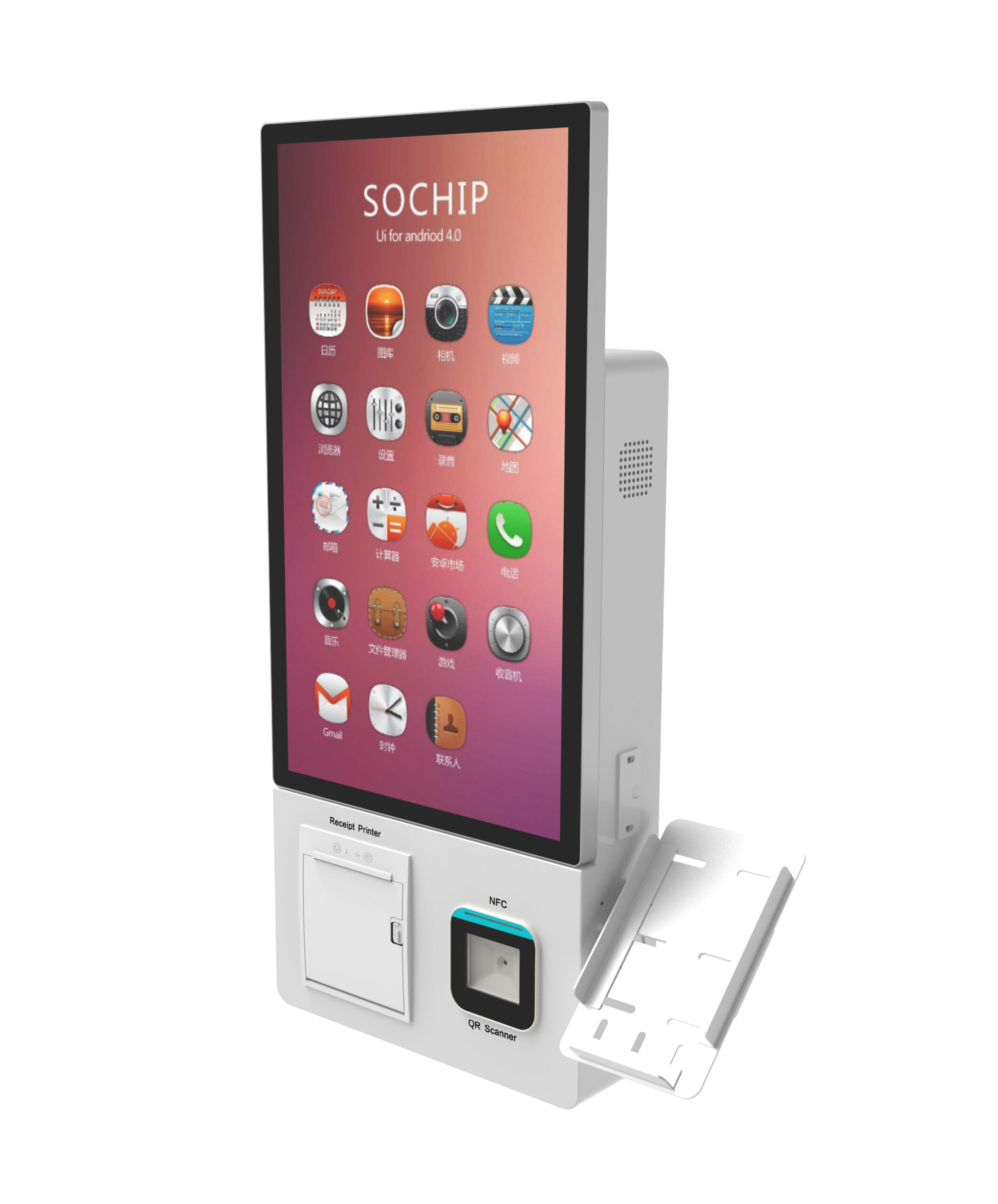
Outdoor shells are usually part of a broader configuration decision. Freestanding cash and payment units are typically specified on the freestanding cash-handling self-service kiosk platform; exchange and self-service units in tourist or transport locations often start from the currency exchange kiosk ; and where the site is sheltered or recessed, a wall-mount self-service kiosk can remove much of the weather exposure that drives the stainless decision in the first place. Curved-front formats with three-way mounting options are also used where the same core hardware must serve different site layouts.
Frequently asked questions
Which lasts longer outdoors, 304 stainless steel or galvanized steel with powder coating?
There is no universal answer, because the two systems fail differently. 304 resists corrosion through a self-renewing passive layer, so its life is limited mainly by chloride severity and contamination. Galvanized steel is protected by a sacrificial zinc coating whose life is consumed by the same environment, and by how well edges and seams were treated after fabrication. Match the material to the site’s chloride, humidity and industrial exposure, then verify process control.
Is 304 stainless steel worth the extra cost for a coastal kiosk?
Usually yes, particularly where the kiosk is difficult to remove for recoating or where downtime is expensive. But confirm the specifics: direct salt spray and repeated salt-laden cleaning can still stain or pit 304, and 316 may be the realistic grade. Ask for both grades priced against identical internal hardware before deciding.
Can a galvanized steel kiosk enclosure survive salt spray in a marine environment?
It can be specified for sheltered or lightly marine-influenced locations, but the zinc budget is consumed faster in chloride air and every untreated cut edge or seam becomes an early corrosion site. If the site is directly exposed, treat galvanized as a maintenance-intensive option and get the treatment of edges, welds and entries documented in writing.
Do I need IP65, or is IP54 enough for an outdoor kiosk enclosure?
They address different threats. IP54 covers dust and splashing water; IP65 adds protection against water jets. Neither is a corrosion rating. What matters is whether water can reach electronics and whether moisture that does get in can drain or escape — in humid climates, a controlled vent and drain strategy with correctly compressed gaskets can outperform an attempt at a perfect seal.
Next step: send your site conditions, get a selection and quote
Send your deployment environment (coastal / industrial / humidity / temperature swing) and we return an enclosure selection recommendation with pricing. Two items make the quote directly usable: a short environment sheet covering chloride exposure, humidity, cleaning regime and mounting location, and a drawing or specification for the internal hardware, so both shell options are priced against the same configuration. Prefer to start from your deployment type? Tell us the application and we will confirm the platform, finish and sealing scope before you commit to a grade.