Quick answer: A TITO ticket redemption kiosk accepts redeemable encoded tickets and cash, validates them against an approved ticketing system, and pays out — as a printed ticket, or as cash where a dispenser or recycler is fitted. Purchase validation turns on three modules: the bill validator, the thermal ticket printer, and the cash dispenser or recycler. Enclosure and service access decide everything else.
Overview
Quick answer: A TITO ticket redemption kiosk accepts redeemable encoded tickets and cash, validates them against an approved ticketing system, and pays out — as a printed ticket, or as cash where a dispenser or recycler is fitted. Purchase validation turns on three modules: the bill validator, the thermal ticket printer, and the cash dispenser or recycler. Enclosure and service access decide everything else.
That is the short version. The longer version is the reason this page exists: most TITO ticket redemption kiosk quotes you will receive answer the first question and stay silent on the four that actually hurt — queue behaviour at peak, what happens when the host link drops, how a redemption is reconstructed after a dispute, and who is exposed when cash sits in an unattended cabinet at 3 a.m.
What follows is a validation sequence, not a specification list. Each check is written as the failure mode the item removes , so you can look at a quote line and decide whether it protects the floor or merely describes a cabinet. For the upstream module-selection logic behind these items, the site’s published guide on how ticket-in/ticket-out reshapes cash-handling hardware covers the choice of validator, printer and dispenser in detail; this page assumes those choices and tests them.
Check 1 — Work backwards from your five failure points
Before you score a single quote, write down which of these you are actually trying to remove. They are not the same problem, and no single line item fixes all five.
| Failure mode on your floor | Hardware or integration item that addresses it | What to demand in writing |
|---|---|---|
| Cage or window queue at peak | Validator acceptance path and thermal ticket printer output speed | Your ticket stock and peak transaction mix, run at bench or demo |
| Manual ticket validation by staff | Host / approved TITO system integration and fallback behaviour | Supported protocols and the defined behaviour when the link drops |
| Cash-room labour and refill trips | Cash dispenser vs. recycler selection, cassette capacity | Denominations, capacity per cassette, refill assumptions — flagged if unconfirmed |
| Shrinkage and unexplained variances | Transaction-level logging and export | What is recorded per event and how compliance retrieves it |
| Night-shift cash exposure | Lockable ticket and currency storage box, tamper resistance, placement | Lock specification, storage retention behaviour, sightline from staffed positions |
Score every vendor against all five. A quote that only answers row one is a quote for a ticket printer with a cabinet around it. The broader budgeting context — what hardware absorbs in a kiosk project and when replacement falls due — sits in the site’s casino kiosk procurement and replacement budgeting playbook.
Check 2 — Ticket throughput lives in the validator and printer, not the cabinet size
Queue length at a redemption point is a function of how fast tickets and bills move in, and how fast validated output moves out. Cabinet dimensions do not enter that calculation, but they do decide where you can place the unit — so a slim, inexpensive enclosure can look like the better answer right up to the first Saturday night, when it moves the queue from the cage to the kiosk.
Validation method: request a bench or demo run using your own ticket stock and a transaction mix that reflects your peak hour. Ask the vendor to show ticket-accept behaviour on worn, creased or partially printed tickets, because those are what your floor actually delivers. Then ask a second question the demo will not answer: what does the printer do when a ticket fails validation mid-transaction — does it void cleanly, or does it leave an operator to reconcile a half-completed event?
Check 3 — Cash recycler for gaming venues: the decision that changes your collection routine
If your redemption point pays cash rather than a ticket, you are choosing between a dispenser and a recycler, and that choice propagates into staffing. A dispenser is refilled from the cash room on a schedule you set; a recycler recirculates notes it has accepted, which changes refill frequency and the denominations you must keep on hand.
Ask the vendor to state, in writing, denominations supported, capacity per cassette, and the refill assumptions behind any staffing statement they make. Anything they cannot confirm for your floor should be marked as unconfirmed rather than accepted as a planning input.
Stated limitation: this article cites no site-measured labour saving, queue-time reduction or payback period, because no such measurement is being disclosed here. Model those numbers from your own collection records and cash-room logs before you sign.
Check 4 — TITO system integration and what happens to a ticket when the link drops
This is where regulatory framing becomes a purchasing requirement rather than background reading. A rule petition filed with the Washington State Gambling Commission proposes a new definition — “ticket redemption kiosk” means an electromechanical device that accepts redeemable encoded tickets or vouchers issued from TITO-enabled bill validators for cash — and proposes that such kiosks only be used in conjunction with approved ticketing (TITO) systems, be secure from unauthorised access, tampering and bill/ticket removal, and contain a lockable ticket and currency storage box ( Washington State Gambling Commission, Rule Petition to Amend, WAC 230-15-767 and 230-15-782 ).
Note the scope: this is a proposed rule text for Washington State, not a statement of federal law, and your jurisdiction may frame the same obligations differently. The purchasing implication travels regardless — a kiosk that is not tied to an approved ticketing system is not a redemption device in the regulatory sense, whatever the datasheet calls it.
Validation method: require a written statement of supported protocols and interfaces, and a defined behaviour for host loss. Then pilot on one bank of machines before you commit a fleet. A pilot is the only honest test of whether the integration behaves the way the integration document says it does.
Check 5 — Audit trail, reporting and your AML programme
Currency transaction reporting and suspicious-activity reporting obligations run under the Bank Secrecy Act and FinCEN rules, and they are the operator’s programme — a kiosk does not discharge them. What a kiosk does is either strengthen or weaken the programme, depending on what it records. Confirm thresholds and reporting duties with your own compliance counsel rather than with a hardware vendor.
Ask these four questions of every shortlisted supplier:
- What is recorded per transaction, and at what granularity — ticket identifier, timestamp, device, outcome?
- How is that data exported, in what format, and on what schedule?
- Can your compliance team retrieve a specific ticket’s redemption history on request, and within what window?
- How does the kiosk record a failed or partial redemption, and does that record survive a power interruption?
Do not accept the phrase “AML compliant” on a quote. A kiosk is a logging and traceability input to your programme; the programme itself is yours.
Check 6 — Placement, enclosure and the night shift
Placement is a security decision before it is an aesthetic one. The test: does the position keep cash handling visible and staff-accessible, or does it create an unattended cash point after hours? A unit tucked into a dark corner because it fits there fails that test regardless of its module quality.
| Option | When it fits | What to verify |
|---|---|---|
| Floor-standing unit, freestanding footprint | High-traffic redemption zones needing queue separation and a clear sightline | Footprint against aisle clearance requirements; cable and service route |
| Wall-mount unit | Tight floors, arcade walls, secondary redemption points | Structural mounting, cable concealment, and whether the mount position stays lit and visible |
| Integrated multifunction cabinet | Operators combining redemption, bill breaking and loyalty at one point | Module fit, power budget and service access once all functions share one enclosure |
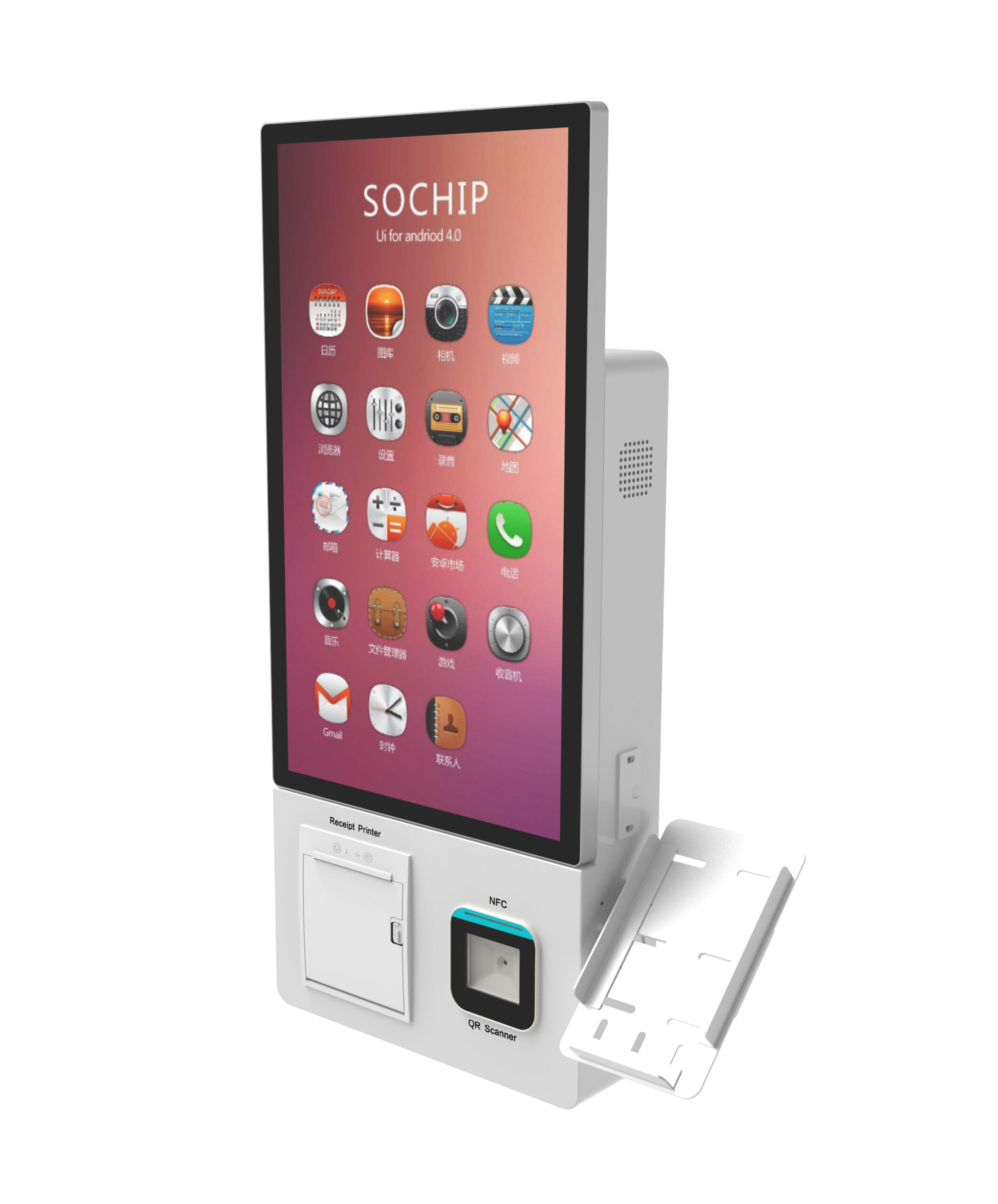
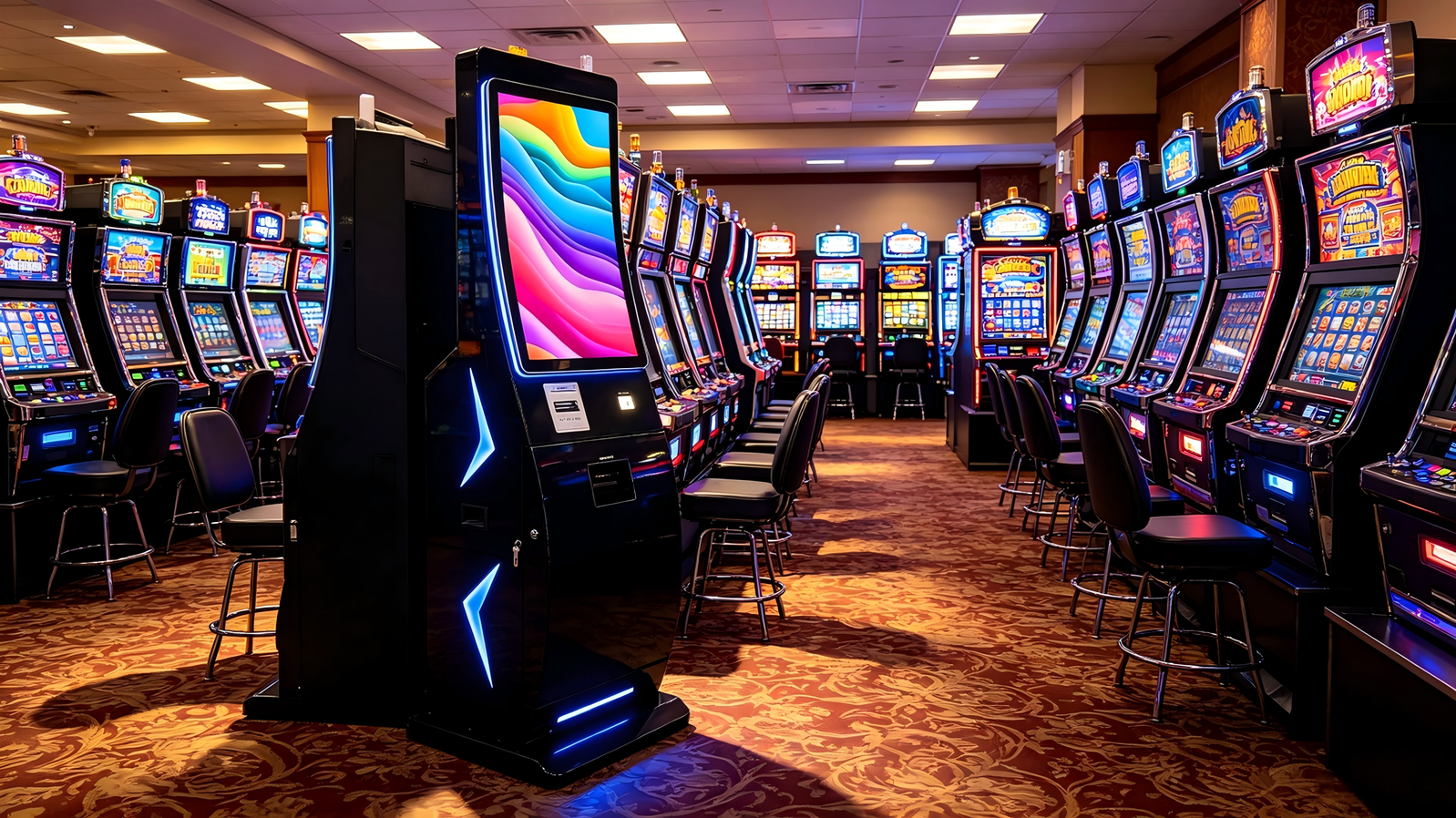
On arcade and FEC floors, the same logic applies to an arcade redemption machine: place it where staff already stand, not where floor space happens to be free. Where redemption is integrated alongside game hardware, the enclosure and module layout of a slot game cabinet is a useful reference for how modules are stacked and serviced — and for how much internal volume a lockable storage box actually consumes. For wall-mounted redemption points in constrained venues, a wall-mount cash redemption kiosk configuration shows the alternative footprint; for freestanding curved designs, a curved-design freestanding self-service kiosk is the comparable cabinet family.
Check 7 — Serviceability, spares and what the warranty actually covers
The modules that fail are the ones that touch paper, notes and tickets. Your cost of ownership is set by how fast they can be swapped, not by how good they look in a render.
- Service access: can each module be reached and exchanged without dismantling the cabinet or removing adjacent units?
- Spares: where are consumable and module spares held for US delivery, and what is the stated lead time?
- Warranty: get terms, exclusions and response commitments in writing. Do not plan against figures a vendor has not put in the contract.
- Currency of the spec: if you intend to add a recycler, an extra cassette or a loyalty module later, confirm the enclosure and power budget can accept it now.
Check 8 — What a spec sheet cannot prove, and how to verify it instead
Datasheets describe capability, not outcome. These items should be treated as buyer-verified before award, not assumed from a quote:
- Per-site ROI and payback period — model from your own labour, collection and cash-room data.
- Real queue reduction — only a pilot on your floor with your transaction mix measures this.
- Badge counts, machine counts and floor specifics — vendor-side assumptions rarely match your floor plan.
- Uptime and failure rates — ask for a reference site you can visit and speak to, rather than a percentage.
State plainly what this article does not contain: no customer case studies, no savings percentages, no payback periods, and no site-measured uptime figures, because none are evidenced here. Where a claim cannot be evidenced, the check becomes a verification task you assign before the purchase order — a single-bank pilot, a run with your own ticket stock, an on-site reference visit, and a written configuration specification signed off by both parties.
Turning the checklist into a configuration
Work the checks in order and they route you: high-traffic, cash-paying floors with queue pressure point to a floor-standing configuration with a defined recycler or dispenser decision; constrained arcade and FEC floors point to wall-mount; multi-function redemption points point to an integrated cabinet where module fit and service access have to be verified as a set. What you should never do is start from a photo and a price.
Request a TITO redemption kiosk quote / sample from Usingwin. Send your transaction mix, peak-hour expectations, payout method and compliance requirements, and we will return a configuration with the validator, printer and cash-handling modules specified against your failure points — plus a datasheet and a sample or reference unit for bench testing with your own ticket stock before you commit.