Quick answer: The short answer: If the cabinet, transaction flow or interface is your differentiation, and you can commit to a volume that amortises tooling, choose OEM and have tooling and design files named as yours in the purchase order. If you need speed on a proven form factor, start ODM — but negotiate exclusivity, module substitution and the CE/FCC technical file before signing, not after.
Overview
The short answer: If the cabinet, transaction flow or interface is your differentiation, and you can commit to a volume that amortises tooling, choose OEM and have tooling and design files named as yours in the purchase order. If you need speed on a proven form factor, start ODM — but negotiate exclusivity, module substitution and the CE/FCC technical file before signing, not after.
The part most sourcing guides skip: the model you sign is not the model you are stuck with. What decides whether you can migrate later is the tooling clause, the design-file handover term and the certification file — not the label on the quotation.
OEM vs ODM in one paragraph: which model fits which buyer
The distinction itself is well documented. PARTTEAM & OEMKIOSKS describes the ODM model as one where the production company fully designs and builds the kiosk and third parties then market it, while in the OEM model the client designs the product and the manufacturer materialises it ( oemkiosks.com ). That is the textbook split — and it is also where most comparison pages stop.
For a kiosk programme, the useful version of the question is narrower. Who holds the mould, the CAD file and the declaration of conformity when the relationship ends? A buyer on an ODM base cabinet can still be in control — if the tooling owner is named in writing and the technical file is contractually handed over. A buyer on a nominally OEM build can still be locked out — if tooling sits with the factory and the change-order terms are open-ended.
So the decision is not “OEM or ODM”. It is: what does it cost me to leave, and do I know that number before I sign?
The decision table: what actually transfers in each model
The third column matters most and is disclosed least. Kiosk Industry documents the pattern directly: in many projects the “US manufacturer” is a systems integrator assembling imported enclosures, displays and electronics, or a brand that owns design, compliance and support while manufacturing happens in Shenzhen, Dongguan and similar hubs ( kioskindustry.org ). None of that is disqualifying — it is a problem only when it is not disclosed, because your compliance and support path is then tied to a party that does not control the build.
| Item | OEM (buyer-led design) | ODM (supplier-led design) | “OEM in name only” (integrator) |
|---|---|---|---|
| Mould / tooling ownership | Named to buyer if written into the PO; otherwise verify in RFP | Typically retained by the supplier; transfer terms verify in RFP | Often held by an upstream enclosure factory you have no contract with — verify in RFP |
| Design file / CAD ownership | Buyer-owned in a true OEM engagement; confirm handover format and timing | Supplier-owned; licence to modify may be negotiable | Split ownership across parties — verify in RFP |
| CE / FCC declaration holder | The party placing the product on the market — establish this in writing | May sit with the supplier unless re-declared in your name | Frequently ambiguous; verify in RFP |
| Module swap freedom | High if the bay, power and interface budget were designed for substitution | Bounded by the original design; ask for the interface drawing | Limited to modules the integrator already sources |
| MOQ band | Higher, because tooling is amortised over committed volume | Lower — the published trade-off | Varies by integrator stock position |
| Lead time on a change order | Tied to mould trial, first article, mass production milestones | Depends on whether the change touches tooling | Depends on the upstream factory’s queue |
| Exit cost | Buy-out of tooling plus new-supplier qualification | New tooling plus re-declaration plus re-qualification | Re-sourcing of the whole assembly, including the compliance file you never held |
Every cell in this table depends on the individual supplier. Treat them as questions, not specifications. The one axis that is consistently reported across the industry is the trade-off Freightos summarises in its OEM/ODM comparison: exclusivity and near-complete customisation on the OEM side, against little or no product development cost and lower minimum order quantities on the ODM side — with expensive development cost, high MOQ, no exclusivity and fewer customisation options as the corresponding cons ( freightos.com ). That framing is correct as far as it goes; it just does not tell you who signs the declaration of conformity.
Who holds the CE and FCC declaration — and why that sets your exit price
In the EU, obligations attach to the entity that places the product on the market — the manufacturer, or the importer that brings it in. If you brand a kiosk and put it into service in the EU, that entity is normally you, regardless of who designed the cabinet. The same logic applies in the US, where radio-frequency authorisation sits with the responsible party for the device.
Two questions resolve the whole issue in one call:
- Who is named on the declaration of conformity, and will you provide the technical file on request?
- When we re-declare this unit under our own name, what engineering and test work is required, and who performs it?
The second answer is your real switching cost. Re-declaring an existing ODM cabinet is not paperwork — it is engineering and test time, and it is the reason a “cheap” ODM start can be expensive to leave. Where a card-data path is involved, the boundary question gets sharper: any element that touches cardholder data pulls in PCI DSS scope, so define which party owns that boundary before the design freezes.
For the clause-by-clause audit method, including how to separate a factory-level certificate from a model-level one, use our 2026 OEM/ODM kiosk procurement checklist for verifying CE, FCC, RoHS and ISO 9001 line by line .
MOQ, tooling amortisation and lead time: how to price the choice without trusting a quote
The mechanism is simple. In an OEM build, tooling is normally a capital cost incurred once and recovered across a committed volume — which is why OEM minimums sit above ODM minimums, consistent with the published trade-off above. What is not standard is any specific figure. Tooling cost, amortisation schedule, volume breakpoints and change-order lead time vary by design, and we will not quote a market norm for them.
Three RFP asks make competing quotes comparable:
- Tooling as a separate line item. Not absorbed into unit price. If there is no amortisation line, there is nothing for you to buy out at exit.
- Amortisation schedule and volume breakpoints. Ask at what cumulative volume the tooling is considered paid, and what happens to the balance if you stop early.
- Change-order lead time after first-article approval. Ask for the milestone it is measured from — mould trial, first article or mass production. A single headline lead-time number is not a commitment.
Module flexibility: the upgrade path is the product
A kiosk is not frozen at shipment. Bill acceptors, coin modules, cash-recycling units, card readers, ID scanners and printers are replaced, re-sourced or upgraded across a five-to-ten-year service life. The question to ask is whether the internal bay, the power budget and the interface set were designed for substitution or machined around one module SKU.
Ask for two documents: the module compatibility list, and the mechanical interface drawing. If the supplier will not share the drawing, assume the bay is proprietary and price your exit accordingly.
Cash handling deserves separate scrutiny, because it locks in more than a mechanism — the note-validation and reconciliation path determines serviceability, fault diagnosis and where your data boundary sits. Our comparison of a bundled proprietary bill-pay cabinet against configurable OEM cash-handling platforms works through that trade-off on published specs. If cash acceptance is a compliance requirement in your market rather than a feature, read why cash hardware became a compliance spec before you fix the module list.
Platforms that were designed for substitution show it in their structure — for example the freestanding cash-handling self-service kiosk platform, or, for a non-cash deployment, the automated tool checkout kiosk spec guide for MRO and tool-crib rooms, where module choice drives the entire specification.
How to verify which kind of supplier you are actually talking to
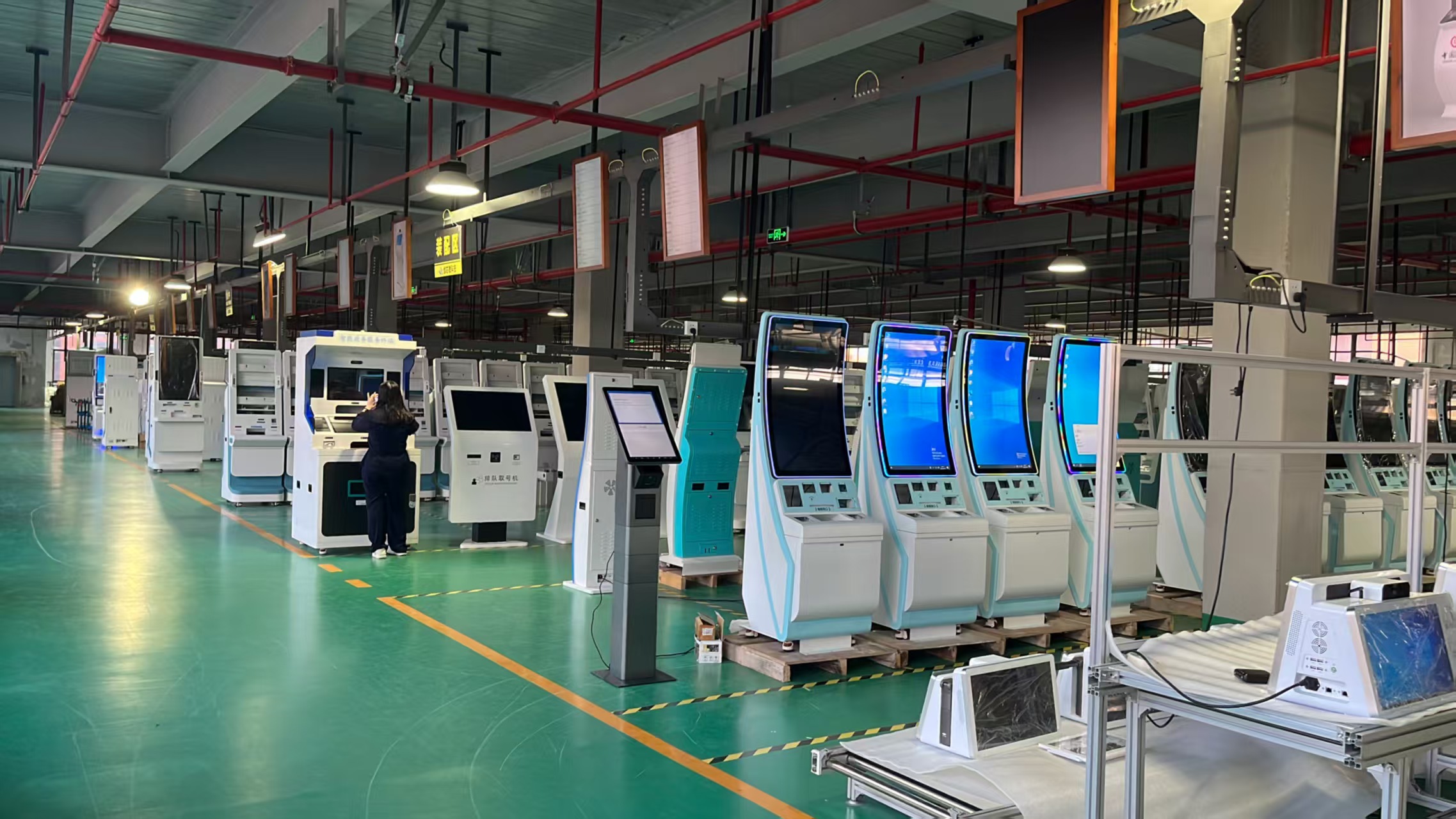
Separate three roles on the first call and see which one the supplier claims: does it own the design and the tooling, does it build only to your drawings, or does it assemble imported modules under its own brand and compliance? Then verify with four requests, run as a sequence:
- Ask for the tooling list or tooling drawings held in the supplier’s own name.
- Ask which certifications are held in the factory’s name versus the client’s name, and request the certificate scope.
- Request the certification file review path — who hands over what, and when.
- Request the spare-module availability list and the first-article inspection report format before placing a pilot order.
Red flags worth naming plainly: refusal to separate tooling cost from unit price; no written tooling-ownership or transfer clause; certification answers given verbally; and a cabinet that cannot accept a substitute module from a second source. These are signals to investigate, not proof of a failing supplier — the sequence exists so that you, not the quotation, decide what you own.
Which model should you sign? A short decision shortcut
- Choose OEM when the enclosure or the transaction flow is your differentiation, you can commit to a volume that amortises tooling, and you want the design file in your name.
- Choose ODM when speed to market dominates, the form factor is commodity in your segment, and you accept bounded customisation and limited exclusivity.
- Choose a hybrid when an ODM base cabinet plus your own branded front panel and software layer is the right cost point — but insist the tooling clause still names you as owner of whatever you paid for.
Common questions buyers ask before signing
Who owns the tooling and the design IP when a kiosk is manufactured for my brand?
Whoever the contract says — which is why tooling ownership and design-file handover belong in the purchase order, not in a side email. In a genuine OEM engagement the buyer normally owns both; in ODM the supplier typically retains them. If no clause exists, assume the supplier holds them.
Can I move from an ODM kiosk to a fully custom OEM build later?
Yes, but budget for it: new tooling, re-declaration under your name if you are placing the product on the market, and supplier qualification. The cheapest migration is a base cabinet whose mechanical interface drawing you already hold.
What MOQ and lead time should I expect for a custom self-service kiosk?
There is no defensible market norm — both depend on tooling scope, module selection and the milestone you measure from. Ask each shortlisted supplier to quote MOQ, tooling cost and lead time to the same three milestones, then compare like for like.
Who holds the CE or FCC certification for an ODM-built kiosk?
Establish this in writing before the design freezes. In the EU, obligations follow the entity placing the product on the market; in the US, authorisation sits with the responsible party. If the supplier’s name is on the declaration and yours is on the product, you need a handover path for the technical file.
Request a quote + OEM/ODM capability matrix
Tell us which modules must be substitutable, which market you are declaring into, and whether tooling is intended to sit in your name. We will come back with a quote and the OEM/ODM capability matrix so you can see which items on the table your project actually needs — and which you can leave out. Start from the freestanding cash-handling self-service kiosk platform, or send your enclosure drawing and module list directly for an OEM review.